Andrew M. Dai is co-founder and CEO of Elorian AI. Previously a director at Google DeepMind, he worked on language-model research and Gemini’s training data. At Elorian, his focus is models that reason about visual and spatial relationships.[1][2]
Start with Visual reasoning: Andrew Dai →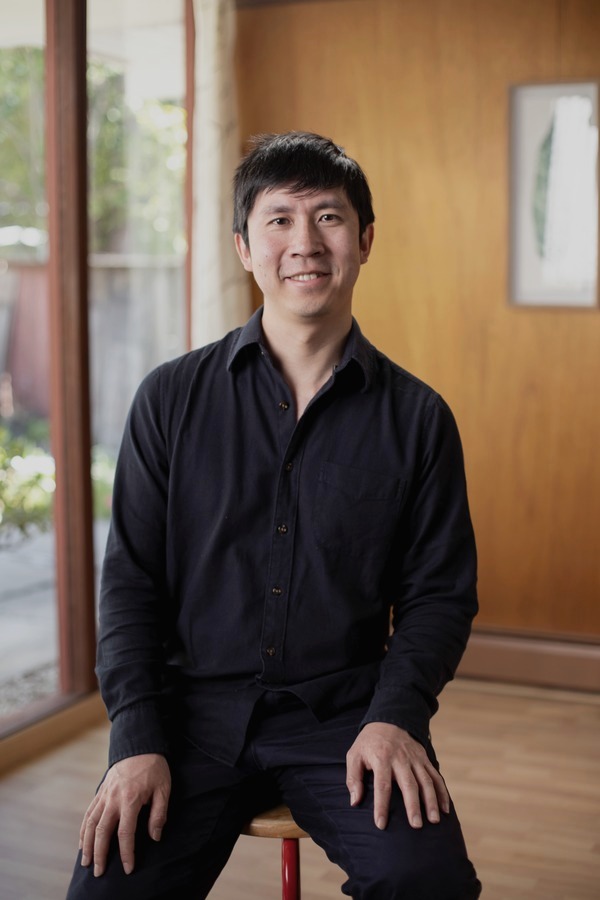


 X · andrewdai
Career
Elorian’s team biography credits Dai with co-leading GLaM and PaLM 2 pretraining and Gemini’s data work. The company applies that model-development background to visual reasoning. His earlier doctoral research developed Bayesian nonparametric models for entity disambiguation and supervised learning.[1][6]
Contributions
In their 2015 paper, Dai and Quoc V. Le study two ways to initialize recurrent networks with unlabeled data: next-step prediction and reconstruction through a sequence autoencoder. They then fine-tune the learned parameters for supervised tasks. The experiments show more stable training and better generalization on document and sentiment classification. This is work on LSTMs, with its own architectures and experiments.[3]
Ideas
In his visual-reasoning talk, Dai uses examples such as a chessboard and physical manipulation to distinguish recognizing an object from reasoning about its arrangement. He argues for models that can use visual intermediate steps, rather than converting every problem into text. His proposed training loop combines evaluations, synthetic data and agent interactions with supervised and reinforcement learning. These are the direction and demonstrations he presents for Elorian.[4]
Tools, writing & talks
Writing, research & talks
Start here
Visual reasoning: Andrew Daiai.engineerA talk on visual intermediate reasoning, model evaluation and training approaches.
Start with the chessboard example and the distinction between understanding and reasoning. The demonstrations need no setup; basic machine-learning knowledge helps.
Speaker[4]Elorian's Andrew Dai argues frontier multimodal models hallucinate spatial answers from memorized patterns rather than perceiving images, and critiques benchmarks that hide this gap, proposing visual chain-of-thought as a fix.
Catalog workOriginal source- Semi-supervised Sequence Learningarxiv.org
Unsupervised initialization followed by supervised adaptation of recurrent sequence models.
Co-author with Quoc V. Le[3]