Ankush Gola is LangChain's co-founder and chief technology officer. His published engineering work explains how to build agents with memory, inspect their behavior, and store the traces needed to debug them.[10][6][7][8]
Start with Introducing the LangGraph Functional API →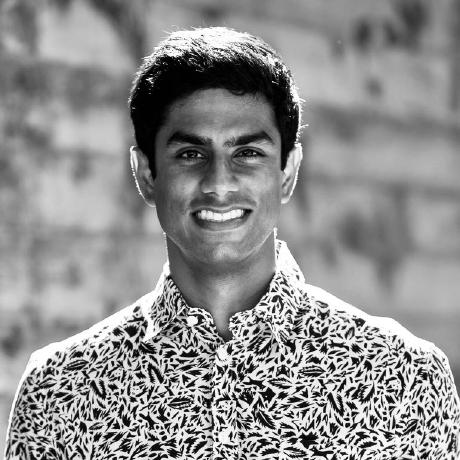
Education

Links
 GitHub LinkedIn Princeton founder talk
Co-founder and chief technology officer · LangChain
Background
Gola completed an electrical engineering bachelor's degree at Princeton in 2015. His undergraduate thesis with Joseph Bolling investigated a binocular stereo-vision system using quadrotor aircraft: two camera viewpoints allow a system to estimate depth. Their code remains on his GitHub profile. Princeton awarded both students its Bradley Dickinson Award for System Design in 2015, recognizing their work designing and implementing complex electronic systems.[1][4][5]
Career
After Princeton, Gola worked at Facebook, where Princeton describes him as a senior software engineer. He left after four years and joined Robust Intelligence, where he met Harrison Chase. LangChain's own history distinguishes Chase's original open-source project in 2022 from the company the two founded in early 2023. Gola now serves as co-founder and CTO. The company's work covers building agents, evaluating their behavior and operating them in production.[1][2][10]
Contributions
Agent workflows using ordinary functions
Gola's introduction to the LangGraph Functional API shows how developers can add durable execution and human intervention to programs without first drawing an explicit graph of steps. The interface uses entrypoint and task functions, while ordinary loops and conditionals control execution. It shares a runtime with LangGraph's graph-based interface. His examples explain how to save conversation state and stream progress as work proceeds, making the article a practical entry point for programmers bringing an existing application into LangGraph.[6]
Finding useful memories
In his article on semantic search for LangGraph memory, Gola explains how an agent can retrieve information by meaning rather than an exact text match. A query can find a relevant earlier interaction or preference even when its wording differs. The implementation adds similarity search to LangGraph's memory store, alongside filters that restrict the records being considered. This provides a retrieval mechanism for an agent's stored knowledge; it does not by itself verify that a remembered claim is true or decide what the agent should retain.[7]
Storing and searching agent traces
Gola introduced SmithDB in May 2026 as the database behind LangSmith's agent-observability workloads. An agent trace records the model calls, tool actions and other steps within a run. Long-running agents produce nested records that arrive over time, so a debugging interface must find individual steps and reconstruct their relationships. SmithDB combines durable object storage with ingestion and query services. In a follow-up article with Akshay Aurora and Sumedh Arani, Gola describes how the team builds and merges text indexes to make those records searchable. These are accounts of a team-built system, rather than claims that he wrote the database alone.[8][9]
Ideas
In a 2024 ClickHouse interview, Gola described LangSmith's progression from inspecting agent execution to evaluating changes in prompts and models. A trace helps an engineer locate a failure; evaluation compares behavior across examples to test whether a proposed fix improves it. That distinction gives a newcomer a useful way to read his work: memory and workflow APIs govern what the agent can do, while traces and evaluation help developers understand what it actually did.[11][6][7]
Tools, writing & talks
Writing, research & talks
Start here
Introducing the LangGraph Functional APIlangchain.comA practical walkthrough of persistent agent workflows, human intervention and streamed progress using ordinary Python or JavaScript functions.
If you know Python or JavaScript, start with this walkthrough to see how an agent keeps state and pauses for human input. Its examples connect familiar functions and loops to the behavior needed for a dependable application.
Authored technical article[6]- Semantic Search for LangGraph Memorylangchain.com
Explains meaning-based retrieval over stored agent memories, with examples that combine a natural-language query and structured filters.
Authored technical article[7] Introduces the team-built storage system behind LangSmith and the nested, long-running trace workloads its architecture supports.
Authored engineering announcement[8]An engineering explanation of index construction, compaction and querying for full-text search over agent traces.
Co-authored with Akshay Aurora and Sumedh Arani[9]- LangSmith: observability and evaluationclickhouse.com
Gola explains how inspecting runs and comparing prompts or models support different parts of the application-development process.
Interview with Ankush Gola[11]