Aravind Srinivas is Perplexity’s co-founder, President and CEO. His research background includes reinforcement learning and generative models; at Perplexity, he has focused on turning web search and language models into answers that cite their sources.[7][1][2][3][4]
Start with Berkeley alum wants to make the planet smarter →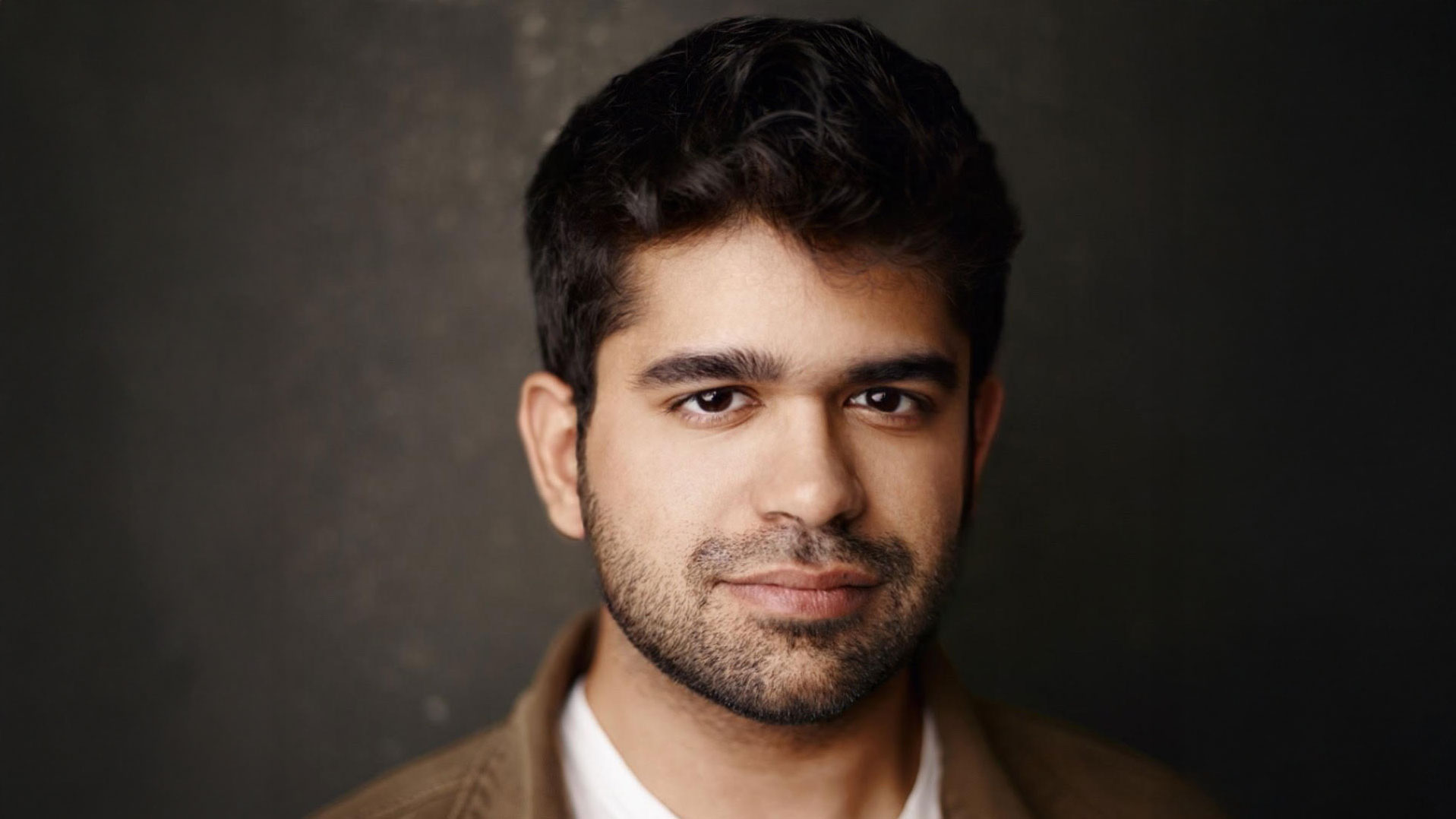


 GitHub
 X
Background
Srinivas earned a dual degree in electrical engineering from IIT Madras in 2017 and a computer-science doctorate from UC Berkeley in 2021. IIT Madras’s 2026 alumni profile records research internships at OpenAI, DeepMind and Google, followed by a Research Scientist role at OpenAI. The institution dates his co-founding of Perplexity to August 2022. These sources establish the sequence, but do not provide precise start and end dates for every research appointment.[1][2]
Career
In Berkeley’s account, Srinivas connects Perplexity’s design to the practice of academic citation: a response should give the reader sources to inspect. The product combines conversational answers with web material, aiming to reduce unsupported responses by grounding them in retrieved information. This is a product principle and a description of the intended workflow, not a guarantee that every generated answer or citation is correct. The Berkeley profile also records his view that research requires the engineering needed to make an idea work, not only mathematical insight.[2]
Contributions
Learning to act from images
Srinivas co-authored CURL with Michael Laskin and Pieter Abbeel. Reinforcement learning trains a system to choose actions using feedback from an environment. When its input is an image, it must also learn which visual features are useful for that decision. CURL uses contrastive learning to extract a representation from raw pixels, then learns control behavior using those features. The paper evaluates this combination on DeepMind Control Suite tasks and Atari games. Its result concerns the tested image-based control problems and sample efficiency, the amount of interaction needed to learn; it does not establish general reasoning ability.[3]
Reproducible generative-model research
Srinivas co-authored Flow++ with Jonathan Ho, Xi Chen, Yan Duan and Pieter Abbeel. The implementation README also credits him as an original developer. It contains the TensorFlow implementation used for experiments in the Flow++ paper, with instructions for image datasets including CIFAR-10 and ImageNet. This is an attributable research-code contribution from before Perplexity. The repository specifies an older software environment and multiple GPUs for reproducing its training setup, so it is best approached as an experimental record rather than a lightweight beginner application.[8][4]
Ideas
Tools, writing & talks
Writing, research & talks
Start here
Berkeley alum wants to make the planet smarterengineering.berkeley.eduA university interview connecting Srinivas’s research background with Perplexity’s source-citing answer format. A useful nontechnical introduction to the product idea and his path from research to a company.
Start with this interview for a nontechnical explanation of the connection between his research and Perplexity.
Interview subject[2]