Arthur Mensch is the co-founder and CEO of Mistral AI. His research includes efficient language-model training, the Chinchilla study at DeepMind, and Mistral’s early open model releases.[1][5][6]
Start with DeepMind’s introduction to Chinchilla →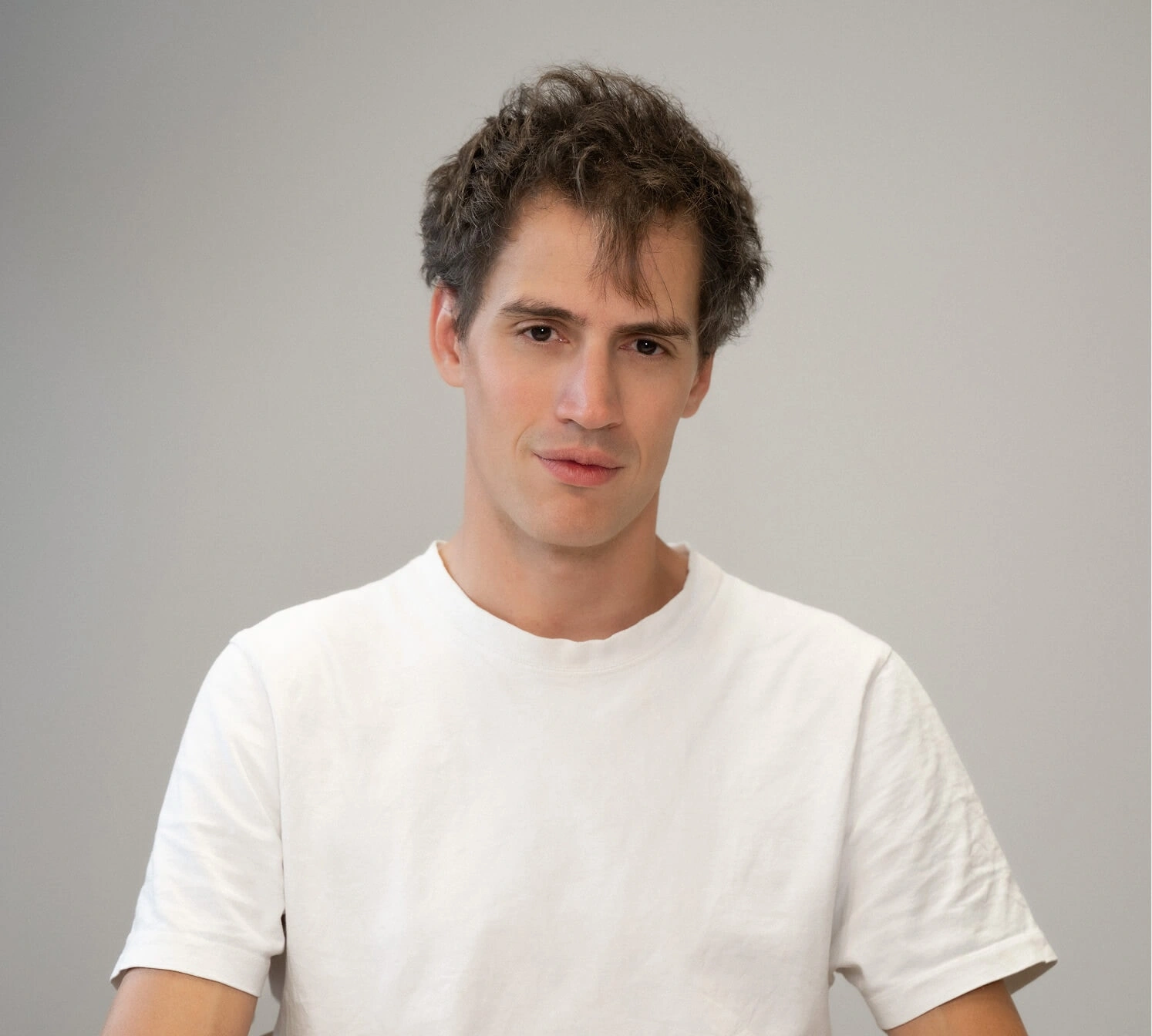



 GitHub
Background
Mensch’s self-reported academic record lists engineering studies at École Polytechnique and Télécom ParisTech, a Mathematics, Vision, Learning master’s at ENS Cachan, and a computer-science doctorate at Université Paris-Sud completed in 2018. His early work included methods for breaking very large matrices into smaller components. Such methods can extract useful structure from data too large to handle conveniently in one calculation. His paper on stochastic subsampling tested that approach on brain-imaging data and recommender systems.[2][10]
Career
Before founding Mistral, Mensch worked as an AI researcher at DeepMind, following doctoral work at Inria and a mathematics postdoctoral position at ENS. DeepMind’s article on compute-optimal training credits him alongside Jordan Hoffmann, Sebastian Borgeaud and Laurent Sifre. This gives a concrete entry into his pre-founder work: studying how to allocate a training budget between the size of a model and the amount of text it sees.[8][9]
Contributions
Training a model for long enough
The Chinchilla paper asks how to get the most useful language model from a fixed amount of computation. The authors trained hundreds of models to compare model size with training-data volume. They found that increasing parameters without increasing data left models undertrained. Their proposed balance scales model size and training tokens together. Chinchilla tested that conclusion with a smaller model trained on more text using Gopher’s compute budget. The result concerns the experiments and budgets in the paper; it is not a universal prescription for every deployed model.[4]
Open model releases at Mistral
Mensch co-authored the Mistral 7B and Mixtral papers. The first describes a compact language model released under Apache 2.0. Mixtral routes each token through two of eight expert blocks at each layer, increasing available model capacity while using only part of it for each step.[5][6][1]
Ideas
In a January 2026 discussion hosted by École Polytechnique, Mensch argued that learning to use AI should coexist with learning to reason without it. He described opportunities for engineers to build AI, apply it within another discipline, or work on problems where it has little value. His sovereignty argument concerned dependence on outside technology suppliers and the influence of information systems. The talk is a useful introduction to his priorities without requiring a machine-learning background.[3]
Tools, writing & talks
Writing, research & talks
Start here
DeepMind’s introduction to Chinchilladeepmind.googleAn accessible explanation of the experiments and why training-data volume changes the preferred model size.
Start with DeepMind’s research explainer for the training-budget question; no code is required.
Co-author of employer research explainer[8]The Chinchilla study explains the tradeoff between model size and training data under a fixed compute budget.
Co-author[4]- Mixtral of Expertsarxiv.org
Describes a language model that routes tokens to selected expert blocks.
Co-author[6] - Arthur Mensch at École Polytechniquepolytechnique.edu
A university account of his January 2026 talk on engineering, sovereignty and entrepreneurship.
Speaker; institution’s account of his talk[3]