Chris Olah is Anthropic’s co-founder and interpretability research lead. He develops ways to understand the internal computations of neural networks, alongside visual explanations that make those systems easier to study.[1][2][4]
Start with Feature Visualization →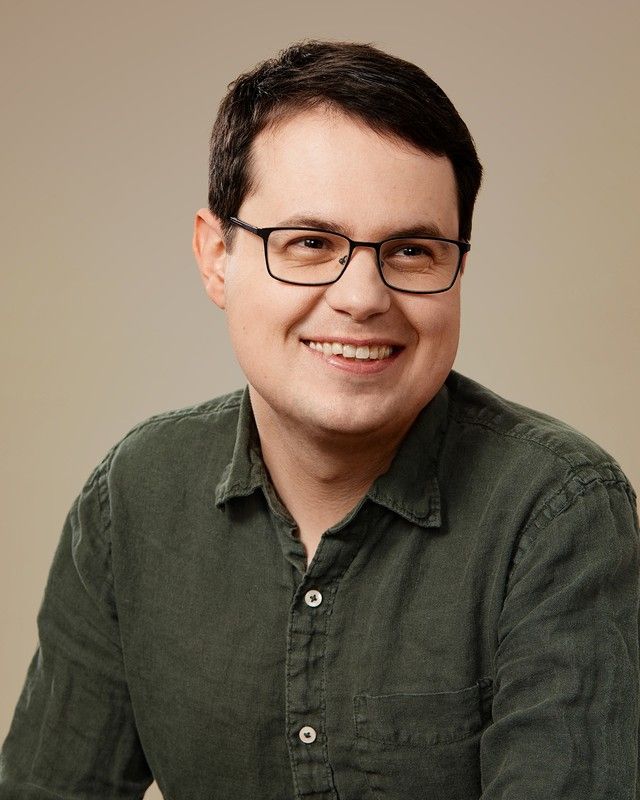
Education
- Research focus
- Mechanistic interpretability: explaining how a neural network produces its behavior[2]
Links
Personal site About X
 GitHub Bluesky Google Scholar Transformer Circuits
Co-founder and Interpretability Research Lead · Anthropic
Background
Olah’s account of his education distinguishes university attendance from a completed degree. He audited University of Toronto courses while in high school, then spent one year taking advanced courses there. In his 2020 essay he described becoming a researcher without an undergraduate degree or Ph.D., supported by independent work, the Thiel Fellowship and mentorship. He does not present that route as advice for everyone. The essay asks people to compare university with a specific alternative and to consider the structure, support and risks of each path.[3]
Career
Olah worked at Google Brain, led interpretability research at OpenAI, and co-founded Anthropic, where the current leadership page identifies him as interpretability research lead. He also co-founded Distill, a scientific journal that emphasized clear explanations. His stated research aim is to reverse-engineer neural networks into algorithms people can understand. That is a different task from observing whether a model answers a test question correctly: it asks which internal computations produce the answer and whether an explanation survives further investigation.[1][2]
Contributions
Seeing what image models respond to
Feature Visualization, written with Alexander Mordvintsev and Ludwig Schubert, shows how to generate images that strongly activate selected parts of a neural network. Starting from an input image, an optimization procedure changes its pixels to increase a chosen internal response. The resulting image can reveal patterns that a neuron or group of neurons responds to. The article explains practical choices and limitations in this process, rather than treating the pictures as direct photographs of a model’s thoughts. Its interactive examples make the method a useful entry into interpretability.[4]
Finding concepts inside a language model
Olah co-authored Scaling Monosemanticity, which uses dictionary learning to separate patterns of activity in Claude 3 Sonnet into more interpretable features. The challenge is that individual neurons can participate in several concepts, making a neuron-by-neuron reading misleading. The researchers extracted features associated with recognizable concepts and experimentally changed some feature strengths to observe effects on behavior. This supports causal investigation of model internals, while leaving much of the model’s internal activity unexplained.[6][7]
Explanations and model character
Olah’s educational writing includes Understanding LSTM Networks, an illustrated walkthrough of recurrent networks that retain and update information across a sequence. He explains the architecture; he did not invent LSTMs. His work also extends to Claude’s constitution. Anthropic credits him with drafting substantial material on model nature, identity and psychology. That contribution concerns how the organization describes and trains the model’s intended behavior, alongside his separate work on explaining its internal mechanisms.[5][9]
Tools, writing & talks
Writing, research & talks
Start here
Feature Visualizationdistill.pubAn interactive explanation of generating inputs that activate a network’s internal components. Start here for a concrete view of interpretability; basic familiarity with neural networks is helpful, but the images carry much of the explanation.
Its visual examples show what an interpretability method actually does before introducing the larger language-model research program.
Co-author[4]- Understanding LSTM Networkscolah.github.io
A diagram-led tutorial explaining how a recurrent neural network stores, forgets and updates information over a sequence. It provides a model of careful technical explanation as well as an introduction to LSTMs.
Author of explanation[5] - Scaling Monosemanticitytransformer-circuits.pub
A collaborative study extracting interpretable features from Claude 3 Sonnet. Read the accessible Anthropic overview before the full research article if dictionary learning and sparse autoencoders are unfamiliar.
- Claude’s Constitutionanthropic.com
The document specifying Anthropic’s intended behavior for Claude. The contribution statement credits Olah’s writing on model nature, identity and psychology; it also identifies the primary author and other contributors.
Contributing author[9]