Christopher Manning is a Stanford professor emeritus and a distinguished member of technical staff at Moonlake, where he leads foundation-model work. His research spans statistical language processing, word representations, neural translation and linguistic structure.[1][2]
Start with World Models Need Causality, Not Pretty Pixels →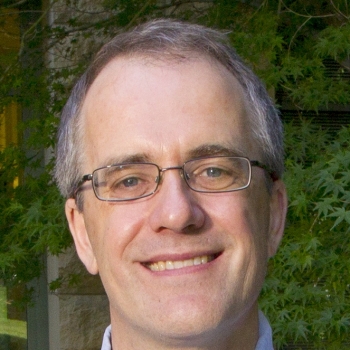
Education

Links
Stanford X
Professor Emeritus · Stanford University
Distinguished Member of Technical Staff · Moonlake
Background
Manning studied linguistics at the Australian National University, with additional majors in mathematics and computer science, then earned a Stanford linguistics PhD in 1994. His academic career included Carnegie Mellon and the University of Sydney before he returned to Stanford in 1999. His books helped establish statistical natural-language processing and information retrieval as subjects that students could learn through explicit models and algorithms.[1][3]
Career
At Stanford, Manning founded the NLP group and helped develop Stanford Dependencies and Universal Dependencies. He directed SAIL from 2018 to 2025 and held the inaugural Siebel machine-learning chair in 2017–2026. At Moonlake, his foundation-model work turns toward embodied AI. He argues that useful simulation needs causal, action-conditioned representations of a world, so an agent can reason about what an intervention changes.[1][2]
Contributions
Word meaning from co-occurrence
With Jeffrey Pennington and Richard Socher, Manning coauthored GloVe. It learns word vectors from a corpus-wide matrix of word co-occurrences. The model connects those global statistics to vector relationships that can represent semantic and syntactic regularities. Training on the nonzero entries of the matrix combines ideas from global matrix factorization and local context methods. The paper evaluates the resulting representations on analogy, similarity and named-entity tasks.[4]
Choosing what a translator attends to
His work with Minh-Thang Luong and Hieu Pham compared global and local attention for neural machine translation. Global attention considers every source word; local attention concentrates on a smaller window. This lets a decoder use different source information as it generates each translated word, rather than relying on one fixed sentence representation. The experiments compare these architectures on English-German translation.[5]
Tools, writing & talks
Writing, research & talks
Start here
A talk about the difference between generating plausible images and building a world an agent can manipulate.
Watch the opening distinction between visual plausibility and causal structure before studying model architectures. The examples introduce why an agent needs a world it can act on; basic familiarity with generative AI is enough.
Speaker[6]Christopher Manning traces AI history from Dartmouth to LLMs and argues that generative video models lack the semantics needed for planning, then explains how Moonlake instead builds manipulable, code-based worlds from a single photo, using web research to fill occluded detail and a Claude-Code-insp
Catalog workOriginal source- GloVe: Global Vectors for Word Representationaclanthology.org
Explains how word co-occurrence statistics can produce useful geometric relationships between word vectors.
Coauthor[4] Compares local and global attention mechanisms for translation.
Coauthor[5]