Dani Yogatama is co-founder and CEO of Reka and an associate professor of computer science at USC. His research spans language models, memory and reinforcement learning, following research roles at DeepMind and Baidu.[1][3]
Start with Relational Memory Augmented Language Models →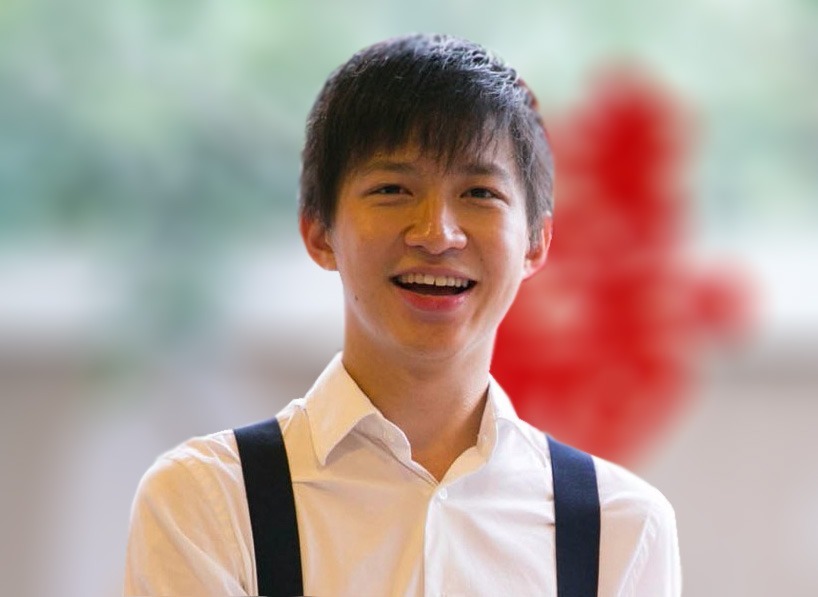
Education

Links
Website X Google Scholar
Co-founder and chief executive officer · Reka AI
Associate professor, Computer Science · University of Southern California
Career
Yogatama studied at Institut Teknologi Bandung, held a research fellowship at the University of Tokyo and completed his doctorate at Carnegie Mellon under Noah Smith. He worked at Baidu’s Silicon Valley AI Lab in 2015–2016 and was a senior staff research scientist at DeepMind in 2016–2022 before his work at Reka and USC.[1]
Contributions
Relational Memory Augmented Language Models, coauthored with Qi Liu and Phil Blunsom, separates stored relations from the language model’s parameters. A knowledge graph is represented as triples; the system retrieves relations relevant to the current text and uses them to condition generation. The authors evaluate language-model quality and coherence, and show how changing the retrieved information can affect generated text.[4]
Learning useful structure from text
Yogatama’s doctoral thesis studies sparse models for text: methods that select a smaller set of useful features while encoding prior knowledge about how those features relate. Regularization helps limit overfitting and makes structural assumptions part of the learning problem. This earlier work provides context for his later interest in representations and language-model architecture.[2]
Tools, writing & talks
Writing, research & talks
Start here
A model retrieves knowledge-graph relations to condition language generation.
Start with the graph-to-triples representation and the retrieval step. Familiarity with language models helps; ask what changes when the stored information changes without retraining the model.
Co-author[4]