François Chollet is a software engineer and AI researcher who created Keras and the ARC-AGI benchmark. He cofounded Ndea and the ARC Prize Foundation with Mike Knoop.[1]
Start with Keras →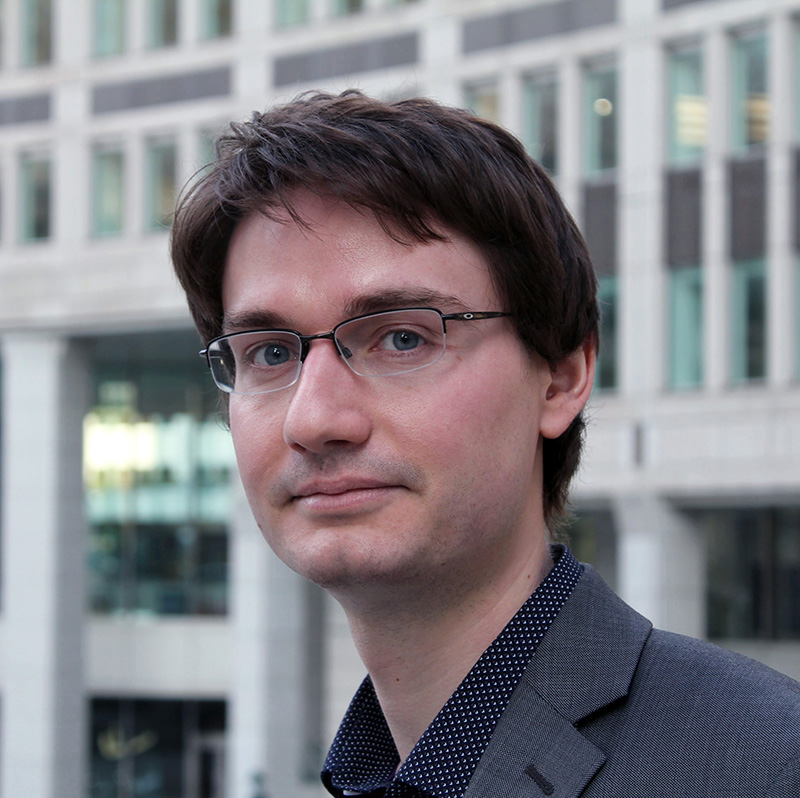
Education
Links
Personal website Ndea founders X · fchollet
 GitHub · fchollet
Cofounder · Ndea
Cofounder and Board Member · ARC Prize Foundation
Career
From a Python library to Google and independent research
Chollet describes creating Keras in February or March 2015 while researching neural networks for natural-language processing. He wanted Python tools that supported both recurrent networks for sequences and convolutional networks for images, without rebuilding low-level components for every experiment. The Global Swiss AI Award biography records joining Google in 2015. Google announced his departure on November 13, 2024, while saying he would continue contributing to Keras and overseeing its roadmap. His later work with Ndea and ARC Prize extends the emphasis on making AI systems easier to build and evaluating how they learn.[6][7][5][2]
A lab for combining learned intuition and reasoning
Ndea describes its research direction as combining learned pattern recognition with formal reasoning. Chollet and Knoop also cofounded the ARC Prize Foundation, a nonprofit advancing public research and education in artificial general intelligence.[2]
Contributions
Make neural networks easier to build
Keras gives developers a common Python interface for constructing and training neural networks across several computation frameworks. Its current multi-backend design lets a model use JAX, TensorFlow or PyTorch while keeping the high-level model definition. That separation reduces the need to rewrite the application when experimenting with a different backend.[4]
Separate spatial patterns from channel combinations
Xception, Chollet’s CVPR 2017 paper, proposes an image-classification architecture based on depthwise separable convolutions. It processes spatial patterns separately for each channel, then combines information across channels. The paper reports better accuracy than Inception V3 on ImageNet with a similar parameter count, and larger gains on a larger image dataset. The contribution concerns how a convolutional network allocates its computation, rather than a general claim about all vision tasks.[8]
Ideas
Chollet’s 2019 paper distinguishes skill on a familiar task from the efficiency with which a system acquires new skills. ARC supplies small grid puzzles with examples of an input-output transformation, then asks a solver to apply the inferred rule to a new input. The benchmark is intended to test generalization with limited experience, rather than recall of a large task-specific training set.[3]
Tools, writing & talks
Tools
Start here
Kerasgithub.comA Python framework for building and training neural networks using several supported backends.
Start with a small Keras example and trace how the model, training data and loss function fit together. Python and basic neural-network concepts help; the backend choices matter after the first model works.
Writing, research & talks
François Chollet discusses ARC-AGI-3, his forecast for AGI, and Ndea’s research into program synthesis and symbolic descent as an alternative to scaling deep learning alone.
Interview with François CholletOriginal source- François Chollet: How We Get To AGIyoutube.com
François Chollet argues that falling compute costs and scaling laws are not sufficient for general intelligence and outlines the ingredients he thinks are needed to reach AGI.
Catalog workOriginal source - On the Measure of Intelligencearxiv.org
A proposal for evaluating intelligence through skill-acquisition efficiency, introducing the ARC benchmark.
Author[3] - Xception: Deep Learning with Depthwise Separable Convolutionsopenaccess.thecvf.com
A convolutional-network architecture that separates spatial filtering from mixing information across channels.
Author[8]