Gabriel Chua is OpenAI’s developer experience engineer for APAC. He helps developers build, ship and scale AI applications, following public-sector work on responsible AI and systems to combat online scams at GovTech Singapore.[1]
Start with Open NotebookLM →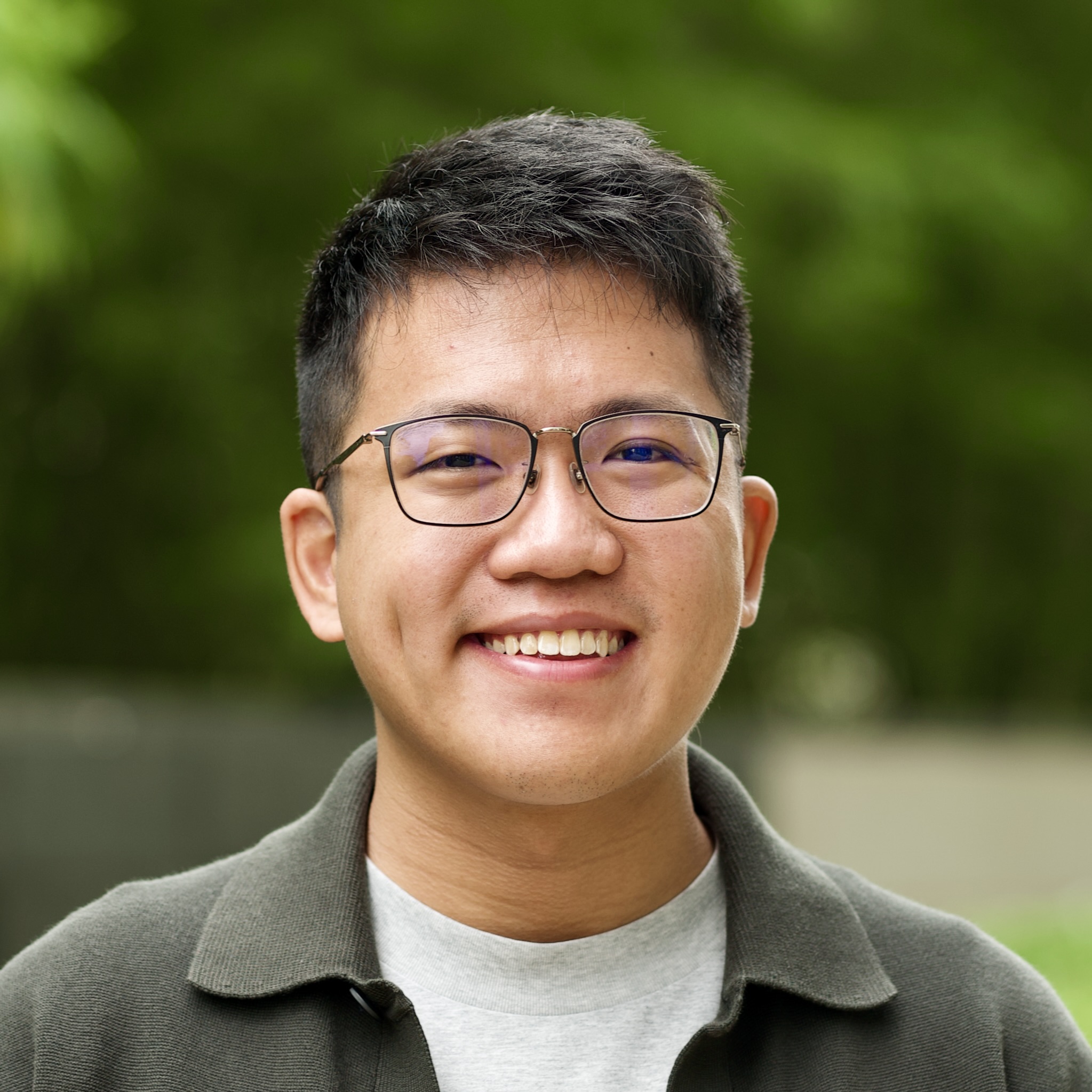
Links
Website GitHub LinkedIn
 X · gabrielchua
Developer Experience Engineer, APAC · OpenAI
Contributions
Safety that reflects local language
Chua coauthored LionGuard 2, a multilingual moderation classifier designed for Singapore. It combines pretrained embeddings with a smaller classifier and supports English, Chinese, Malay and partial Tamil. The paper evaluates it against Singapore-specific and public English benchmarks, arguing that local training data can address safety gaps missed by broader moderation systems without fine-tuning a large language model.[2]
A PDF becomes a conversation
Chua’s Open NotebookLM adapts knowsuchagency’s pdf-to-podcast project into an application using open language and speech models. It reads a PDF, generates a conversational script and produces an MP3 through a Gradio interface. The repository identifies its upstream project, making this a concrete example of extending existing open-source work into an approachable AI application.[4]
Ideas
His off-topic guardrail paper with Shing Yee Chan and Shaun Khoo starts by defining what an application should and should not answer. A language model then generates a varied synthetic dataset for training and evaluation. The classifier judges a user request against the system’s intended scope. This gives teams a way to develop a guardrail before they have a large archive of real user queries.[3]
Tools, writing & talks
Tools
Start here
Open NotebookLMgithub.comConverts a PDF into conversational audio with open language and text-to-speech models.
Try the PDF-to-podcast example first to follow a complete input-to-audio workflow. Running it requires Python, the dependencies in the repository and the specified model-service credentials.
Adapter and repository maintainer; fork of knowsuchagency/pdf-to-podcast[4]
Writing, research & talks
OpenAI's Codex team demonstrates goals, subagents, hooks, remote threads, automations and plugins across builds like a live translation app and a Rust-backed Python package, emphasizing verifiable completion and supervision.
Catalog workOriginal source- LionGuard 2arxiv.org
A lightweight multilingual moderation system evaluated for Singapore’s language context.
Coauthor[2] Uses defined application scope and synthetic prompts to develop misuse detection before launch.
Coauthor[3]