Gauri Gupta is cofounder and CEO of NeoSigma, which builds infrastructure for agents to learn from production experience. Her work connects model research with the practical tasks of finding failures, turning them into evaluations and checking whether a proposed change preserves earlier fixes.[1][2]
Start with Self-Improving Agentic Systems →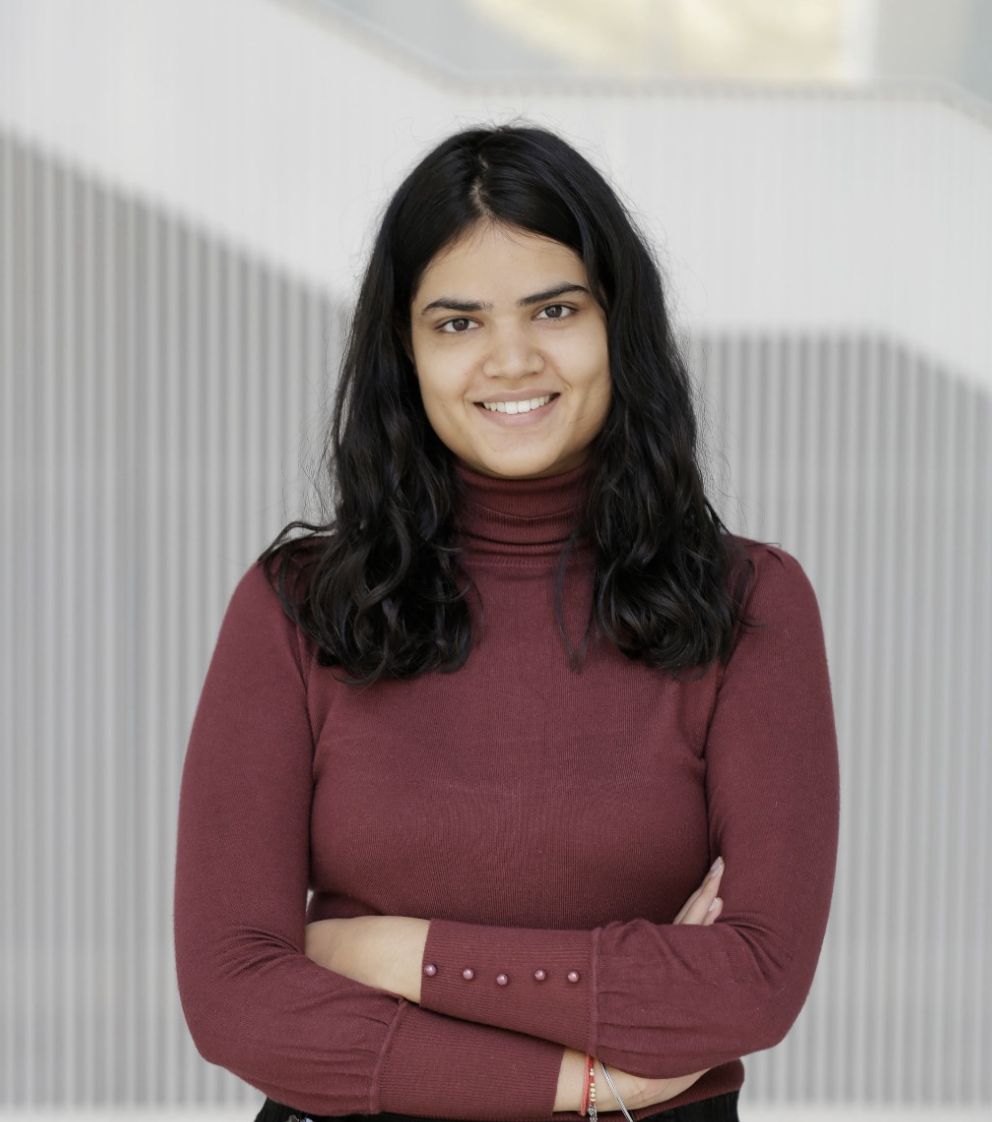


 X
Career
Gupta completed a bachelor’s in mathematics and computer science at IIT Delhi, then pursued doctoral research at MIT Media Lab with Ramesh Raskar before leaving the program. She interned at Apple’s machine-learning research group and joined Parallel’s early team, working on deep-research agents and evaluations. At NeoSigma, she continues that interest in how agent behavior is measured and improved.[1][6]
Contributions
Turn recurring failures into a regression suite
With Ritvik Kapila and Kartik Gupta, Gupta coauthored NeoSigma’s account of self-improving agentic systems. Their loop groups failures, proposes evaluations and tests changes to the harness around the model. Cases from resolved failures become continuing checks. The intended benefit is that a new improvement must survive tests of problems the system already learned to handle, rather than repeatedly rediscovering the same defect.[3]
Publish a bounded environment for trying the loop
NeoSigma’s auto-harness repository supplies benchmark adapters, an editable agent file, experiment records and a persistent learning log. Its current gate checks the evaluation suite, a full validation score and suite promotion before accepting a change. The released implementation is a simplified version of the company’s setup. Running it requires benchmark-specific environments and model credentials, and consumes evaluation resources.[4]
Share knowledge between different model architectures
Gupta and Abhishek Singh are equal contributors to CoDream, with Ritvik Kapila and other collaborators. The paper studies federated learning when participants use different model architectures. Clients jointly optimize synthetic data that conveys knowledge, then use that shared data to train locally, instead of averaging incompatible parameter sets. The experiments evaluate that approach on standard federated-learning tasks.[5]
Tools, writing & talks
Writing, research & talks
Start here
Self-Improving Agentic Systemsneosigma.aiNeoSigma’s explanation of failure mining, evolving evaluations and gated harness changes.
Begin with the failure-to-evaluation loop and the regression gate. The article explains the method before the repository setup; reproducing experiments requires a benchmark environment, model access and a budget for repeated evaluations.
Coauthor with Ritvik Kapila and Kartik Gupta[3]A comprehensive guide and methodology for building AI agents that automatically improve themselves by mining failures, creating evaluations, and fixing issues autonomously. Includes open-source auto-harness library implementation.
Catalog workOriginal source- CoDream: Exchanging dreams instead of models for federated aggregation with heterogeneous modelsarxiv.org
Federated knowledge aggregation through collaboratively optimized synthetic data.
Equal contributor with Abhishek Singh[5]
Tools
- auto-harness
 github.com
A simplified benchmark-driven loop for improving an agent and preserving regression tests.