Guillaume Lample is the co-founder and Chief Science Officer of Mistral AI. His research includes translation without paired examples, neural approaches to symbolic mathematics, and the original LLaMA models at Meta.[1][3][4][5][6]
Start with Unsupervised Machine Translation Using Monolingual Corpora Only →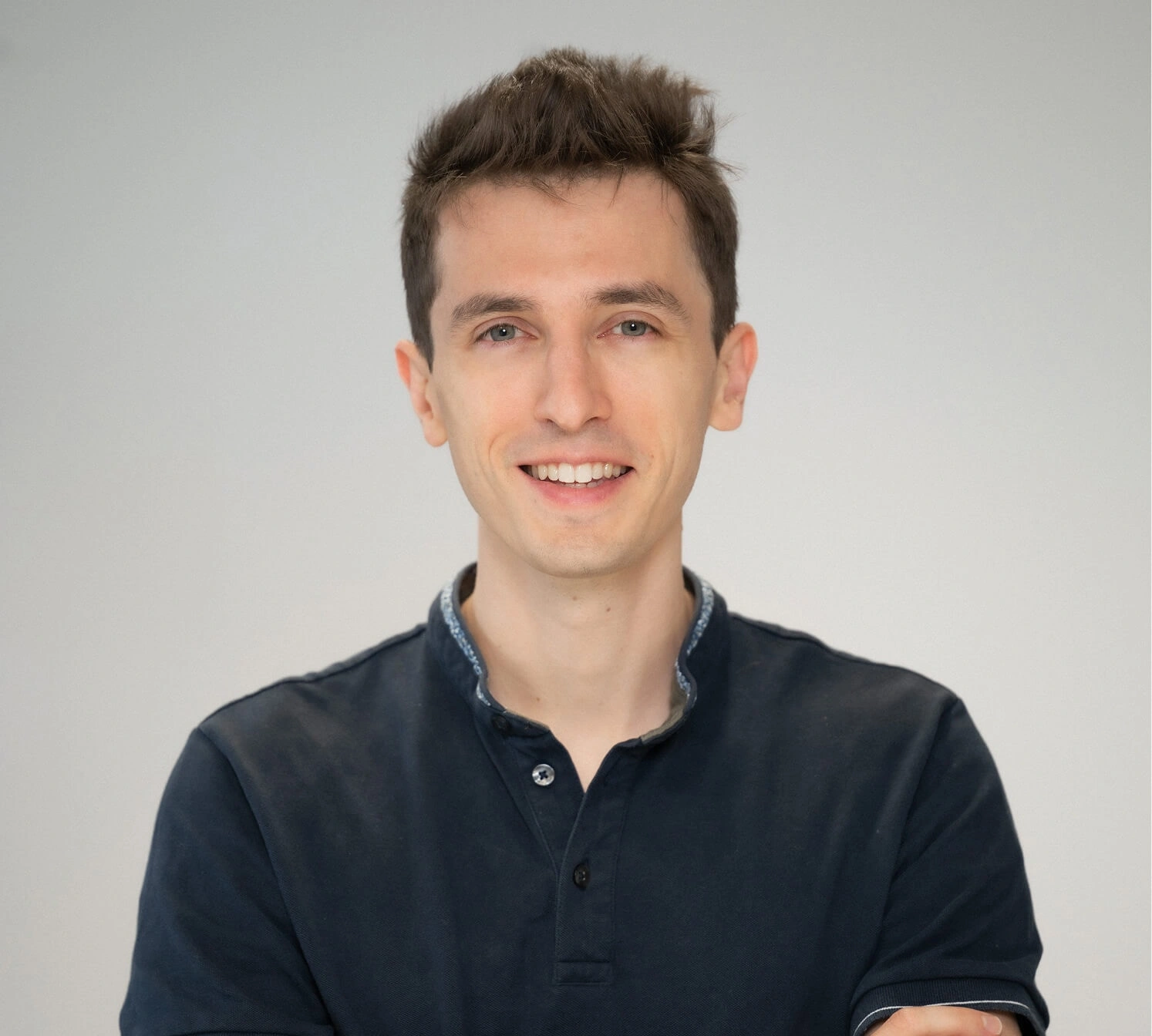
Education
Links
 GitHub
 X Hugging Face Employer biography Carnegie Mellon alumni record
Co-founder and Chief Science Officer · Mistral AI
Background
Career
Before Mistral, Lample was a researcher at Meta’s Facebook AI Research. He co-authored the original LLaMA report, submitted in February 2023. Mistral now identifies him as Chief Science Officer and says he leads its science teams. His GitHub biography still describes a Facebook research role, so that older self-description should not be read as current employment.[1][3][6][9]
Contributions
Translation without translated sentence pairs
Lample and his co-authors investigated whether a translation system could learn from separate collections of text in each language, without matching every training sentence to a human translation. Their 2017 paper maps sentences from both languages into a shared internal representation and trains the system to reconstruct language from that representation. The reported results cover specified language pairs and datasets. The contribution is a way to reduce dependence on parallel training material, not evidence that translation works equally well for any language or subject.[4]
Treating mathematics as a sequence problem
With François Charton, Lample explored whether neural networks could perform symbolic integration and solve differential equations. Their paper defines a representation for mathematical expressions and generates large training datasets for models that turn an input sequence into an output sequence. The authors report stronger results than named computer-algebra systems on their tests. This is a specific experimental result about generated mathematical tasks, rather than proof that a neural model replaces a general mathematics system. A reader should begin with the examples before tackling the data-generation procedure.[5]
Language models for broader use
The original LLaMA report demonstrated the team’s approach to training models on publicly available datasets and releasing them to researchers. Lample later co-authored Mistral 7B, which used an Apache 2.0 release. These publications connect his earlier language research to the model-building work at Mistral. They establish participation in the named projects without assigning sole ownership of their code or training decisions.[6][7]
Tools, writing & talks
Writing, research & talks
Start here
A study of learning translation from separate text collections rather than paired translations.
Begin with the translation problem and abstract. The full method benefits from basic neural-network knowledge.
Co-author[4]A concrete application of sequence models to integration and differential equations.
Co-author[5]The original 2023 paper on Meta’s research language models.
Co-author[6]- Mistral 7Barxiv.org
Research report for Mistral’s compact Apache-licensed language model.
Co-author[7]