Ilya Sutskever is the co-founder and CEO of Safe Superintelligence, following his work as OpenAI’s co-founder and chief scientist. His research includes AlexNet and sequence-to-sequence learning, two early demonstrations of what large neural networks could accomplish in vision and language.[3][4][7][8]
Start with We’re moving from the age of scaling to the age of research →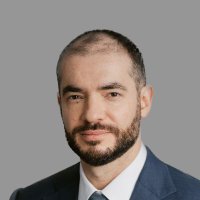
 X
Background
Sutskever earned a mathematics bachelor’s degree at the University of Toronto in 2005, then a master’s degree and PhD in computer science. His doctoral work with Geoffrey Hinton examined how to train recurrent neural networks, which use information from earlier inputs when processing sequences. The 2013 thesis addressed the difficulty of learning relationships across long sequences and explored applications to text. His subsequent career included a Stanford postdoctoral position with Andrew Ng, the startup DNNresearch, and research at Google Brain.[4][6][5]
Career
Sutskever co-founded OpenAI in 2015 and served as research director and later chief scientist. He left in 2024 and co-founded Safe Superintelligence, or SSI. The company frames safety and capability as technical problems to develop together. In a July 2025 update, Sutskever announced that he was formally CEO and that the technical team continued to report to him. A July 2026 joint announcement with NVIDIA confirms that role and describes a compute partnership to expand SSI’s research capacity. That agreement supports a scaling plan, not a claim that safe superintelligence has been achieved.[4][1][2][3]
Contributions
Sutskever co-authored the 2012 AlexNet paper with Alex Krizhevsky and Geoffrey Hinton. Their neural network learned to classify images and substantially improved on earlier ImageNet results, using graphics processors to make training practical. In 2014, he co-authored Sequence to Sequence Learning with Oriol Vinyals and Quoc Le. One recurrent network converted an input sentence into a numerical representation; another generated the translated sentence. The result showed that a broadly trained neural system could perform translation without building every stage around hand-designed language rules.[7][8]
Ideas
In his 2025 conversation with Dwarkesh Patel, Sutskever asks why models can excel on demanding evaluations yet make repeated mistakes in ordinary work. He distinguishes training intensively for a narrow task from learning principles that transfer to unfamiliar situations. He suggests that a model’s training environments and weak generalization may help explain the gap. These are his research judgments, rather than a published measurement of SSI’s systems. The discussion is useful because it puts a concrete question behind the broad ambition of more capable AI: what must a model learn to become reliably useful outside its training tasks?[9]
Tools, writing & talks
Writing, research & talks
Start here
A long interview about generalization, research strategy, and alignment. The opening discussion of models fixing one bug while reintroducing another is an approachable entry into his concerns about reliable intelligence.
Begins with recognizable failures in coding assistants before discussing generalization and SSI’s research direction; no equations required.
Interview guest[9]Sutskever argues GPU neoclouds have weak security relative to frontier labs, which makes them the obvious place a rogue self-replicating agent would go for compute. His ask: companies with strong cyber models should help neoclouds harden their infrastructure.
Catalog workOriginal sourceSutskever pushes back on how his podcast was summarized: continued scaling of current methods keeps yielding improvements and will not stall, even though he still holds that a key ingredient is absent. A narrow but load-bearing correction to a widely repeated claim.
Catalog workOriginal source- ImageNet Classification with Deep Convolutional Neural Networksproceedings.neurips.cc
The AlexNet paper explains how a deep image classifier combined a large training set with efficient GPU computation. A useful first technical work for readers who know basic neural-network training and want to see the result behind the historical reputation.
Co-author with Alex Krizhevsky and Geoffrey Hinton[7] A foundational translation paper that turns an input sequence into a representation and then decodes an output sequence. Read its diagrams and translation setup first; familiarity with recurrent networks helps with the implementation details.
Co-author with Oriol Vinyals and Quoc Le[8]- Training Recurrent Neural Networkscs.utoronto.ca
His doctoral thesis presents methods for training sequence models and applies them to difficult learning tasks. It provides more mathematical depth than the interview and is best approached with some machine-learning background.
Author; doctoral dissertation[6]