Jan Leike researches how to train AI systems to follow human intent. He is working on a new project at Anthropic, after leading its Alignment team until early 2026 and previously co-leading OpenAI’s Superalignment team.[1]
Start with What is the alignment problem? →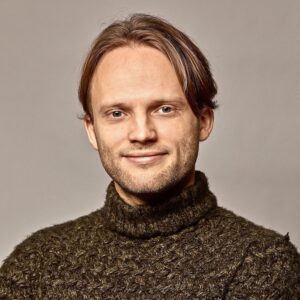
Education

- Current work
- Research on a new project at Anthropic[1]
- Research question
- How to supervise systems on tasks humans cannot easily evaluate[3]
Links
Personal site Publications Musings on the Alignment Problem X Google Scholar
Research on a new project · Anthropic
Background
Leike’s earlier work spans software verification and theoretical reinforcement learning. During his master’s study at the University of Freiburg, he developed Ultimate LassoRanker with Matthias Heizmann, a tool for proving whether certain programs terminate. He later earned a Ph.D. at the Australian National University; his publication list dates his thesis, Nonparametric General Reinforcement Learning, to 2016. The topics share an interest in understanding what a system can be expected to do, though proving properties of programs and aligning learned models are distinct research problems.[1][2]
Career
Leike worked on alignment at DeepMind before moving to OpenAI. An interview introduction dates his leadership of OpenAI’s alignment work to 2021; the company announced the Superalignment team, co-led with Ilya Sutskever, in July 2023. He later led Anthropic’s Alignment team, working on oversight, character training and classifiers. His current website explicitly says that leadership role ended at the beginning of 2026 and that he now works on a new Anthropic project.[1][8][9]
Contributions
Teaching with comparisons
Leike co-authored early work on reinforcement learning from human preferences. Instead of requiring a person to write a complete numerical reward rule, the experiment asks people which of two short behavior clips they prefer. A model learns to predict those preferences and supplies a reward signal for the learning agent. This can make a human’s goal easier to communicate than a hand-written reward function. The DeepMind account also notes the remaining cost of reviewing hundreds or thousands of comparisons, a cost that limits how far the approach scales.[4]
From instruction following to difficult oversight
Leike co-authored the InstructGPT paper. Human demonstrations and rankings help train a model toward answers people prefer. His later weak-to-strong work studies a harder problem: what happens when the supervisor is less capable than the system being trained? The experiments use smaller models to supervise larger models and test whether the larger models can recover more of their own capabilities. This is an experimentally accessible analogy for future oversight, with acknowledged limitations, rather than a demonstration of control over superhuman AI.[5][6]
Ideas
Leike’s introductory essay distinguishes inability from misalignment: an answer can fail because a system cannot do the task, or because its behavior does not match the intended goal. The distinction becomes harder to assess when people cannot check the work directly. In the 2026 study Teaching Claude Why, which he co-authored, researchers compare training interventions against held-out alignment evaluations. The paper reports benefits from teaching principles and richer descriptions of desired behavior, while stressing that measured improvements do not rule out harmful behavior in untested situations.[3][7]
Tools, writing & talks
Writing, research & talks
Start here
What is the alignment problem?aligned.substack.comA concise introduction to the difference between capability and alignment, followed by the problem of supervising tasks people cannot directly evaluate. It requires no technical background and gives context for the research papers.
A short, nontechnical explanation of the problem that motivates Leike’s technical work, including why checking an advanced system is difficult.
Author[3]- Learning through human feedbackdeepmind.google
A DeepMind explanation of learning a reward signal from human comparisons of behavior clips. It introduces the mechanism and the human-evaluation burden without requiring the paper’s mathematics.
Co-author of article and underlying research[4] The InstructGPT paper describes demonstrations, ranked answers and reinforcement learning, and reports both improvements and remaining failures.
Co-author[5]- Weak-to-strong generalizationopenai.com
Tests whether a stronger model can learn usefully from a weaker supervisor. The setup offers a research analogy for difficult oversight, with explicit gaps between the experiments and future superhuman systems.
- Teaching Claude Whyalignment.anthropic.com
Studies whether different forms of alignment training improve behavior on held-out evaluations, and explains why performance on a finite test suite cannot establish general safety.
Co-author[7]