Jared Kaplan is Anthropic’s co-founder and chief science officer. A theoretical physicist, he co-authored research on language-model scaling laws, GPT-3 and Constitutional AI, studying how larger models learn and how training can shape their behavior.[1][4][5][6]
Start with Scaling Laws for Neural Language Models →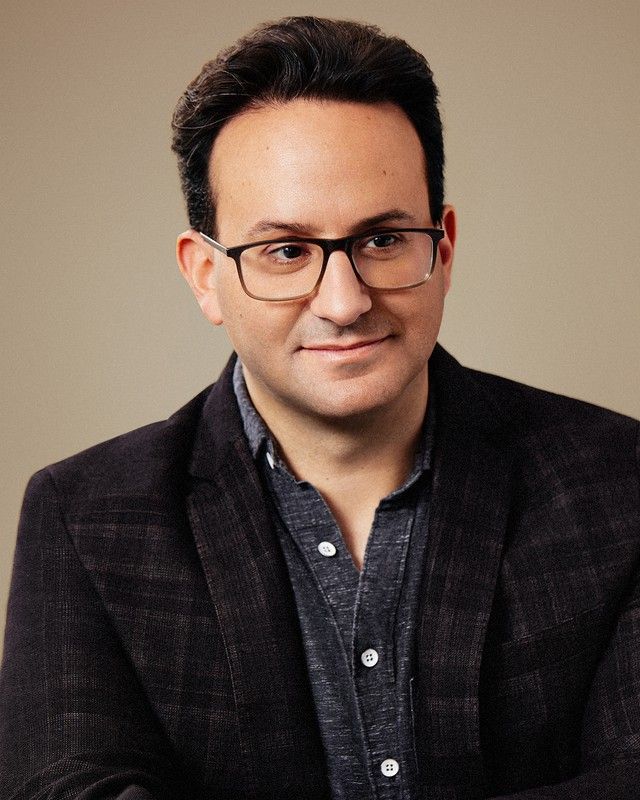
Education


- Research background
- Theoretical physics and machine learning[2]
- Current role
- Co-founder and Chief Science Officer, Anthropic[1]
Links
Anthropic leadership Johns Hopkins profile Academic CVAssociate Professor, Physics and Astronomy · Johns Hopkins University
Co-founder and Chief Science Officer · Anthropic
Background
Kaplan studied physics and mathematics at Stanford before earning a physics Ph.D. at Harvard under Nima Arkani-Hamed. His academic work examines quantum gravity and conformal field theory, mathematical approaches to questions about space, particles and black holes. He later collaborated with physicists and computer scientists on machine-learning research, including language-model scaling laws and GPT-3.[2][3]
Career
Kaplan is Anthropic’s chief science officer, responsible for its technical research efforts. Johns Hopkins also lists him as an associate professor. His CV records an assistant professorship from 2012 to 2018 and promotion to associate professor in 2018, with earlier research appointments at SLAC (2009–2012) and Stanford (2012–2013). The Hertz Foundation describes his earlier work on GPT-3 and Codex at OpenAI.[1][2][3][8]
Contributions
Measuring the returns to scale
The 2020 paper Scaling Laws for Neural Language Models asks how language-model prediction error changes as researchers increase model size, training data and computation. Kaplan and his co-authors found regular mathematical relationships across the configurations they measured. This gave researchers a way to estimate tradeoffs before paying for a larger training run. The paper’s recommendations concern allocation of a fixed computing budget in its experimental setting. They do not mean that every ability improves predictably, or that more computation by itself establishes a model’s reliability.[4]
Learning tasks from examples in a prompt
Kaplan is a co-author of the GPT-3 paper, Language Models are Few-Shot Learners. It examines whether a large language model can perform a task after seeing instructions and a few demonstrations in its input, without updating the model’s weights for that task. That distinction matters: prompt examples guide the already-trained model, while fine-tuning changes it through further training. The work helped establish a practical route to using one model across many language tasks, while documenting uneven performance and limitations. It was a large collaborative project.[5]
Training with written principles
Constitutional AI studies a training process in which written principles guide a model’s critiques and revisions of its own answers, followed by reinforcement learning from AI-generated preferences. Kaplan is one of the paper’s co-authors. His contribution to Claude’s later constitution is more specifically documented: Anthropic credits him with helping Amanda Askell establish the Claude Character project in 2023, setting direction for the constitution and considering how training would make it effective.[6][7]
Tools, writing & talks
Writing, research & talks
Start here
Start with the abstract and plots to see how prediction error changes with model size, data and computation. The practical question is how to spend a training budget; familiarity with logarithmic plots helps.
The abstract and plots explain the measurable training tradeoffs behind Kaplan’s work; logarithmic plots are the main prerequisite.
Co-author[4]The GPT-3 paper tests tasks specified through prompt examples rather than task-specific weight updates. Read it for the distinction between learning during training and using examples at inference time.
Co-author[5]Describes a supervised and reinforcement-learning procedure that uses written principles and AI feedback to train an assistant toward less harmful behavior.
Co-author[6]- Claude’s Constitutionanthropic.com
Anthropic’s published account of the behavior it wants Claude to learn. Its acknowledgements identify Kaplan’s role in the Character project and the constitution’s direction; Amanda Askell is the primary author.
Contributor to direction and development[7]