Jeff Dean is a computer scientist and co-founder of Discovery Loop, which aims to automate research experiments. During his Google career, he co-authored the papers behind MapReduce, Bigtable and TensorFlow. He became Google’s chief scientist in 2023 and left in 2026 to start the new company.[1][2][3][7][8][9]
Start with Jeff Dean & Noam Shazeer — 25 years at Google: from PageRank to AGI →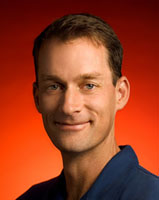

 X
Background
Dean earned his bachelor’s degree in computer science and economics at the University of Minnesota in 1990 and his computer science PhD at the University of Washington in 1996. Minnesota’s account of his 2025 visit notes that his undergraduate thesis already investigated parallel neural-network training. Before Google, he worked at Digital Equipment Corporation’s Western Research Laboratory. The chronology connects his later AI work with a long-standing interest in making computations run efficiently across available hardware.[4][5][6]
Career
Dean joined Google in 1999. His work spanned search and advertising infrastructure, distributed data systems, machine-learning software and hardware, and Gemini. Google named him chief scientist in April 2023, serving both Google Research and Google DeepMind. In August 2026, the company announced his departure to launch an independent public benefit corporation with Sanjay Ghemawat. Discovery Loop’s own site identifies Dean, Ghemawat, Quoc Le and Oriol Vinyals as its founding team.[6][3][2][1][5]
Contributions
Making large computations manageable
MapReduce let programmers express a data-processing job as two operations: transform individual records, then combine records sharing a key. The system handled distributing work across machines and recovering from failures. Dean and Ghemawat wrote the 2004 paper. Bigtable addressed the complementary storage problem, organizing structured data across many servers while allowing applications to control its layout. Dean is one of its co-authors. These systems made large-scale data work accessible without requiring every application team to rebuild the underlying distributed machinery.[7][8]
The systems underneath machine learning
Dean also co-authored the TensorFlow systems paper. TensorFlow represents a computation as a graph and assigns its operations to different devices or machines, allowing developers to express training and inference workloads while the system manages execution. The paper describes support for CPUs, GPUs and Tensor Processing Units. This contribution is infrastructure: it gives researchers a way to build and run models. It should not be confused with personal authorship of every model trained with that software.[9]
Ideas
Discovery Loop describes a cycle of proposing an experiment, running it, inspecting the result and choosing the next experiment. Its plan is to automate that cycle with frontier models and computing infrastructure, starting with machine-learning research and using its own systems as the first customer. The website presents the intended approach, not published evidence of success across all scientific fields. For the clearest earlier account of Dean’s thinking, his 2025 conversation with Noam Shazeer explains the relationship between hardware, algorithms and the practical constraints of large AI systems.[1][10]
Tools, writing & talks
Writing, research & talks
Start here
A long conversation covering Google infrastructure, AI hardware and model design. Begin with the early-career and hardware chapters, then use the transcript to explore technical topics.
An accessible interview connecting the early systems work to modern AI; use its chapter markers before reading the original papers.
Interview participant[10]Original source- Jeff Dean: The 1% Rule for Building in AIyoutube.com
Google's Jeff Dean revisits his 2025 prediction that AI would reach junior-engineer level, says agent-based long-running coding progressed faster than expected, and offers predictions for where agents go next.
Catalog workOriginal source Jeff Dean discusses owning the capability-efficiency Pareto frontier, distilling Gemini 3 Deep Think into Flash, and how hardware, software and model work combine across Google's stack.
Catalog workOriginal source- MapReduce: Simplified Data Processing on Large Clustersresearch.google
The 2004 paper explains a programming model for processing large datasets across clusters. Its key contribution is the division between simple user-defined operations and a runtime that handles distribution and failures.
Co-author with Sanjay Ghemawat[7] - Bigtable: A Distributed Storage System for Structured Dataresearch.google
A paper about storing and serving very large structured datasets. It complements MapReduce by explaining the storage layer and how different applications control data layout without implementing their own distributed database.
Co-author[8] The systems paper explains how computation graphs run across different kinds of hardware. It suits readers who want to understand the infrastructure beneath model training rather than start with a particular neural-network architecture.
Co-author[9]