Jensen Huang co-founded NVIDIA and has led it since 1993. His influence in AI comes from the computing platform behind model training and deployment: GPUs, CUDA software and the systems built around them. His public talks and essays explain the company’s strategy and its view of where AI infrastructure is heading.[1][7][3]
Start with AI Is a 5-Layer Cake →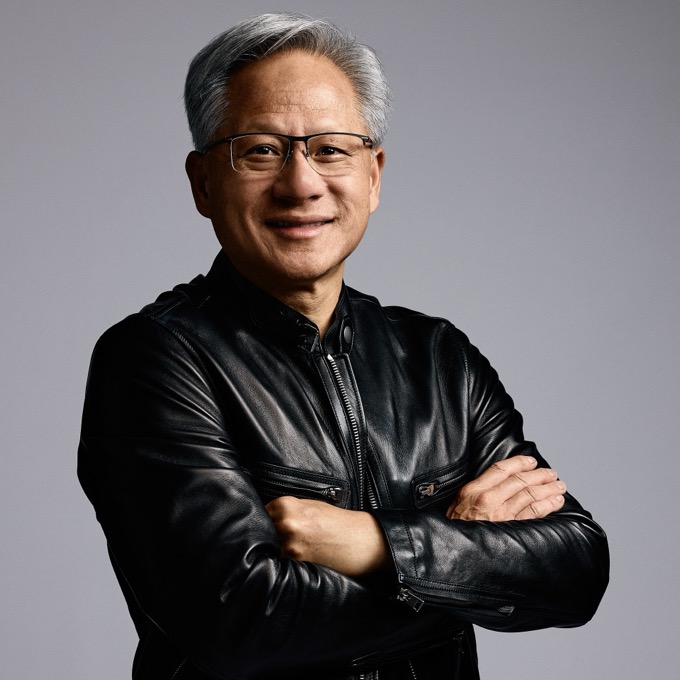

Background
Huang earned his bachelor’s degree in electrical engineering at Oregon State University in 1984. He later completed a master’s in the same field at Stanford in 1992 while working full time. His early semiconductor jobs included microprocessor design at AMD and directing Coreware at LSI Logic, before he started NVIDIA.[6][2]
Career
Huang founded NVIDIA with Chris Malachowsky and Curtis Priem in 1993, initially pursuing 3D graphics for gaming and multimedia. He has served as president and CEO since the company’s founding. Over that tenure, NVIDIA expanded from graphics chips into a platform for scientific computing, machine learning and AI infrastructure. His role is company leadership and platform strategy; the engineering and research contributions belong to teams across NVIDIA and its wider ecosystem.[1][7]
Contributions
CUDA is central to NVIDIA’s reach beyond graphics. Introduced in 2006, it lets programmers use the GPU’s parallel processing for general computational workloads rather than expressing every task through a graphics API. For AI engineers, that software platform connects model code to accelerated hardware. NVIDIA’s timeline lists the 2012 AlexNet breakthrough among its milestones in deep learning. This is why understanding Huang’s company means looking at software and developer adoption alongside chip performance.[8][7]
Ideas
In his 2026 essay, Huang describes AI as a stack connecting energy, chips, infrastructure, models and applications. His argument is that a useful application depends on physical capacity beneath it, including power and computing equipment. This is a useful starting framework for understanding why an AI service has constraints that cannot be resolved by improving its model alone. His claims about future investment and employment are an executive’s forecast, rather than measured outcomes.[3]
Tools, writing & talks
Writing, research & talks
Start here
AI Is a 5-Layer Cakeblogs.nvidia.comAn essay connecting AI applications to the layers of models, computing infrastructure, chips and energy beneath them.
Start with this short essay for Huang’s view of how AI applications depend on models, computing infrastructure and energy. It requires no semiconductor background.
Author[3]- NVIDIA Live at CES with CEO Jensen Huangyoutube.com
A recorded CES presentation by Huang, offering a view of how he introduces NVIDIA’s work to a public audience.
Speaker[4] - The First Six Months of NVIDIAstvp.stanford.edu
Stanford’s archive lists this 2009 talk segment about NVIDIA’s early months. It offers a historical starting point alongside Huang’s current technology presentations.
Speaker[5]