Laurence Moroney leads AI work at Arm and is an AI Fund fellow, author and instructor. His teaching spans PyTorch, TensorFlow and machine learning on devices, translating model concepts into training and deployment exercises for developers.[1][4]
Start with PyTorch for Deep Learning →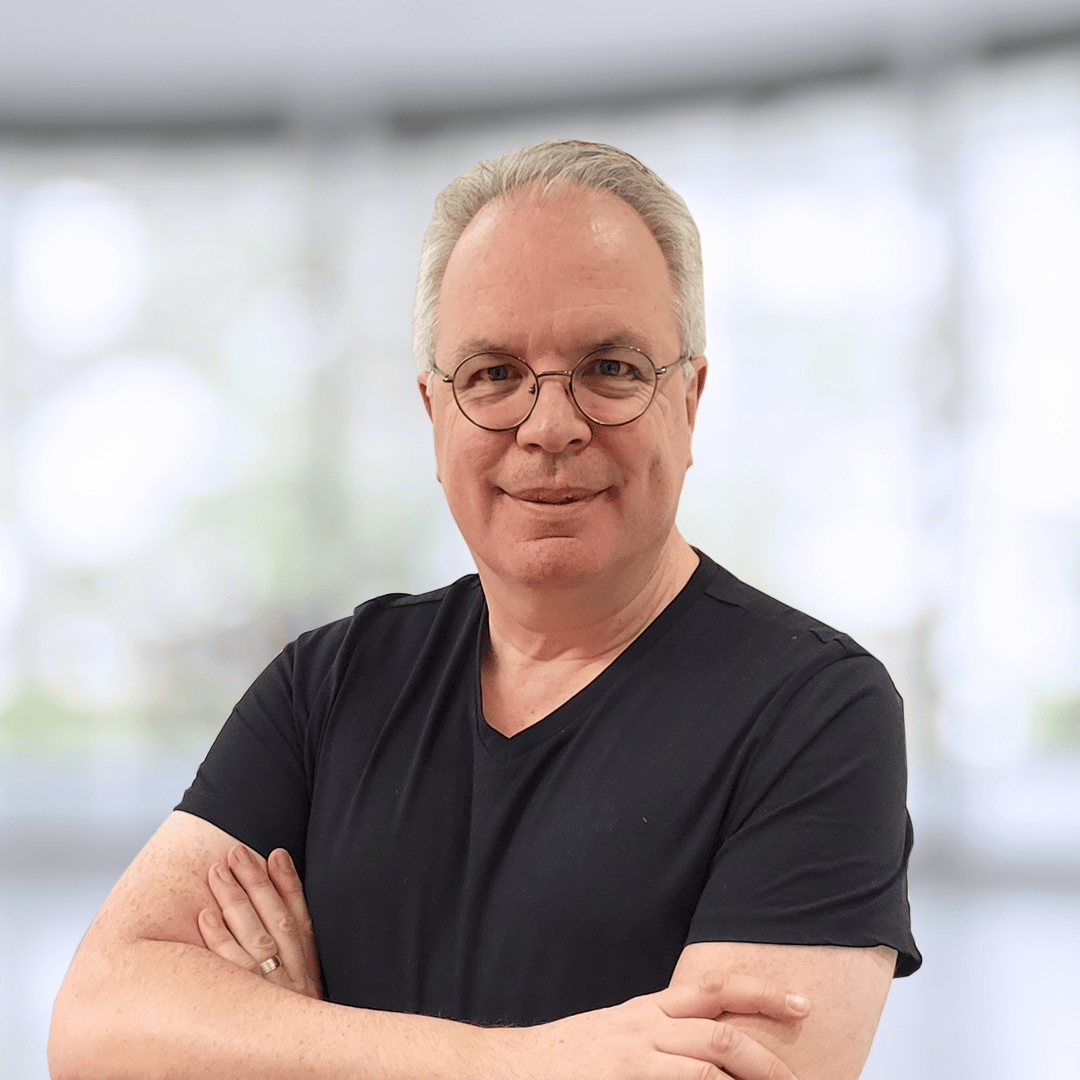

 GitHub
 X
Career
Moroney’s self-maintained ORCID record dates work at Vicon Industries, Reuters and Mainsoft before Microsoft developer advocacy in 2006–2013 and Google AI leadership in 2013–2024. It lists Arm from January 2025. AI Fund’s current biography confirms Arm and his earlier Google work; Arm’s October 2026 article describes his role as Director, Solutions Architect for AI. His public teaching combines code, explanatory videos and curricula aimed at widening access to practical machine learning.[5][1][6]
Contributions
Build a path from tensors to deployed models
His PyTorch certificate progresses through tensor operations, neural networks and training loops, then vision and language applications, advanced architectures and deployment. Exercises connect choosing and training a model with evaluating, optimizing and serving it. The three-course structure gives learners intermediate artifacts to inspect rather than treating a pretrained model call as the whole discipline.[7]
Carry machine learning onto constrained devices
Moroney’s teaching directory includes TinyML work with Harvard and courses on model customization, deployment and generative-AI-assisted development. The device-oriented material connects data collection and model training with optimization for limited hardware and TensorFlow Lite for Microcontrollers. This emphasizes the engineering between a useful model and an application that must run within memory and compute limits.[4]
Tools, writing & talks
Writing, research & talks
Start here
PyTorch for Deep Learningdeeplearning.aiA three-course path through fundamentals, ecosystem tools, advanced architectures and deployment.
Start with the fundamentals course and its training-loop exercises. The program expects Python and foundational deep-learning knowledge; check the provider’s current auditing and certificate-access options before enrolling.
Instructor[7]A three-course PyTorch certificate taught by Laurence Moroney: fundamentals of tensors, datasets and training loops; then profiling, learning-rate schedulers, overfitting and Optuna-based tuning across TorchVision and Hugging Face; then Siamese nets, ResNet, DenseNet, transformers and deployment.
Course taught by Laurence Moroney, announced by Andrew NgOriginal source- Laurence Moroney’s teaching directorylaurencemoroney.com
Original course descriptions and links covering TinyML, TensorFlow, PyTorch and developer workflows.
Instructor and curriculum contributor[4]