Li Juanzi, published as Juanzi Li, is a professor at Tsinghua and a cofounder of Z.AI. Her research connects knowledge graphs, language models and explainable question answering, including benchmarks that make reasoning steps and long-context understanding easier to examine.[1][3]
Start with KQA Pro: A Dataset with Explicit Compositional Programs for Complex Question Answering over Knowledge Base →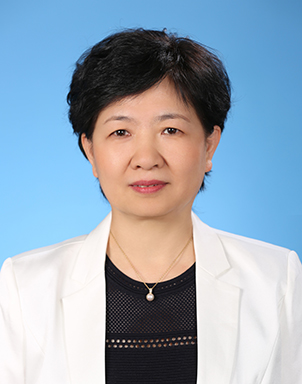
Education


Links
Faculty biography Academic websiteNon-executive Director · Z.ai
Tenured Professor · Tsinghua University
Cofounder · Z.ai
Career
Connect structured knowledge with language understanding
Li earned her bachelor’s and master’s degrees at Shanxi University and her doctorate at Tsinghua. After postdoctoral research, she remained at Tsinghua, where her work spans knowledge-graph construction, question answering and dialogue generation. She also directs the university’s Knowledge Intelligence Center. Her academic account describes team projects that connect structured facts with language and reasoning.[1][4]
Contribute research guidance to a model company
Z.AI’s annual report identifies Li as a cofounder and non-executive director, appointed to the board in June 2025. Her company responsibilities concern guidance on research, strategy and business development.[2]
Contributions
Pair an answer with the program that produces it
Li coauthored KQA Pro, a complex knowledge-base question-answering dataset. Each question includes a program in the interpretable KoPL language and a SPARQL query. Those representations expose operations such as following relations, comparing attributes and counting sets. They let researchers test the reasoning process as well as the final answer.[5]
Measure understanding across long inputs
Li is a corresponding author of LongBench with Yuxiao Dong. The bilingual benchmark covers question answering, summarization, few-shot learning, synthetic tasks and code completion. Standardized datasets and evaluation formats let researchers compare what models do with long material across tasks, rather than assuming that accepting more tokens establishes useful understanding.[6]
Train text representations and knowledge embeddings together
KEPLER, which Li coauthored, uses textual entity descriptions to connect a language model with facts in a knowledge graph. Training combines language modeling with a knowledge-embedding objective. This lets the textual representation carry relational information while the knowledge representation uses information in descriptions, including for entities not seen during training.[7]
Tools, writing & talks
Writing, research & talks
Start here
Complex questions paired with interpretable reasoning programs and graph queries.
Begin with the question and reasoning-program examples. They show why the answer alone can conceal a reasoning failure; the later dataset and model comparisons assume basic familiarity with knowledge graphs and question-answering evaluation.
Coauthor[5]A standardized Chinese-English evaluation of multiple long-context tasks.
Corresponding author with Yuxiao Dong[6]- KEPLER: A Unified Model for Knowledge Embedding and Pre-trained Language Representationaclanthology.org
Joint training of language representations and graph-based factual knowledge.
Coauthor[7]