Liang Wang is a senior researcher at Microsoft Research Asia working on retrieval, text matching and embeddings. He is first author of the E5 text-embedding paper and publishes models through the intfloat account.[1][2][3][4][5]
Start with Text Embeddings by Weakly-Supervised Contrastive Pre-training →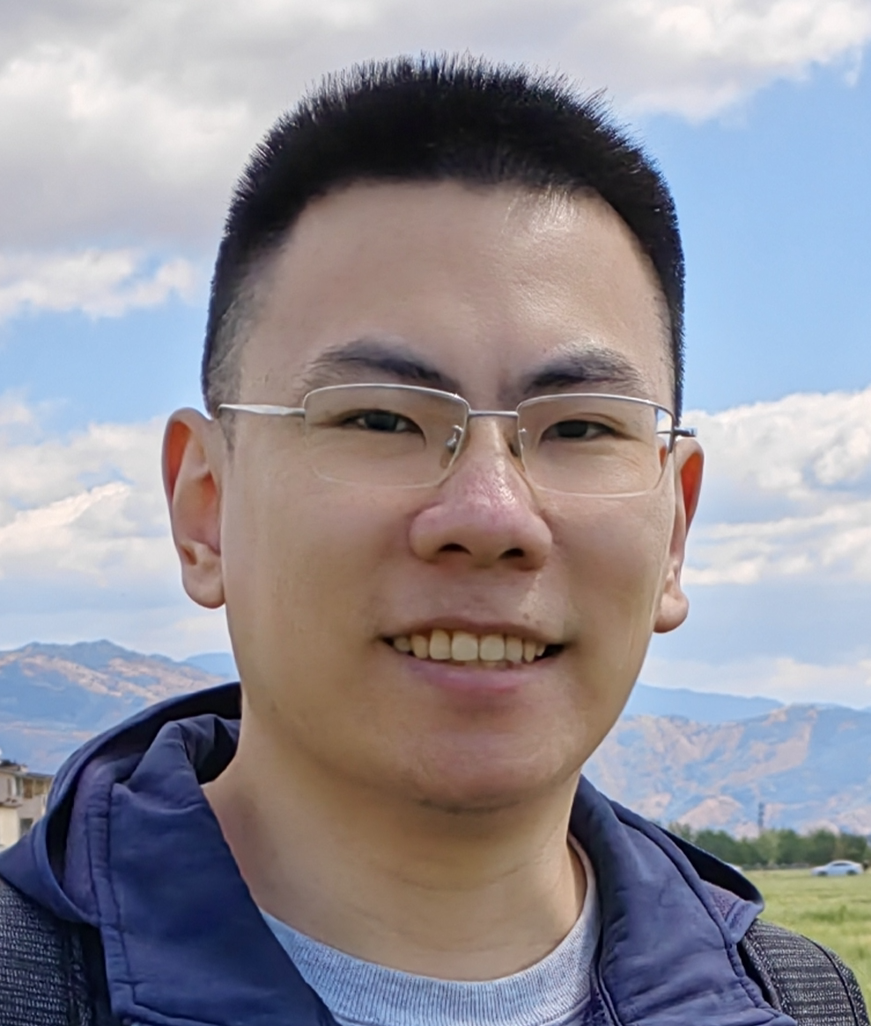

 GitHub
Career
Wang earned bachelor’s and master’s degrees at Peking University in 2014 and 2017. He worked as a researcher at Yuanfudao AI Lab from 2017 to 2021 before joining Microsoft in January 2022. His research asks how to represent queries and documents so a system can retrieve useful information, with related work on question answering and text generation.[1]
Contributions
Learn embeddings from large collections of pairs
The E5 paper uses weakly supervised text pairs for contrastive pretraining. The model learns to bring related texts together in its embedding space and distinguish them from alternatives. Subsequent supervised training adapts the representation to retrieval and other language tasks. Wang is first author of a team paper; the released models make the representation available for further evaluation and applications.[2]
The input convention is part of using the model
The E5-large-v2 card demonstrates encoding queries and passages with distinct prefixes, then pooling token representations and comparing the normalized vectors. That convention connects the released checkpoint with the way it was trained and evaluated. The intfloat portfolio includes several E5 sizes and multilingual variants, allowing developers to choose an appropriate model for their retrieval setup.[3][4]
Tools, writing & talks
Writing, research & talks
Start here
The E5 training approach for general-purpose text embeddings.
Start with the text-pair training objective, then the model-card encoding example. Basic knowledge of embeddings helps; running the example requires Python and the documented model libraries.
First author[2]
Tools
- E5-large-v2huggingface.co
A released embedding model with query/passage usage examples.