Mira Murati is co-founder and CEO of Thinking Machines Lab, which builds customizable AI models and tools for people to train and work with them. Previously OpenAI’s chief technology officer, she led research, product, and safety work across several of its major releases.[1][4]
Start with Dartmouth conversation on AI’s future (June 2024) →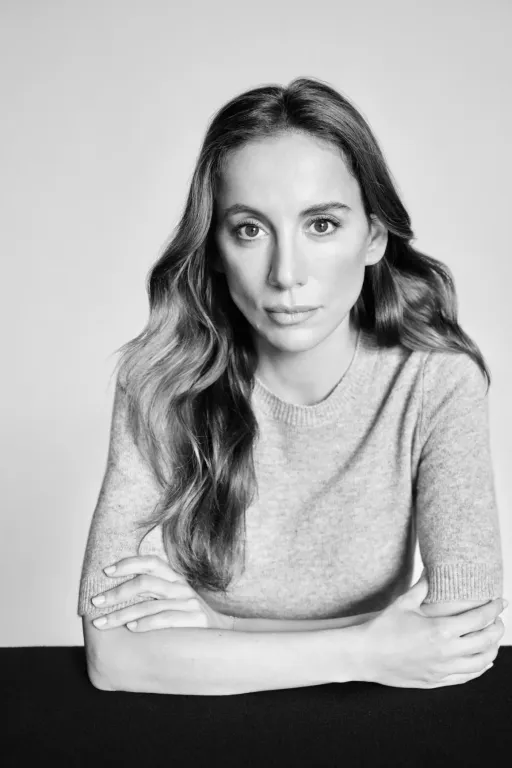
Education


- Company focus
- Customizable AI and collaboration between people and models.[5]
Links
Thinking Machines Lab Dartmouth biographyCo-founder and CEO · Thinking Machines
Background
Murati studied at Colby College and earned a Bachelor of Engineering at Dartmouth in 2012. Her work before OpenAI included Tesla’s Model X and early Autopilot systems, followed by leading product and engineering at Leap Motion, which developed interfaces for virtual and augmented reality. In a Dartmouth conversation, she said her experience with self-driving cars prompted her to learn more about AI. The recurring professional question is how a technical capability becomes something people can interact with and use.[1][2]
Career
OpenAI appointed Murati chief technology officer in May 2022 after she had led research, product, and partnership functions. Its announcement credited her with bringing those functions together for the DALL·E release. Dartmouth’s later biography describes her responsibility for research, product, and safety and her leadership in releases including ChatGPT, GPT-4, Codex, Sora, and reasoning models. She subsequently co-founded Thinking Machines Lab, whose 2026 NVIDIA announcement identifies her as CEO.[3][1][4]
Contributions
Thinking Machines gives model adaptation a central place in its product strategy. Tinker lets developers write their training process while the service handles the underlying computing infrastructure. The developer supplies examples or rewards, evaluates responses, and decides when to save or refresh the model. In July 2026 the company also released Inkling, a model with downloadable weights that handles text, images, and audio and can be adapted through Tinker.[6][7][4]
Ideas
The company’s July 2026 mission essay argues that useful knowledge remains distributed among people doing particular jobs, so AI should adapt to their goals and expertise. It connects that position to model customization and richer, live interaction. In her June 2024 Dartmouth discussion, while OpenAI CTO, she also argued that capability and safety can reinforce each other, while supporting regulation for systems with high potential for harm. Both positions focus attention on the conditions under which a more powerful tool actually helps its users.[5][2]
Tools, writing & talks
Writing, research & talks
Start here
Dartmouth conversation on AI’s future (June 2024)engineering.dartmouth.eduA June 10, 2024 university report on Murati’s discussion, while OpenAI CTO, of AI capability, safety, regulation, and learning. It introduces her reasoning without technical prerequisites and provides historical context for her later work.
This June 2024 conversation, while OpenAI CTO, introduces her thinking about safety, deployment, and the origins of her interest in AI.
Speaker in conversation with Jeffrey Blackburn[2]- Inkling: Our Open-Weights Modelthinkingmachines.ai
The lab’s July 2026 introduction to a customizable model with downloadable weights. The announcement explains its multimodal inputs and intended role as a foundation for further training, while explicitly acknowledging it is not the strongest overall model.
Tools
- Tinkerthinkingmachines.ai
A service for adapting models with your own training code and data while Thinking Machines manages the compute. Its examples make the lab’s customization strategy tangible; using the training API requires programming and machine-learning experience.