Mustafa Suleyman is executive vice president and CEO of Microsoft AI, focused on the company’s frontier-model and superintelligence efforts. He co-founded DeepMind and Inflection AI and wrote The Coming Wave with Michael Bhaskar.[1][3][4]
Start with What is an AI anyway? →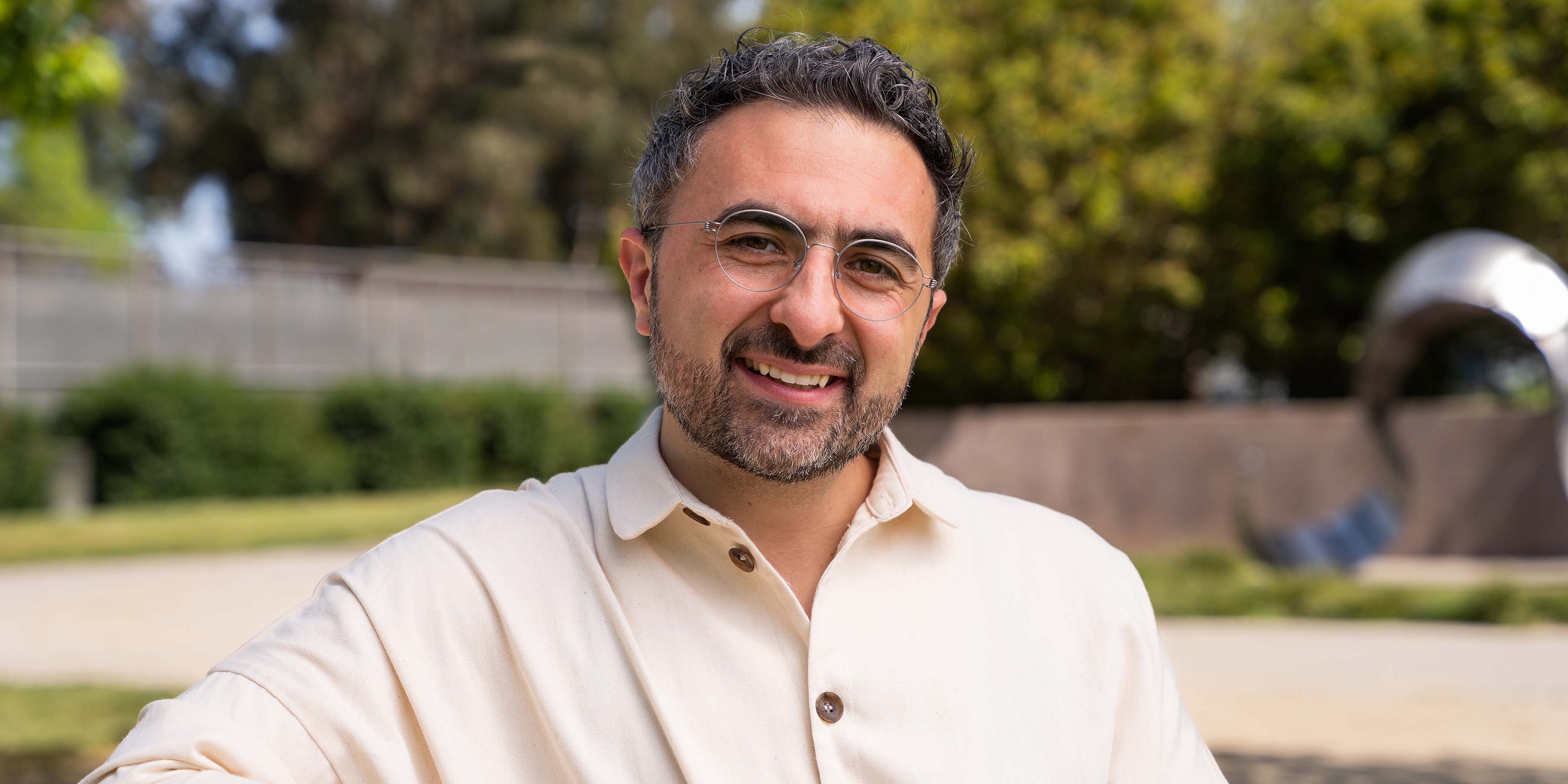
Links
Website X LinkedIn Bluesky Google Scholar
Executive Vice President and CEO, Microsoft AI · Microsoft
Career
From applied research to personal AI
Suleyman co-founded DeepMind and led its applied research and commercialization work. His biography describes activity across healthcare, ethics, policy and product development, and records Google’s acquisition of the company in 2014. He later co-founded and led Inflection AI. These are organizational leadership contributions, not individual model authorship credits.[1]
A revised Microsoft remit
Microsoft announced Suleyman’s appointment as executive vice president and CEO of Microsoft AI on March 19, 2024. That initial organization covered Copilot and other consumer AI products and research. The March 2026 reorganization changed the emphasis: Jacob Andreou took responsibility for the combined consumer and commercial Copilot experience, while Suleyman concentrated on frontier models and superintelligence. Suleyman remained involved in Microsoft AI operations and the Copilot leadership team. A June 2026 article under his byline introduced seven in-house MAI models across image, voice, transcription, coding and reasoning, providing a concrete account of the team’s output without assigning him individual model authorship.[2][3][7]
Ideas
The problem of containing powerful technology
The Coming Wave asks how societies can retain control over technologies that become more capable and more widely available. Written with Michael Bhaskar, the book treats containment as a central challenge: powerful systems can create useful capabilities while also making harmful uses easier to scale. Its argument extends beyond product design to political institutions and the distribution of power. It is a work of analysis and advocacy, so its warnings and forecasts should be read as the authors’ case about possible futures.[4]
Human control as a design objective
In Towards Humanist Superintelligence, Suleyman argues for advanced systems organized around concrete problems, bounded operation and continuing human control. He introduces the MAI Superintelligence Team and distinguishes its desired outcomes from open-ended autonomy. This is a stated research and product direction, not evidence that the control problem has been solved. His earlier TED talk, What is an AI anyway?, uses a digital-species analogy to ask what kind of systems people are creating and which limits society should impose. He explicitly presents that language as a metaphor. The talk is a useful introduction to his public argument, while the Microsoft essay shows how he translates it into a company agenda.[5][6]
Tools, writing & talks
Writing, research & talks
Start here
What is an AI anyway?ted.comA TED talk that uses an explicitly metaphorical digital-species frame to explain the stakes of increasingly capable AI. No technical prerequisites.
An accessible talk introduces his framing and concerns without requiring technical background.
Speaker[6]- The Coming Wavethe-coming-wave.com
A book about technological power, proliferation and containment, written with Michael Bhaskar.
Co-author with Michael Bhaskar[4] - Towards Humanist Superintelligencemicrosoft.ai
Suleyman sets out a research agenda for capable systems constrained by human needs and control. It describes goals rather than a demonstrated solution to safety.
Author[5] An account of Microsoft AI’s model releases and research direction across multiple media and reasoning tasks.
Author and organization leader[7]