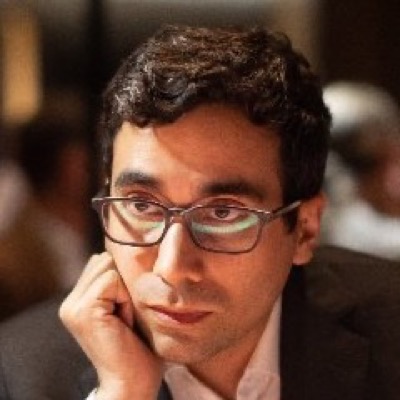
Noam Brown is an OpenAI research scientist working on reasoning, reinforcement learning, self-play and multi-agent AI. His research spans reasoning models and systems that play poker and negotiate in Diplomacy.[1]
Start with Learning to reason with LLMs →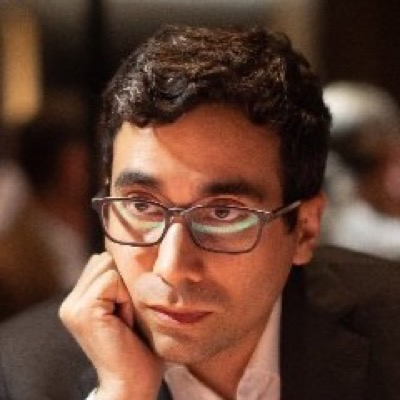
Education
Links
Personal site CV Google Scholar LinkedIn X · polynoamial
Member of Technical Staff · OpenAI
Background
Brown earned a BA in mathematics and computer science at Rutgers University in 2009, an MS in robotics at Carnegie Mellon in 2014 and a computer science PhD there in 2020, advised by Tuomas Sandholm. His earlier professional work included algorithmic trading and research at the Federal Reserve Board. He worked at Facebook AI Research from 2018 to 2023 before joining OpenAI in 2023.[2]
Contributions
Poker with hidden information
With Sandholm, Brown created Libratus and Pluribus, systems that defeated leading human poker players. Poker adds a challenge absent from games in which the whole board is visible: players must act without seeing opponents’ cards. Pluribus addressed multiplayer no-limit Texas hold’em, extending this line of work beyond a two-player setting.[1][5]
Negotiation in Diplomacy
Brown was part of the FAIR team behind CICERO. Diplomacy requires players to communicate and coordinate while pursuing their own strategic goals. CICERO combined a language model with planning and strategic reasoning, linking proposed actions to messages and likely behavior by other players. The study reported human-level performance in an online Diplomacy league. This work brought negotiation and language into a research program previously demonstrated through poker.[4]
Spending computation on an answer
At OpenAI, Brown describes himself as a foundational contributor to reasoning models including o1. OpenAI’s account of o1 explains how reinforcement learning trains a model to work through intermediate reasoning, correct mistakes and try different approaches before answering. Its evaluations found improvements from both additional training and more computation while answering. The distinction matters: capability can change through the process used to produce an answer, as well as through a model’s initial training.[1][3]
Tools, writing & talks
Writing, research & talks
Start here
Learning to reason with LLMsopenai.comOpenAI’s explanation of reinforcement learning and extra answer-time computation in o1.
Start with this explanation of reasoning models to see how his game-AI interests connect to language models. The examples are accessible without a background in game theory; the technical papers are the next step.
OpenAI released further detail on the Hugging Face incident, with Noam Brown highlighting that next-generation Astra-based models were not the driver: the models most responsible were comparable in scale to GPT-5.6 Sol, systems already in wide deployment.
Catalog workOriginal sourceCodex can be pushed to a 1M-token window on GPT-5.6 Sol, but OpenAI's Noam Brown argues against it: the shipped limit is tuned for performance and cost, and autocompaction is meant to carry long sessions instead.
Catalog workOriginal sourceCodex exposes an opt-in 1M-token context window for GPT-5.6 Sol, newly documented after repeated requests. OpenAI tuned the default lower on purpose and says autocompaction is near-seamless — its own researchers advise against raising the limit.
Catalog workOriginal source- Human-Level Play in the Game of Diplomacynoambrown.com
CICERO combines language with strategic planning to negotiate and play Diplomacy.
- Superhuman AI for Multiplayer Pokernoambrown.com
The Pluribus system addresses six-player no-limit Texas hold’em.