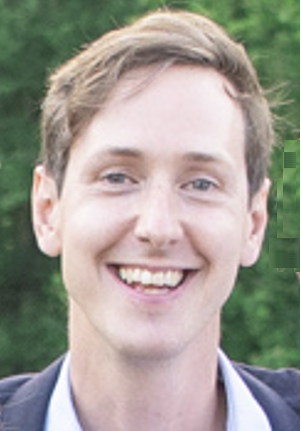
Sébastien Bubeck works on AI at OpenAI. A mathematician and machine-learning researcher, he studies optimization, online algorithms and how the components and training of large language models shape their capabilities.[1]
Start with AI and the Future of Mathematics →


Career
Bubeck earned mathematics degrees at ENS Cachan and a mathematics doctorate at the University of Lille 1 in 2010. He was an assistant professor at Princeton from 2011 to 2014 before joining Microsoft Research. He later served as Microsoft’s VP AI and distinguished scientist, and now works at OpenAI. His research began with the mathematical foundations of learning before shifting toward understanding large language models.[1][3]
Contributions
A guide to optimization algorithms
His monograph Convex Optimization: Algorithms and Complexity explains how algorithms find good solutions to convex problems and how their computational costs differ. It moves from black-box methods, which learn about a function through queries, to algorithms that exploit additional structure or noisy information. The book links proofs about convergence with practical families such as gradient descent, mirror descent and stochastic optimization. It is a technical introduction for readers with mathematical preparation.[4]
Examining GPT-4’s capabilities
Bubeck co-authored Sparks of Artificial General Intelligence, an investigation of an early GPT-4 model. The authors tested tasks across areas including mathematics, coding and language, then argued that the breadth of the results suggested an incomplete form of general intelligence. That interpretation is the authors’ claim, based on their experiments with a particular early model. The paper also examines limitations and research directions.[5]
Ideas
Bubeck describes his current approach as Physics of AGI: studying how parameters, neurons, layers and training curricula combine to produce model behavior. The goal is to use that understanding to improve capabilities. His OpenAI Forum discussion on mathematics considers what makes a mathematical result valuable, how AI can support learning and what it might contribute to research.[1][2]
Tools, writing & talks
Writing, research & talks
Start here
AI and the Future of Mathematicsforum.openai.comA discussion of mathematical discovery, education and the possible roles of AI.
Start with this panel for an accessible account of his interest in AI and mathematics. The optimization monograph is a more technical next step and assumes comfort with mathematical proofs.
Panel participant[2]A monograph connecting optimization algorithms to complexity and convergence results.
Author[4]An experimental analysis of an early GPT-4 model’s capabilities and limitations.
Co-author[5]