Shashi Jagtap is founder and CEO of Superagentic AI. His work connects mobile-development and testing experience with agent engineering: the tools, context, execution environments and evaluations around coding models.[1]
Start with RLM: Recursive Language Models for Large Codebases →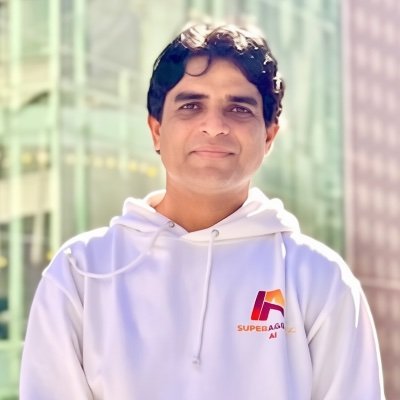
Links
Company team Technical blog GitHub
 X LinkedIn
Founder and CEO · Superagentic AI
Career
Jagtap’s company biography identifies earlier Apple work and founding XCTEQ in 2018. His owned technical blog publishes under Shashikant Jagtap and covers development tooling, code review and agent environments. Superagentic AI organizes his current work around building and evaluating coding-agent systems.[1][2]
Contributions
Treat a repository as a programmable environment
His Recursive Language Models talk applies an existing research pattern to large codebases. Instead of loading the whole repository into a prompt, an agent writes code in a REPL to inspect files and return bounded observations. Focused subquestions can invoke further model calls. A controlling loop combines those observations into an answer, with limits on depth and spending. The inspectable trajectory helps a developer examine how the conclusion was reached. Jagtap presents an implementation of the pattern, not authorship of the original RLM research.[4]
Keep an investigation replayable
RLM Code provides a research playground for recursive reasoning and coding-agent execution. Its recorded trajectories preserve generated code, delegated queries, usage and answers, while configurable sandbox and approval policies constrain execution. Those records make the sequence of actions reviewable beyond the final response.[5]
Tools, writing & talks
Writing, research & talks
Start here
A demonstration of repository investigation through a programmable environment and focused recursive queries.
Start with the repository-investigation demo and its recorded trajectory. Python and coding-agent familiarity help; inspect execution, recursion and spending limits before running the documented harness.
Speaker and implementation developer[4]Recursive Language Models applied to real repositories: rather than stuffing files and tool output into a growing context, the model gets a programmable REPL over the codebase and spawns focused sub-queries. Demoed end to end on local and cloud models with a fully inspectable trajectory.
Catalog workOriginal source