Shunyu Yao is Tencent’s chief scientist for AI. His research connects language-model reasoning with actions and external feedback. He is the first-listed author of ReAct and Tree of Thoughts and completed a computer-science PhD at Princeton.[2][4][6][7]
Start with ReAct: Synergizing Reasoning and Acting in Language Models →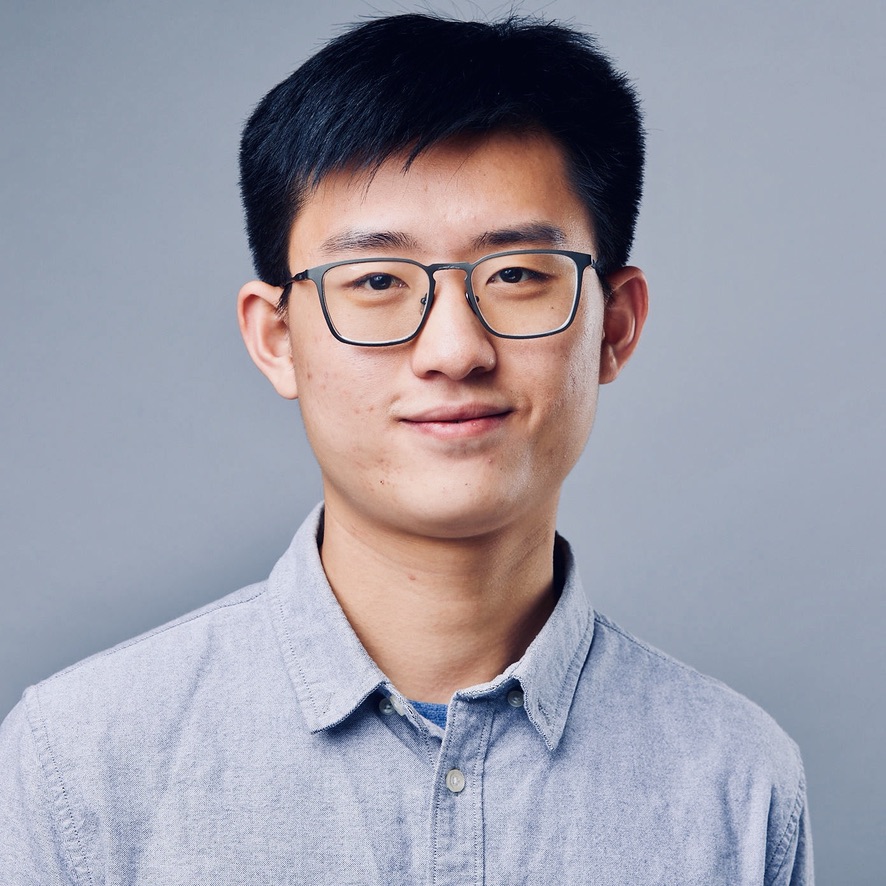
Education


- Research focus
- Language agents: systems that use language models to reason, choose actions and interact with computer environments.[5]
Links
Website GitHub
 X Google Scholar Princeton thesis talk X · shunyuyao12
Chief Scientist for AI · Tencent
Background
Tsinghua’s seminar biography identifies Yao as a graduate of its Yao Class. At Princeton he worked with Karthik Narasimhan, and the university’s alumni record lists a PhD awarded in 2024. His dissertation, “Language Agents: From Next-Token Prediction to Digital Automation,” organizes work on interactive tasks, reasoning methods and a conceptual framework for agents. It asks how models trained to produce text can instead make decisions and use feedback while working toward a goal.[3][4][5]
Career
Yao’s earlier OpenAI work includes Computer-Using Agent and deep research. Tencent identified him as its chief scientist for AI at its June 2026 industry conference. Those projects concern models that use tools, interact with computers and gather information across several steps. His research bibliography also includes SWE-bench and SWE-agent, which respectively study real software issues and the interface through which an agent works on them.[1][2]
Contributions
Reasoning that can act and observe
Yao is the first-listed author of ReAct, which interleaves language-model reasoning with actions. A model can plan a step, query an information source or interact with an environment, then use the result to decide what to do next. This matters because an answer produced from memory alone cannot obtain new evidence during the task. The paper evaluates the method on question answering, fact verification and interactive environments. Its results support the tested approach, not a guarantee that tool-using agents are always reliable.[6]
Searching across possible solutions
Tree of Thoughts, also with Yao as first-listed author, explores several intermediate reasoning paths rather than committing to one sequence of generated text. The model evaluates partial solutions, looks ahead and can backtrack. Experiments use tasks including Game of 24, creative writing and mini crosswords, making the value of search visible in tasks with several possible intermediate steps.[7]
Ideas
In “The Second Half,” Yao argues that defining useful problems and measuring progress deserve more attention as model-training methods become more capable. His focus shifts from finding methods toward identifying what those methods should accomplish. Read the essay after ReAct to see how a researcher of agent methods thinks about the tasks and evaluations they should serve.[8]
Tools, writing & talks
Writing, research & talks
Start here
The clearest starting point for his agent work. Read the examples of reasoning, actions and observations before the experiments; they show how a model incorporates external feedback.
The examples explain the reasoning/action/observation loop behind his agent research before requiring technical background.
First-listed co-author[6]- The Second Halfysymyth.github.io
An accessible essay arguing that useful task definitions and evaluation become central as AI methods improve.
Author[8]Original source - Tree of Thoughtsarxiv.org
A method for exploring and evaluating alternative reasoning paths. The puzzle examples make the search process concrete; basic familiarity with language-model prompting is useful.
First-listed co-author[7] His PhD thesis talk develops a longer explanation connecting interactive benchmarks, reasoning methods and agent architectures. A useful next step after the ReAct examples.