Tengyu Ma is an assistant professor of computer science at Stanford and MongoDB’s chief AI scientist. He founded Voyage AI, whose embedding and reranking technology became part of MongoDB through its 2025 acquisition.[1][2][3]
Start with Sophia →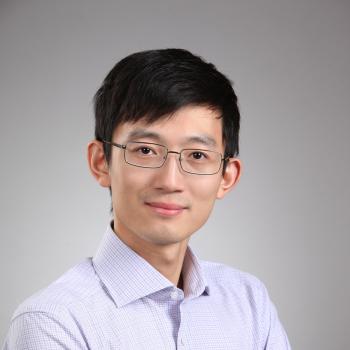
Education


Links
Stanford profile GitHub
 X · tengyuma
Assistant Professor of Computer Science · Stanford University
Chief AI Scientist · MongoDB
Background
Ma received a BS in computer science from Tsinghua in 2012 and a computer-science PhD from Princeton in 2018, advised by Sanjeev Arora. His dissertation studied conditions under which non-convex optimization can solve machine-learning problems efficiently and correctly. Such objectives can have many candidate solutions, so a theoretical guarantee must explain when an algorithm will find a useful one. His work examined settings including sparse coding, topic models, word embeddings and dynamical systems.[4][6][7]
Career
Retrieval as part of an AI application
At Voyage AI, Ma worked on the retrieval problem behind applications that need relevant information from a company’s data. Embedding models make content comparable by meaning; rerankers refine candidate results before an application uses them. MongoDB’s acquisition announcement describes integrating that work with its data platform while continuing to offer the Voyage models. The company’s speaker biography identifies Ma as chief AI scientist.[2][3]
Teaching and research
Stanford lists Ma as an assistant professor of computer science, a Bio-X member and an affiliate of its Institute for Human-Centered Artificial Intelligence. He teaches machine learning and advises graduate research. His academic work combines algorithmic questions with the behavior and training of modern learning systems.[1][4]
Contributions
Ma co-authored Sophia with Hong Liu, Zhiyuan Li, David Hall and Percy Liang. The optimizer periodically estimates diagonal curvature and uses it to scale a moving average of gradients. Clipping limits the size of individual updates. The design seeks the benefit of second-order information without paying its full cost at every training step, connecting an optimization idea to practical language-model pretraining.[5]
Tools, writing & talks
Writing, research & talks
Start here
Sophiaarxiv.orgA scalable second-order optimizer using periodic curvature estimates and clipped updates for language-model pretraining.
Start with the paper’s introduction and comparison with Adam. Basic gradient-descent knowledge helps; the update equation then shows why a periodic curvature estimate and clipping are useful.
Co-author[5]- Non-convex optimization dissertation researchcs.princeton.edu
Princeton’s explanation of Ma’s work on conditions that make difficult learning objectives tractable.
Researcher profiled by his university[4] - Voyage AI joins MongoDBmongodb.com
An acquisition announcement explaining how embedding and reranking models fit into MongoDB’s retrieval platform.
Voyage AI founder quoted; company work[3]
