Willem Pienaar is a cofounder of Cleric and the creator of Feast, an open-source feature store for machine learning. His work connects data infrastructure with AI systems that investigate production incidents.[1]
Start with Beyond Investigation Agents: Building Operational Memory That Compounds →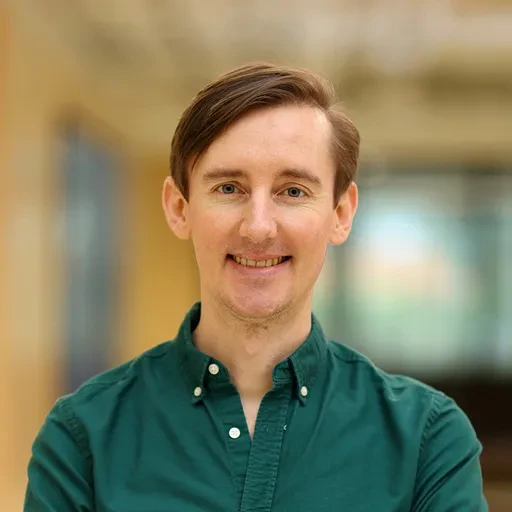
Links
LinkedIn X · willpienaar
Cofounder · Cleric
Career
Pienaar founded Gojek’s machine-learning platform team and later led open-source efforts at Tecton. Feast addresses a recurring ML infrastructure task: defining features and delivering them consistently for model training and online prediction. Cleric extends his infrastructure work into site reliability, where an agent gathers evidence about a running system and helps an engineer understand an incident.[1][3]
Contributions
Feast separates feature definitions from the storage and serving systems that supply their values. Its repository includes historical retrieval for training and low-latency access for online inference. The practical goal is to make model inputs reusable and consistent across these stages, instead of having every model team rebuild its own data-access path.[3]
Ideas
In a Cleric webinar, Pienaar describes memory as more than a transcript. Infrastructure context records dependencies and recent changes; past investigations preserve experiences and corrections; reusable procedures carry debugging knowledge into later incidents. He demonstrates an investigation that consults earlier issues. This approach lets an agent begin with accumulated operational context while still collecting evidence from the current environment.[2]
Tools, writing & talks
Writing, research & talks
Start here
A webinar explaining the infrastructure context, past experiences and reusable procedures behind an AI SRE.
Start with the operational-memory webinar if you have worked on production software or on-call support. It shows how past incidents become useful context rather than an unstructured archive.
Copresenter[2]Cleric's CTO explains why coding-strong agents misdiagnose production incidents, lists four failure modes, and shows grounding via parallel theories, baselines, dependency graphs and evidence, then calibrating confidence against verified fix outcomes.
Catalog workOriginal source- Introducing Clericcleric.ai
The founders describe an evidence-gathering AI teammate for production infrastructure.
Coauthor and cofounder[1]
 github.com