Yu Su is cofounder and CEO of NeoCognition and an associate professor at The Ohio State University. His research examines language agents, long-term memory and the continual learning needed for an agent to acquire expertise in a particular environment.[3][1][7]
Start with HippoRAG →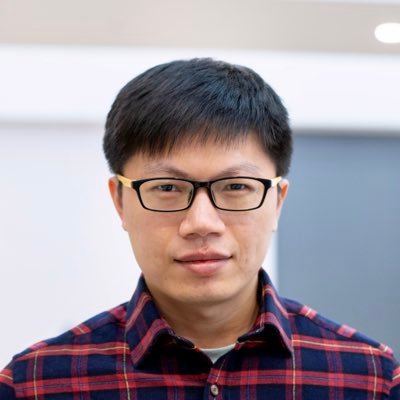
Education


Links
Owned academic biography and dated career news Original current conference biography Original NeoCognition team and manifesto X · ysu_nlp
 GitHub · ysu1989
Associate Professor and Innovation Scholar · Ohio State University
Cofounder and CEO · NeoCognition
Co-director · OSU NLP Group
Co-lead, Foundational AI · ICICLE AI Institute
Lead, Machine Learning Foundations · Imageomics Institute
Career
Su’s early work studied natural-language interfaces to data. He held a visiting appointment at Ohio State and worked at Microsoft Semantic Machines before starting his Ohio State assistant professorship in January 2020. His own news records promotion to associate professor in May 2025. He now also cofounded NeoCognition with Mind2Web collaborators Xiang Deng and Yu Gu.[1][2][3]
Contributions
Retrieve connected knowledge without retraining the model
HippoRAG 2 combines language-model processing with knowledge structure and Personalized PageRank, a graph-ranking method seeded by the query. Deeper passage integration and more effective online model use aim to preserve ordinary factual retrieval while improving associative and multi-hop questions. The paper evaluates these memory tasks as a form of non-parametric continual learning: new knowledge enters an external retrieval system, without changing the language model’s weights.[8]
Evaluate web agents across unfamiliar sites
Mind2Web supplies natural-language tasks and recorded action sequences from real websites across many domains. Its baseline filters large HTML pages with a smaller language model before asking a larger model to choose an action. The dataset tests whether an agent can transfer to new tasks, websites and domains rather than succeeding only in a simplified environment it already knows.[10]
Ideas
In his continual-learning talk, Su distinguishes reasoning through an unfamiliar problem from acting efficiently with accumulated domain knowledge. Organizations have local software, rules and exceptions that an agent must learn through experience. He proposes treating them as specialized micro-worlds, with feedback and memory helping the agent develop an increasingly useful model of its environment. This frames expertise as an ongoing learning process instead of a static prompt containing every possible situation.[7]
Tools, writing & talks
Tools
Start here
HippoRAGgithub.comAn open implementation of graph-based retrieval and external memory, including HippoRAG 2.
Read the retrieval overview, then follow the small document-indexing example. Python 3.10 and configured model access are needed; OpenAI-backed examples require an API key, while local-model options have separate dependencies. Compare a factual query with one requiring linked evidence.
Writing, research & talks
Yu Su separates intelligence, reasoning through an unfamiliar problem from the context you were handed, from expertise, accumulated situated competence, and argues almost nobody is scaling the second.
Catalog workOriginal sourceA talk explaining domain expertise, specialized environments and continual learning for agents.
Presenter[7]A dataset and baseline for evaluating instruction-following web agents across real sites and domains.
Coauthor[10]