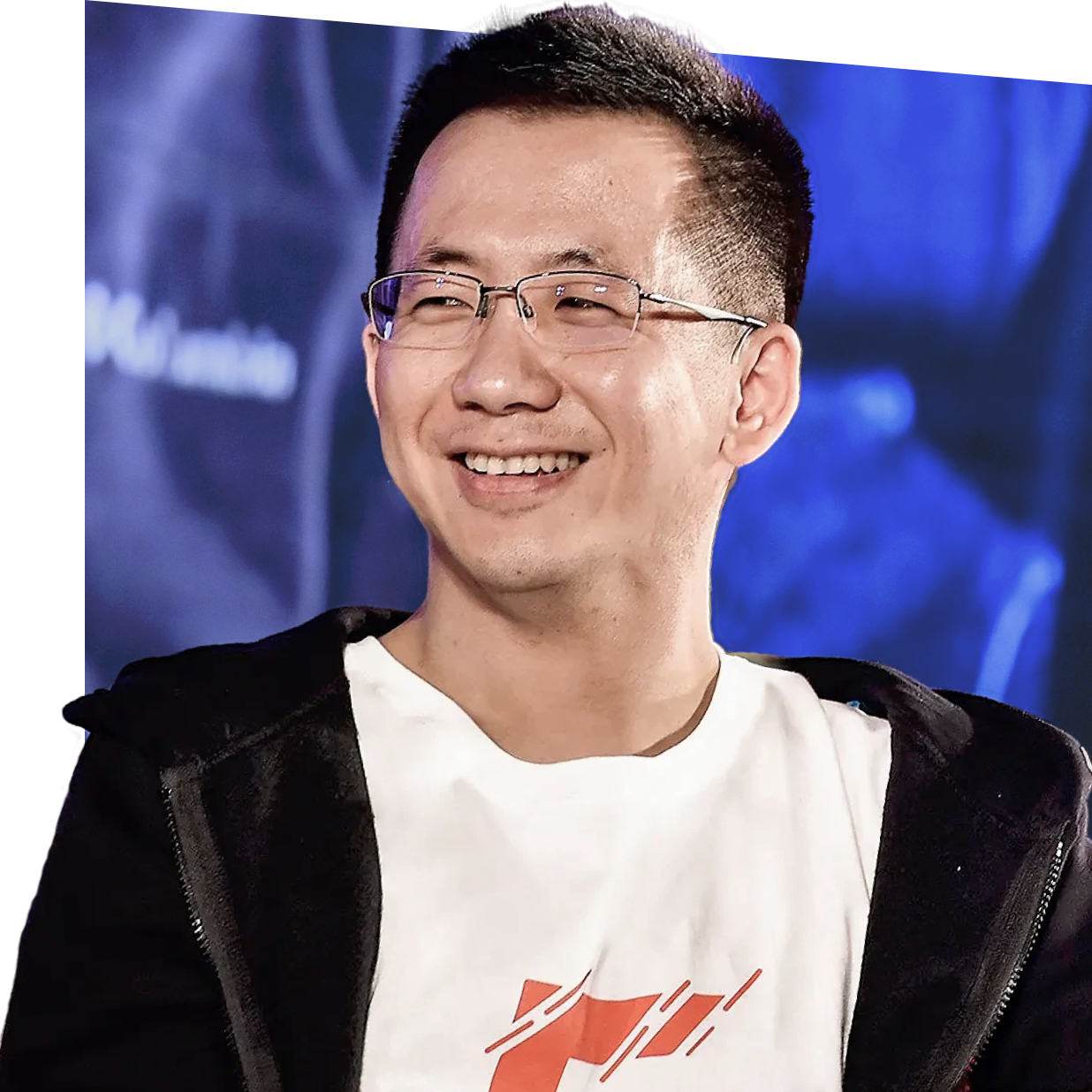
Zhang Yiming co-founded ByteDance in 2012, led it as CEO until 2021 and subsequently focused on strategy, culture and social responsibility.[1]
Start with Nankai incoming-students address (2016) →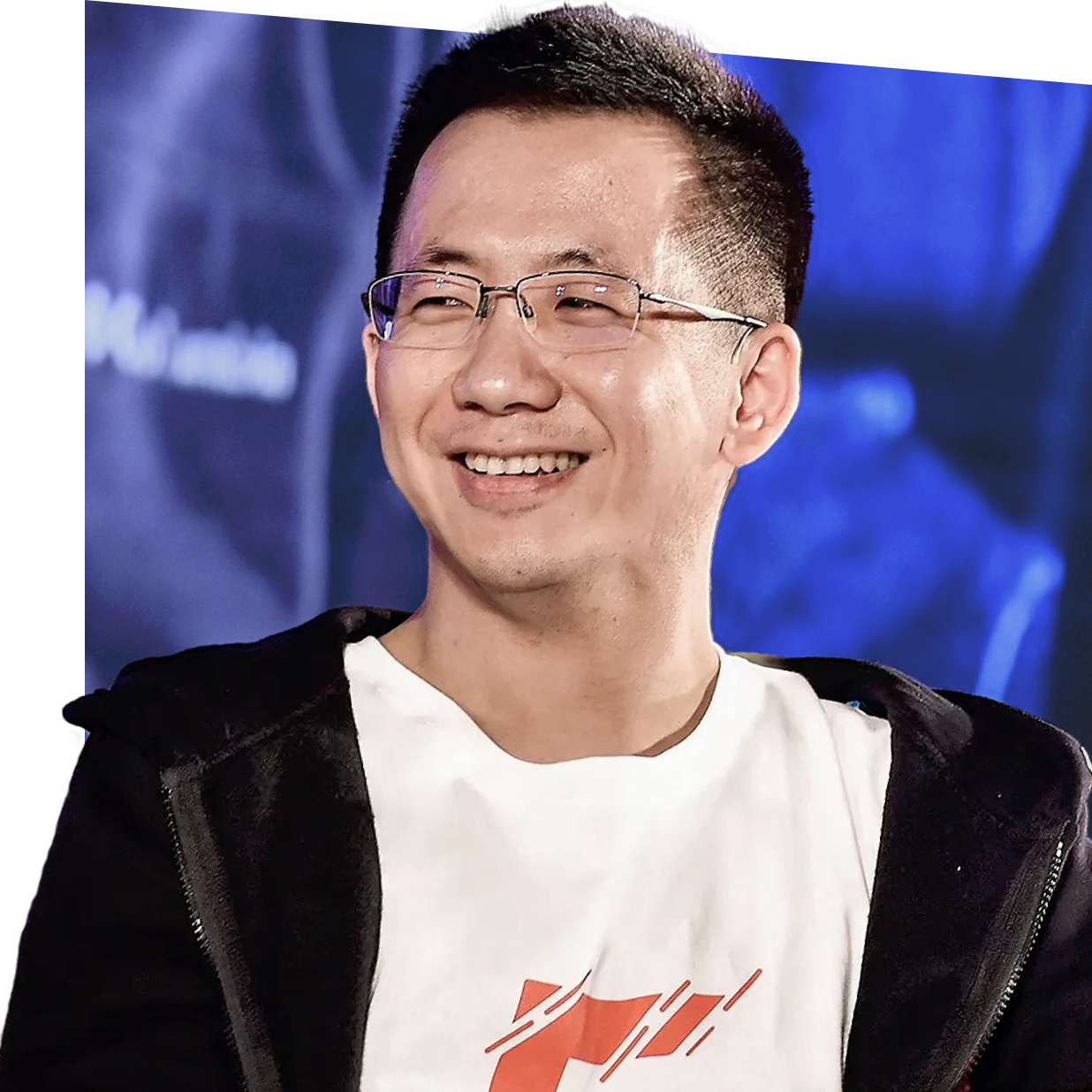

Background
Zhang entered Nankai University in 2001 and graduated in software engineering in 2005. In his 2016 address to incoming students, he recalled changing from microelectronics to software because programming interested him more than building circuits. Student software projects gave him practical experience, while classmates later became colleagues and business partners. His account connects his education to a habit of learning by building useful software.[3][4]
Career
Before ByteDance, Zhang held technical positions at two online platforms, worked at Microsoft and founded a housing-information search engine. He and Liang Rubo started ByteDance in Beijing in March 2012 to connect people with information more efficiently.[1]
Contributions
ByteDance launched the news and information product Toutiao in August 2012, then the short-video service Douyin in September 2016. TikTok followed as the business expanded internationally. These were products of the company Zhang founded and led; their development involved the broader organization. The sequence shows how ByteDance extended its information-distribution business from news into video.[2]
Ideas
Zhang treats a company itself as a product needing continual development. ByteDance describes his approach through an ordinary mind, pragmatic romanticism and long-term development.[1]
Tools, writing & talks
Writing, research & talks
Start here
Nankai incoming-students address (2016)cs.nankai.edu.cnZhang’s first-person account of changing disciplines, learning through software projects and choosing entrepreneurship. The published transcript is in Chinese.
Begin with his account of moving from microelectronics into software and learning through real projects. It offers an introduction to his approach without requiring knowledge of recommendation systems; the transcript is in Chinese.
Speaker[3]