Summary of METR's predeployment evaluation of Claude Opus 5.5
- Source
- metr.org
- Date

Context
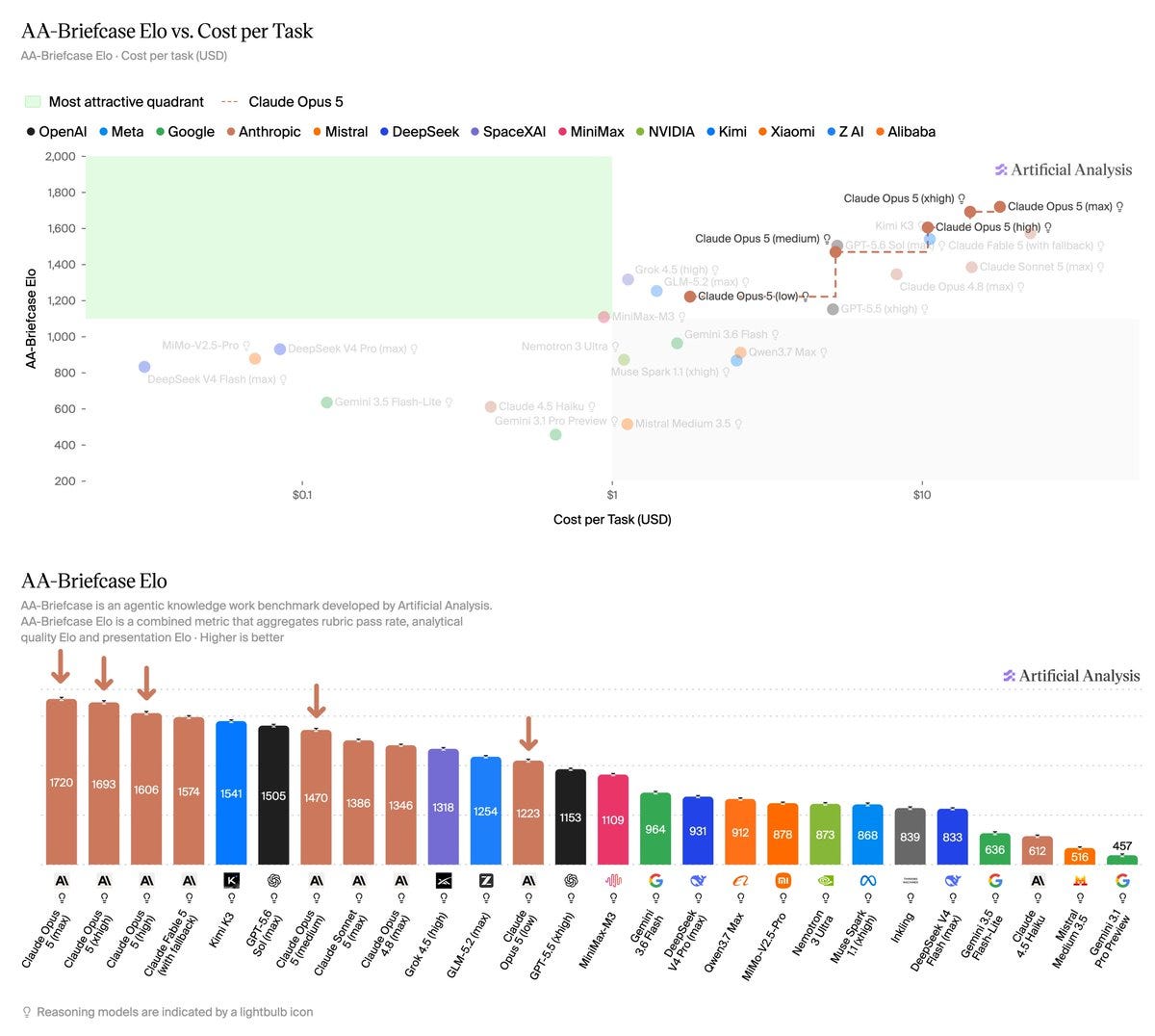
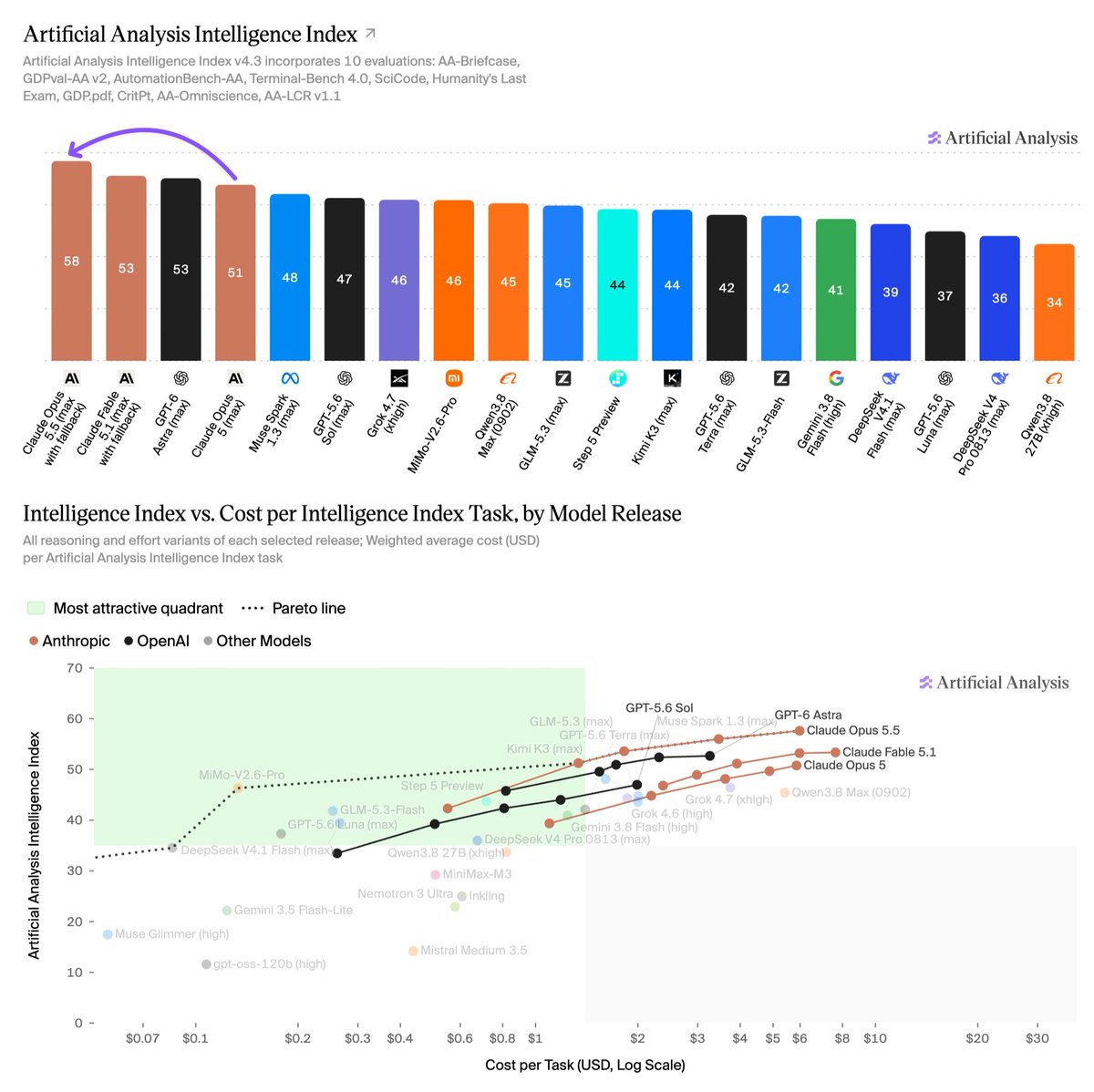
Helping researchers work faster is a different claim from independently doing their research. METR's predeployment assessment of Claude Opus 5.5 finds a modest, incremental improvement over Fable 5.1 on its tests, but says the model still shows weaknesses an expert is unlikely to have on hard, long-horizon tasks and open-ended reasoning. METR expects some research acceleration but considers full automation unlikely, arguing that it would need large gains in foresight, building its own feedback loops and research judgment.
The report separately asks how much AI helped Anthropic develop the model. That assessment draws partly on another METR team's preliminary investigation, whose supporting evidence the authors could not inspect. The distinction matters: capability tests and estimates of a laboratory's actual productivity answer different questions. Anthropic could review and edit the summary, and METR signed off on the final text.
- METR's predeployment review of Claude Opus 5.5 rests on 10 business days of API testing across five tasks (Budget NanoGPT Speedrun, LMCA conceptual arguments, Train a Program, Gaming Bot and Sunlight), plus an Anthropic questionnaire and a researcher interview.
- METR concludes Opus 5.5 is a modest, on-trend improvement over Fable 5.1 on both verifiable and harder-to-verify tasks, likely to speed up researchers somewhat but unlikely to fully automate AI R&D.
- METR says the remaining gap is researcher 'judgment': foresight, prediction and building one's own feedback loops, and its evidence does not show Opus 5.5 improving much on these over Fable 5.1, though it calls this highly uncertain.
- On whether AI sped up Opus 5.5's own development, METR cites a separate METR team's preliminary estimate of about 1.5x acceleration with perhaps a 30% chance of 2x, noting the estimate's time period was unspecified and its supporting evidence was not shared.
- The was unpaid, and Anthropic could review and edit METR's draft before it appeared in the system card; METR notes its findings were about AI R&D capability, not compliance with Anthropic's policy thresholds or .
- eval — A repeatable test for AI quality — a set of tasks plus scoring — used the way software teams use test suites, because model output is too variable to judge by eyeballing.
- alignment — The work of making AI systems actually pursue what their builders and users intend, rather than something subtly or dangerously different.

Checking sign-in…
Loading comments…