Inside OpenAI’s agentic software factory
- Source
- newsletter.pragmaticengineer.com
- Author
- Gergely Orosz
- Date
Context
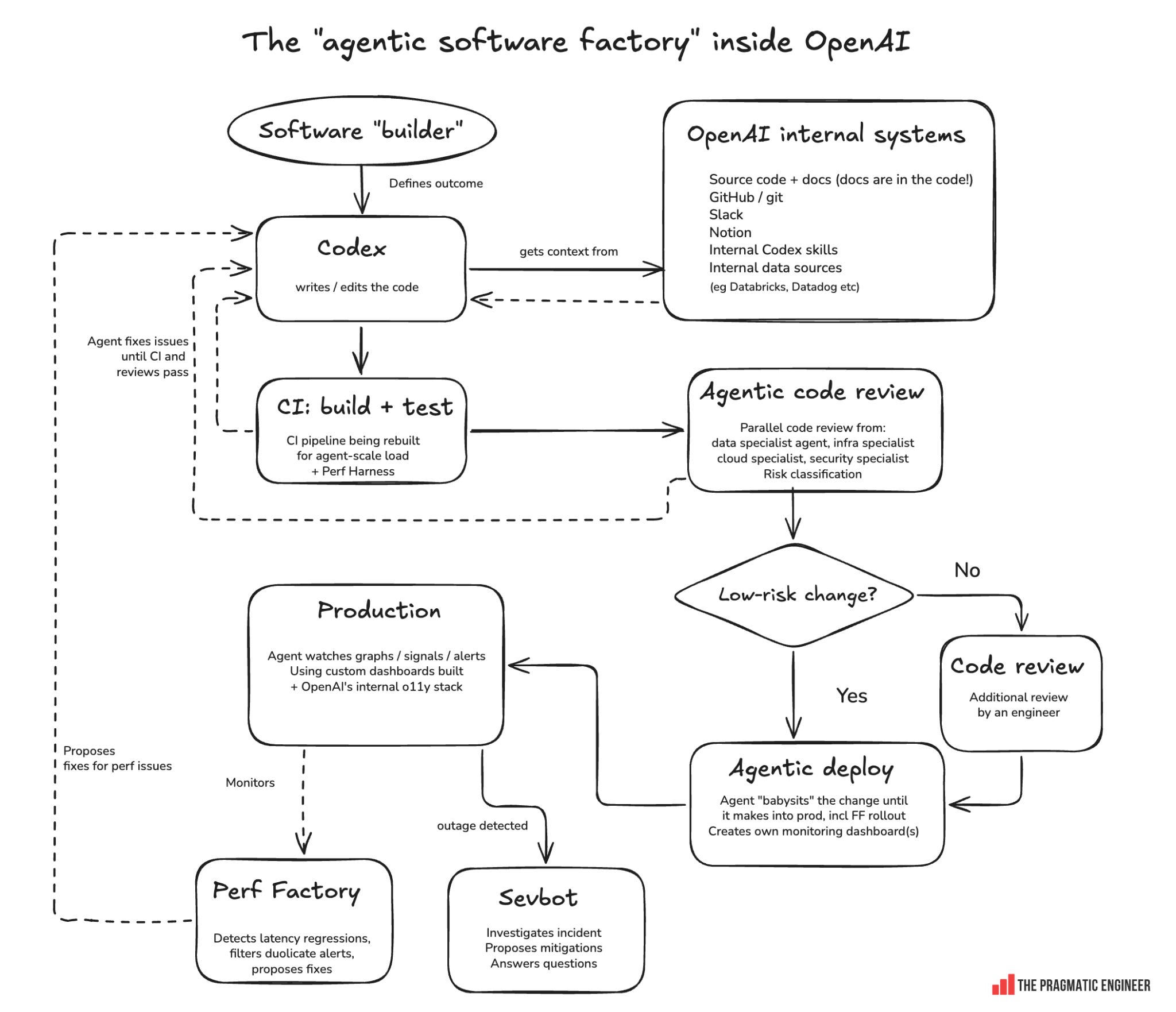
OpenAI's software workflow extends coding agents into review and deployment monitoring while retaining human decision points. In Gergely Orosz's reported account, specialist agents review changes from different engineering perspectives, and risk classification determines whether additional checks or human review are required. Low-risk areas of the codebase can opt in to auto-approval, so human review is not universal.
In the deployment path described, a human approves a change for production before an agent follows it and watches relevant signals. The incident-response agent similarly gathers evidence and suggests mitigations, but needs an engineer's instruction to apply one. The reported automation therefore reaches well beyond writing code while leaving consequential operational decisions with people.
- OpenAI's non-engineering teams like finance, recruitment, and legal went from about 0% to 90% usage of Codex in a four-month period, driven partly by new app releases and Codex getting better at long-running tasks, according to Desktop lead Andrew Ambrosino.
- VP of Engineering Venkat Venkataramani says pull requests per engineer are growing 'like a hockey stick,' causing roughly a 10x increase in load on some infrastructure systems in about six months, versus 2-3 years at most companies.
- OpenAI now uses multiple AI agents, each configured as a domain specialist such as cloud infrastructure or security, to review code changes; VP Venkat Venkataramani compares this to having a human expert from each infrastructure team review every change.
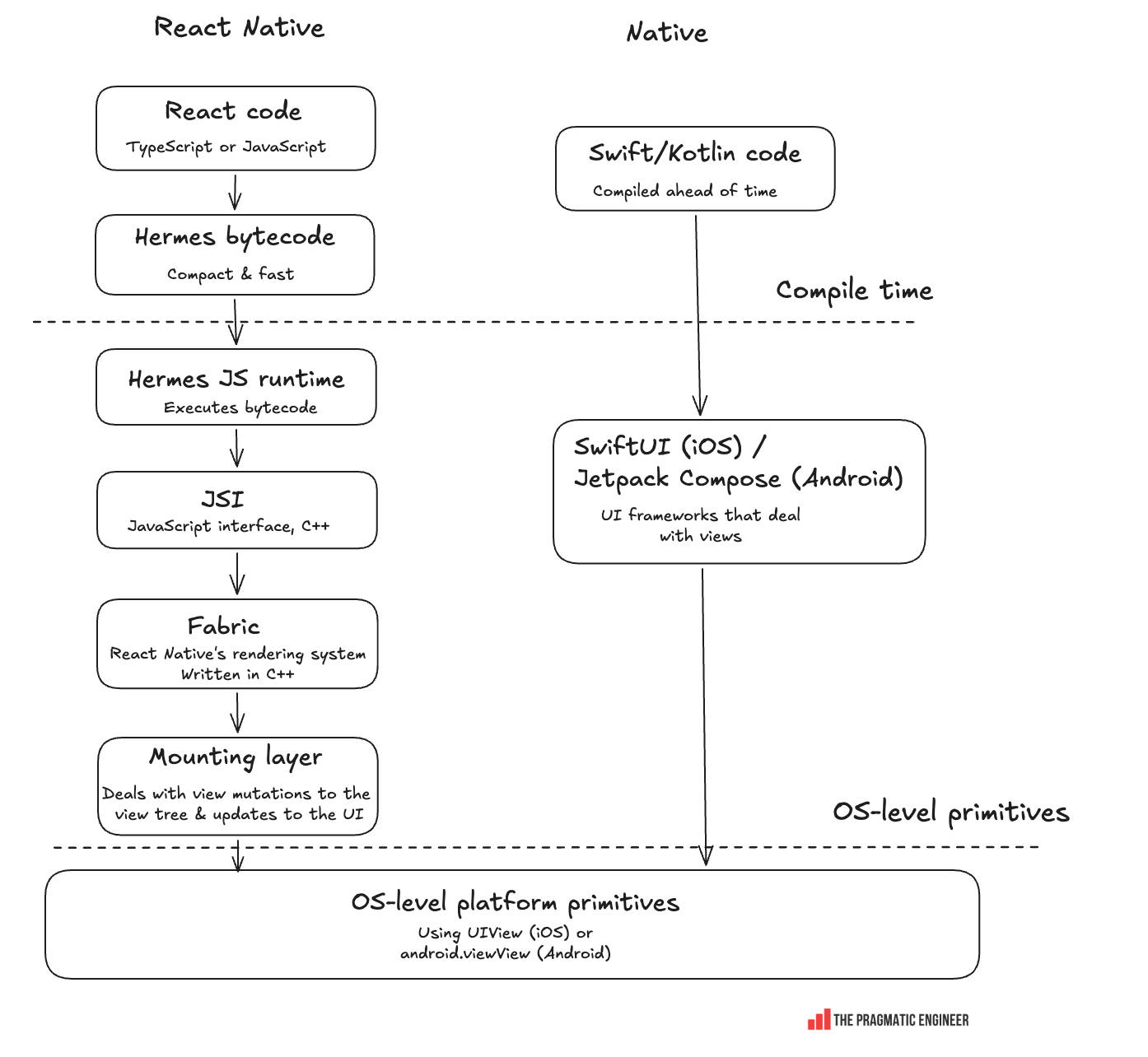
- Native iOS/Android releases remain a painful bottleneck since Apple and Google's manual app-store review takes hours to days, a growing mismatch as Codex lets engineers generate code in minutes, per ChatGPT engineering head Sulman Choudhry.
- OpenAI's internal incident-response agent, Sevbot, is built on Codex and can gather and propose mitigations during outages, but as of now it never executes mitigations autonomously without an engineer's instruction.
- AI agent — An AI system that doesn't just answer once but works toward a goal in a loop — taking actions, reading the results, and deciding what to do next.
- context window — The maximum amount of text a model can consider at once — its working memory for the current conversation or task.



Checking sign-in…
Loading comments…