Code, Test, and Deploy on One Machine with NVIDIA RTX Spark
- Source
- developer.nvidia.com
- Author
- Elizabeth Goodman
- Date
Context
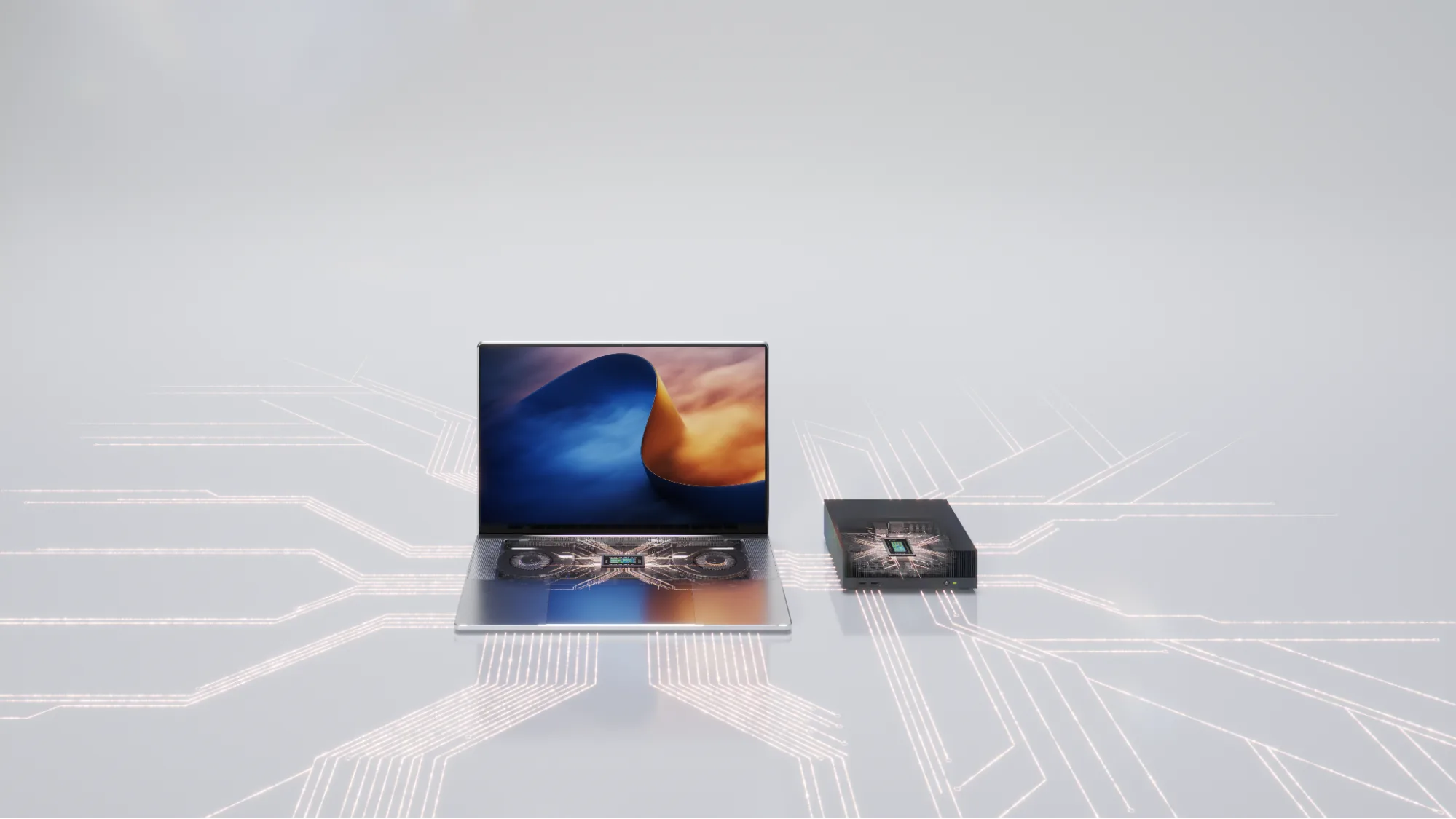
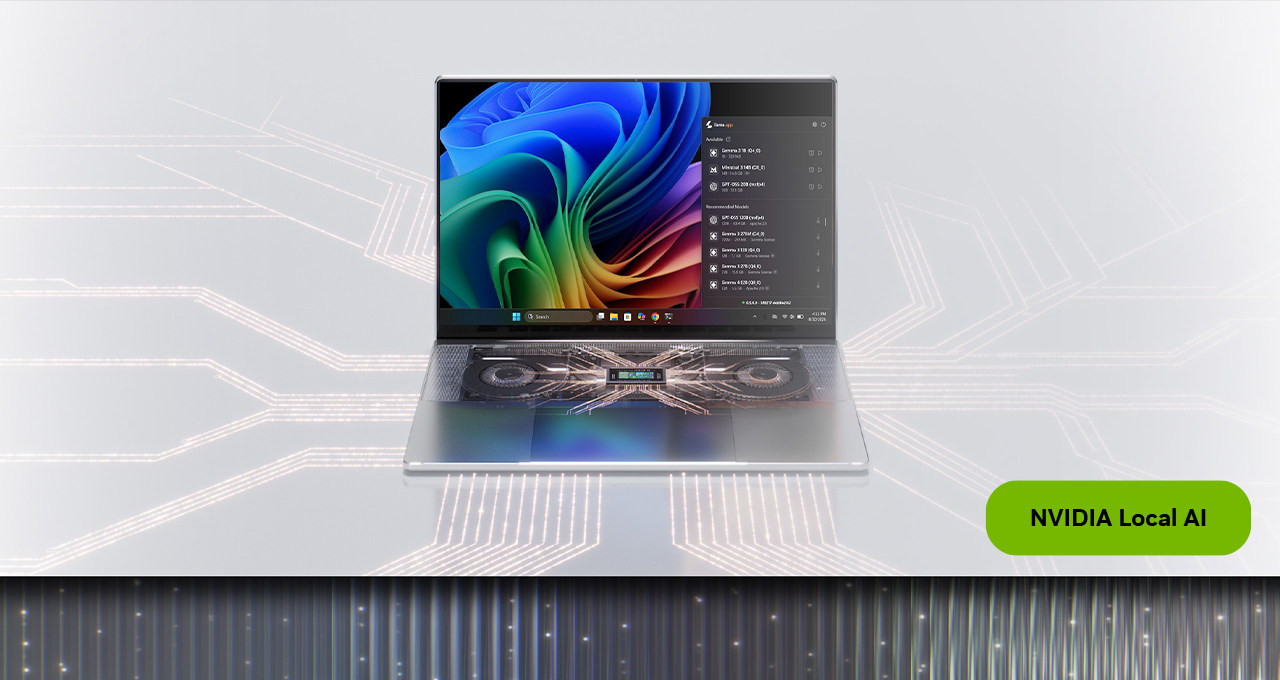
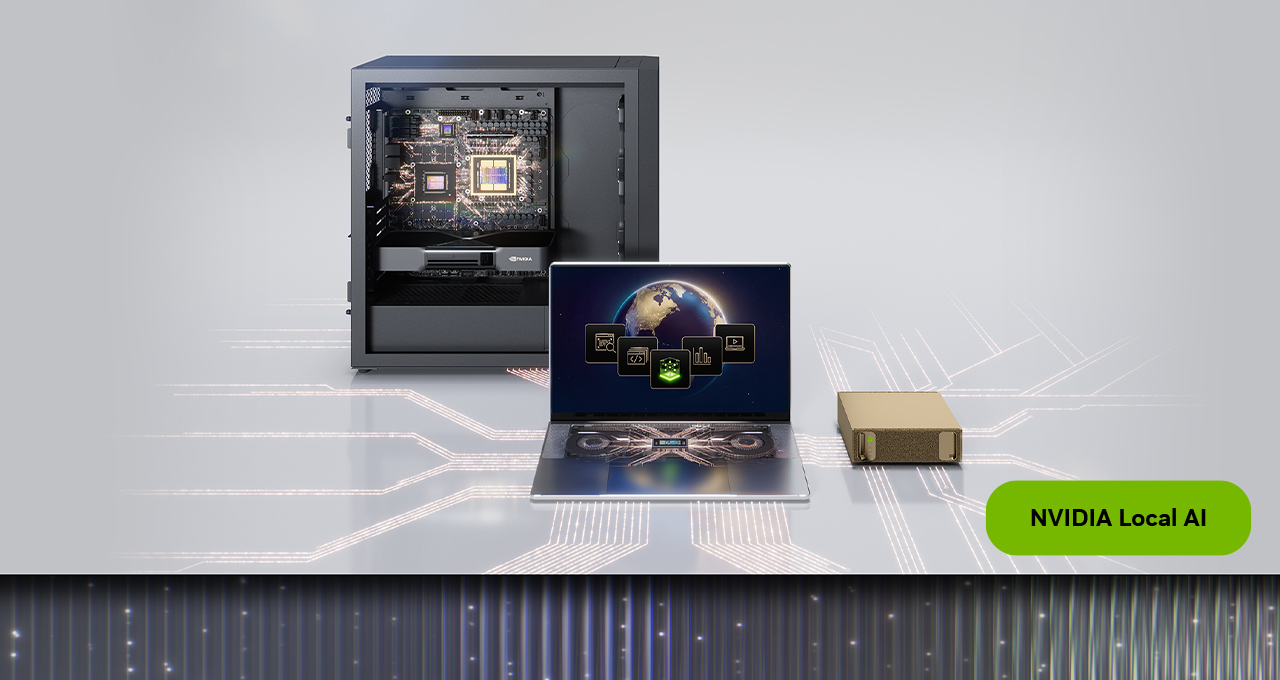
NVIDIA is pitching RTX Spark laptops and small desktops as a way to pull an agent-driven development setup onto one machine (developer.nvidia.com). Today that workflow is often split across a laptop, a cloud model API and a cloud VM. The machines use NVIDIA's GB10 chip, which combines a Grace CPU and a Blackwell GPU with up to 128GB of unified memory. NVIDIA says that memory lets developers run coding models locally, which cuts the tokens spent on cloud coding agents. Developers can work in Windows or in Windows Subsystem for Linux, which matches the environment they will deploy to in the cloud.
The performance figures are NVIDIA's own comparison with an Intel Panther Lake 12Xe laptop: 4.6 times faster on a coding-agent workload, 2.7 times on fine-tuning and 1.8 times on compiling code. The chart caption names the tests behind them: AA-AgentPerf-local running Qwen3.8-27B, a fine-tune of Llama-3.1-8B in Unsloth, and a Linux kernel build in the Phoronix Test Suite. The machines run Windows on Arm, so software support matters as much as speed. NVIDIA says it worked with Microsoft on the first PyTorch build with CUDA for Windows on Arm, over 2,000 Conda packages, and Arm-compatible versions of more than 97% of the top 15,000 Python packages.
NVIDIA also released a model sized for these machines. Nemotron 3.5 Bolt is a 74-billion-parameter model, with 9 billion parameters active per token, compressed into 24GB using 2-bit . NVIDIA says quantization-aware training preserves its quality, and that it runs in llama.cpp, vLLM, Ollama, Unsloth and LM Studio. Laptops are available now, and the desktops arrive in November.
- NVIDIA rates RTX Spark at 1 petaflop of FP4 AI compute and claims 4.6x faster coding agents, 2.7x faster fine-tuning and 1.8x faster compilation than Intel Panther Lake 12Xe; these are vendor figures.
- Nemotron 3.5 Bolt activates 9B of its 74B parameters and fits in 24GB through 2-bit quantization-aware training. NVIDIA says its weights, training data and recipes are fully open.
- NVIDIA describes hybrid prompt routers that keep prompts on a local model when it is good enough and escalate to the cloud otherwise, plus OS-level sandboxing through NVIDIA OpenShell or Microsoft Execution Containers.
- JetBrains' Junie Local sizes its to the memory available to the GPU, so RTX Spark's unified memory lets the agent keep more code, tool output and conversation history in context.
- RTX Spark is available in laptops now, with small form factor desktops aimed at always-on agents due in November, according to NVIDIA.
- LoRA — A cheap way to fine-tune a model by training a small add-on layer instead of changing all of the model's weights.
- mixture-of-experts — A model built from many specialist sub-networks where only a few activate per token, giving big-model capability at small-model running cost.
- quantization — Shrinking a model by storing its numbers less precisely — like rounding — so it runs faster and fits on smaller hardware, at a small quality cost.
- context window — The maximum amount of text a model can consider at once — its working memory for the current conversation or task.
 articleHow NVIDIA OpenShell Reference Architecture Secures and Governs AI Agent Workloads at Scale
 articleHow to Rewrite Apache Spark UDFs for GPU Acceleration with AI Agents
 articleLower the Cost of Building and Running Visual AI Agents with NVIDIA VSS Blueprint 3.3
 articleHow SWE-Serve Exposes the Gap Between Local Tests and Live Serving
Checking sign-in…
Loading comments…