How NVIDIA OpenShell Reference Architecture Secures and Governs AI Agent Workloads at Scale
- Source
- developer.nvidia.com
- Author
- Elizabeth Goodman
- Date
Context
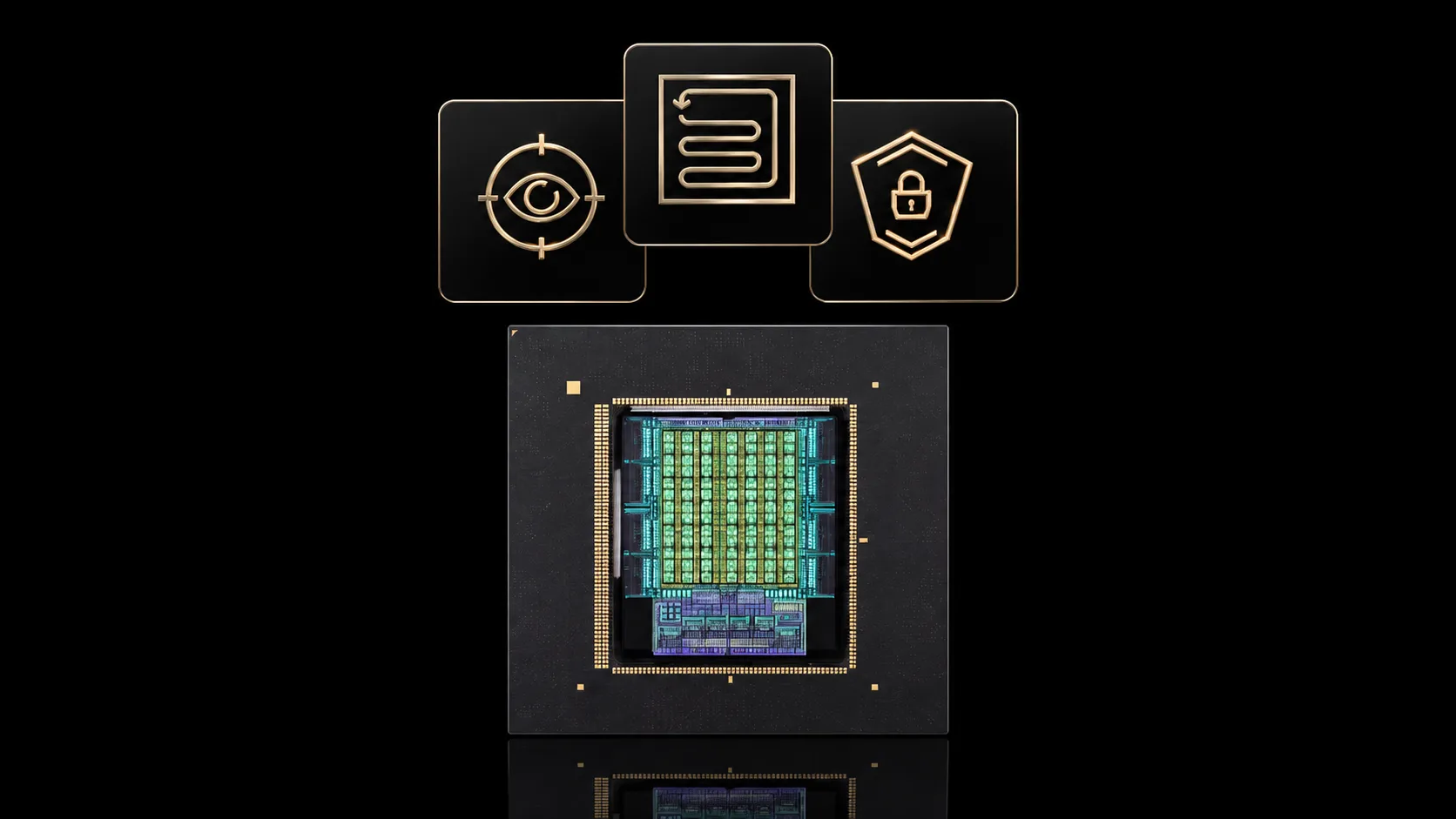
NVIDIA's OpenShell reference architecture packages its runtime into a full stack: OpenShell software decides what an agent may reach, Vera CPUs run the agents, and an optional hardware layer, Sentry on BlueField-4 DPUs, monitors them from outside the host (NVIDIA's overview). The premise is that an agent cannot govern itself, so security and governance controls have to sit in the infrastructure around it.
OpenShell, covered earlier in a runtime walkthrough, treats agent workloads as untrusted throughout execution. Its gateway is the control plane that manages sandboxes and their policies. A supervisor running separately from the checks outbound requests against policy and mediates access to credentials, while the sandbox restricts filesystem and process access. A policy prover formally checks whether a policy's permissions stay within a ceiling the organization defines. The post emphasizes two extension points: supervisor middleware can inspect, block or change what an agent sends and receives over the network, and gateway interceptors let operators add their own governance to control-plane operations without modifying the gateway. Identity, authorization, data protection and auditing are not presented as built in; OpenShell provides enforcement points where those systems can be integrated.
Much of the post argues for Vera as the hardware underneath. NVIDIA claims up to 2x performance on critical agentic workloads versus x86. It also cites CoreWeave, which found sandbox startup more than 3x faster on Vera than on x86, more than 11,000 concurrent agent environments in a single rack, and 1.8x faster performance on Terminal Bench tasks. The post does not name the x86 processors or test configurations behind these comparisons. Sentry is the optional layer for deployments that need more protection: BlueField-4 sits in the path between agents and the models they call, and NVIDIA says Sentry can quarantine an agent within milliseconds when it detects a policy violation. The Sentry deep dive explains how that monitoring works.
- OpenShell, NVIDIA's open-source agent runtime, splits control into four parts: a Gateway that manages sandbox lifecycles and policy, a Supervisor that checks outbound requests and brokers credentials from outside the sandbox, the Sandbox itself, and a Policy Prover.
- The Policy Prover adds formal verification, checking whether a policy's permissions stay inside a ceiling the organization defines. Supervisor middleware and Gateway interceptors let operators add their own inspection and governance without modifying the gateway.
- CoreWeave measured sandbox startup more than 3x faster on NVIDIA's Vera CPU than on x86, with one rack holding over 11,000 concurrent agent environments, and 1.8x faster completion on Terminal Bench agentic tasks. These are partner results published by NVIDIA.
- NVIDIA's case for Vera is that agent loops are chains of dependent CPU steps, so per-core speed matters. It claims Vera's 88 Olympus cores deliver up to 2x performance on critical agentic workloads and 2x performance per watt versus x86.
 articleCode, Test, and Deploy on One Machine with NVIDIA RTX Spark
 articleHow to Rewrite Apache Spark UDFs for GPU Acceleration with AI Agents
 articleLower the Cost of Building and Running Visual AI Agents with NVIDIA VSS Blueprint 3.3
 articleHow SWE-Serve Exposes the Gap Between Local Tests and Live Serving

Checking sign-in…
Loading comments…