How Meta Built Forum With AI-Native Engineering
- Source
- engineering.fb.com
- Date
Context
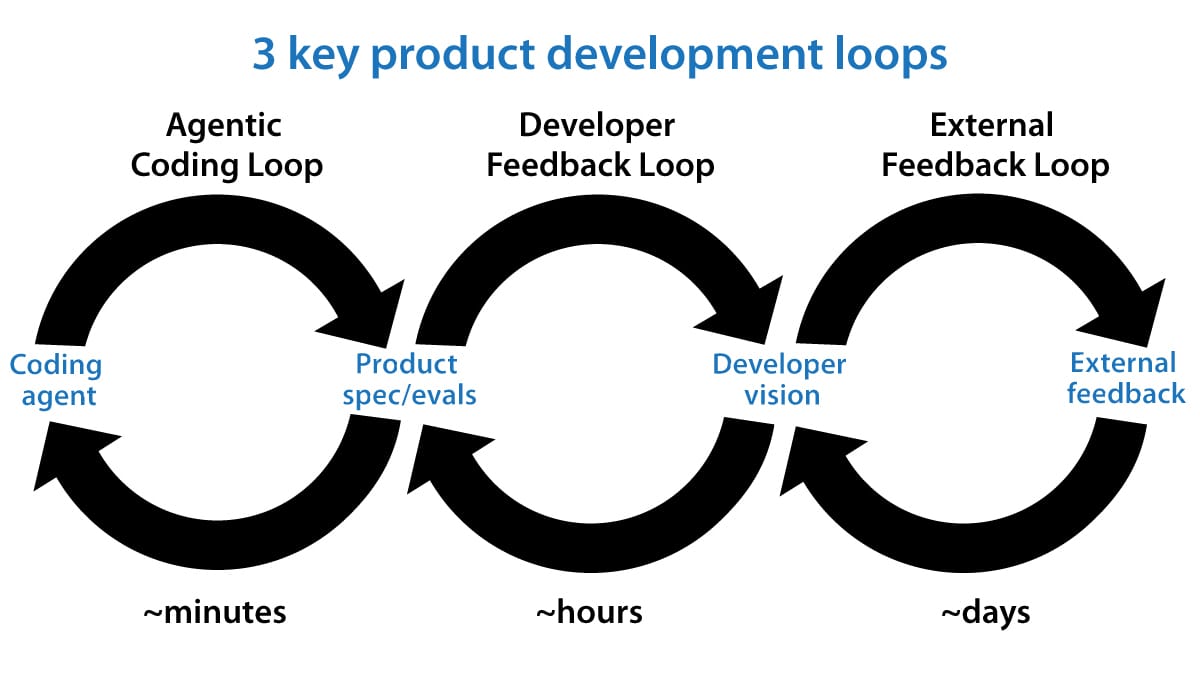
Meta built Forum, a standalone app for going deeper into Facebook Groups conversations, with a small team that treated an as a participant in the engineering work rather than a faster way to type. Meta's engineering write-up describes the shift as moving from , where the engineer drives every step and the AI autocompletes or suggests fixes inside it, to human-on-the-loop, where the agent runs the cycle of planning, implementing, building, testing and correcting while the engineer sets the goal, watches the run, steps in when it drifts and approves the result. Meta calls this a target rather than a finished state: some stages run autonomously today, and others still keep an engineer in each iteration.
What makes that workable, in Meta's account, is verification rather than generation. A task counts as done only after automated tests and visual checks pass, not when the code compiles, and build status, unit tests and UI spec matching are wired into the agent's loop so pull requests arrive with test plans and recorded verification sessions. Without trustworthy checks, Meta argues, the bottleneck simply moves from writing code to reviewing code that looks finished and isn't, and how much it can hand to the loop depends on how far it trusts the verifiers. It measured success the same way: changes that build, pass tests and survive review, not code volume. Every shipped change still carried an engineer's sign-off.
The team says its biggest gains came from changing code and tooling, not prompts. Its main failure was the agent losing track of where it was in the app, for example editing the home feed when asked to change the group home screen. Instead of describing the app, Meta gave the agent tools to read the live view hierarchy from the simulator and list the elements actually on screen before acting, and misdirected edits dropped sharply. It also added a separate build that shares the production codebase but compiles prototype code out of the production app entirely, so designers could prototype with AI tools without that code ever reaching users. Repeatable stress runs, such as aggressive scrolling and rapid navigation, let the agent spot a memory problem, isolate a repro, propose a fix and verify it before launch.
The results are Meta's own report: core feature parity with Facebook Groups in eight weeks, and the stress-test fix roughly halving memory use and page faults. The post gives no comparison with how a conventional team would have fared, so it documents one team's working method rather than a measured speedup.
- Meta's Forum team measured success by verified changes that build, pass tests and survive review, not code volume. A task counted as complete only after automated tests and visual checks passed, so engineers reviewed fewer, higher-confidence results.
- The team's main agent failure was losing track of where it was in the app, such as editing the home feed when asked to change the group home screen. Giving the agent tools to read the live view hierarchy and list on-screen elements sharply cut misdirected edits.
- Meta says the biggest gains came from changing code and tooling, not prompts. It kept the codebase simple and modular, rebuilding pieces from scratch where needed, because agents copy the patterns they read in existing code.
- A separate sandbox build flavor shared the production codebase but compiled prototype code out of the production build entirely, letting designers prototype with AI tools while no prototype code could crash the production app.
- Repeatable stress runs such as aggressive scrolling and rapid navigation let an agent isolate a memory issue before launch; Meta says the fix roughly halved memory use and page faults. Forum reached core feature parity with Facebook Groups in eight weeks.
- AI agent — An AI system that doesn't just answer once but works toward a goal in a loop — taking actions, reading the results, and deciding what to do next.
- human-in-the-loop — Requiring a person's approval at specific points in an automated process, chosen so the irreversible steps are the ones a human sees.
- sandbox — An isolated environment where AI-generated code or agent actions run without being able to touch anything real.

Checking sign-in…
Loading comments…