Inside Prometheus: Meta’s Journey to a Gigawatt-Scale Supercluster
- Source
- engineering.fb.com
- Date
Context
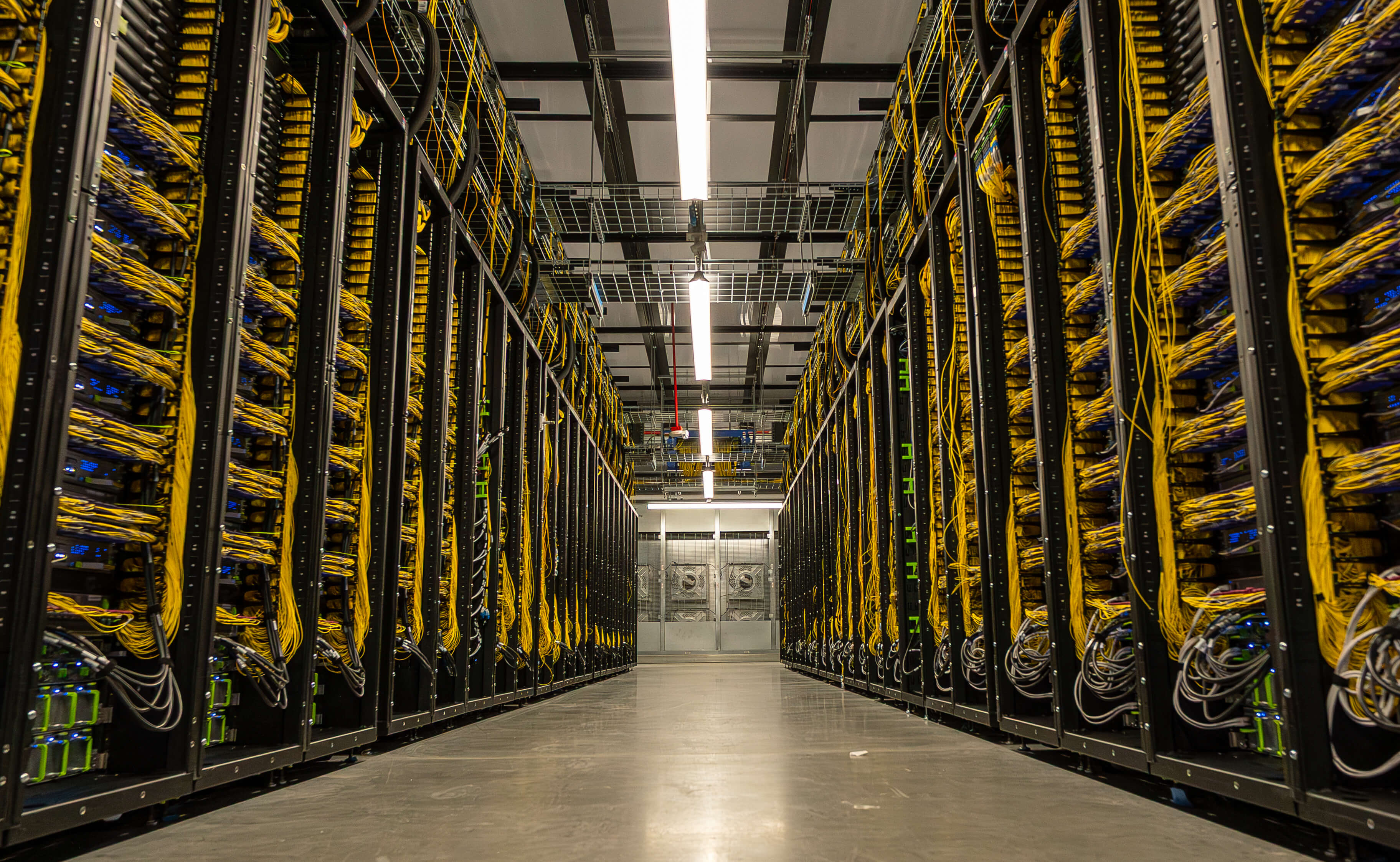
Meta's account of Prometheus, its gigawatt-scale training cluster in New Albany, Ohio, is mostly about one problem: when a training job runs across tens of thousands of GPUs, a fault on a single host can slow or stop the whole run (engineering.fb.com). The first phase of the cluster is complete and trained Meta's Muse Wonder models. Meta is working toward roughly 1 million GPUs. It tracks reliability with two measures. Goodput is, roughly, the share of a job's time that turns into useful training progress. Mean time between interruptions (MTBI) is the average stretch, counted in GPU hours, between faults that halt a job. For the Muse Wonder runs, Meta reports more than 85% goodput in , more than 90% in reinforcement learning, and an MTBI of about 47k GPU hours. Later fleet changes, including firmware fixes, have since raised MTBI above 54K GPU hours.
The hardware made the problem harder. NVIDIA's NVL72 racks tie 72 GPUs into one tightly coupled group. The previous H100 generation coupled eight, and Meta says the larger group increases the blast radius of a fault by 9X. Meta's answer is to plan capacity around the whole rack. Each rack runs a 64-GPU slice, a power-of-two size that training parallelism maps onto efficiently, and keeps its other eight GPUs as in-rack spares. When a GPU fails, a spare takes its place and the job restarts from its last checkpoint instead of waiting for a repair. Meta also holds roughly 2% extra racks for rarer whole-rack faults. Together, these mean a 32,768-GPU run needs 523 racks, or 37,656 GPUs, so about 13% of the provisioned GPUs sit outside the active job. Meta notes that most of that margin, 11%, comes from the 64-of-72 slice geometry rather than from a reliability reserve.
Meta's interruption figures show how much of this work remained. During the cluster's initial phase in mid-2025, interruptions peaked at nearly 1,000 events per 8K GPUs a day. Meta says a year of engineering cut that by 99%, with fixes ranging from screening weak NVLink connections before production to automatically isolating faulty NVLink switch components. Its stated target is two interruptions per 8K GPUs per day, about 100k GPU hours MTBI, which the current 54K figure has not yet reached.
- Meta reports more than 85% goodput on Muse Wonder pre-training runs and more than 90% on RL runs, with a mean time between interruptions of about 47k GPU hours, since raised above 54K GPU hours through fleet firmware fixes.
- Each NVL72 rack runs a 64-GPU slice and keeps eight GPUs as in-rack spares, so a failed GPU is swapped and the job restarts from checkpoint. With about 2% spare racks, a 32,768-GPU run needs 523 racks, about 13% above the active footprint.
- Meta says interruptions peaked near 1,000 events per 8K GPUs per day in mid-2025 and fell 99% over a year. NVLink signal integrity across 600,000+ connections was the main early bottleneck on GB200; the target is two per 8K GPUs per day.
- Synchronized training swings cluster power by 30-40%, and starting or pausing a large job can shift tens of megawatts in seconds. Meta's Dynamo Dimmer lowers GPU power caps gradually near the electrical ceiling instead of stopping jobs.
- Meta deployed its GB200 racks with 800G of scale-out per GPU rather than 400G, because GB200 raised compute and memory bandwidth over H100 while per-GPU scale-out bandwidth would otherwise have stayed flat.
- pretraining — The first, biggest phase of building a model: training it on enormous amounts of text so it learns language, facts, and reasoning in general.
 articleThe Future of Meta Superintelligence: A 1 Year Progress UpdateMax Kan
 articlexAI’s Colossus 2 – First Gigawatt Datacenter In The World, Unique RL Methodology, Capital RaiseJeremie Eliahou Ontiveros
 articleRun Local Agentic AI Workflows with Meta’s Muse Glimmer on NVIDIAMichelle Horton
Checking sign-in…
Loading comments…