Pi Coding Agent
pi.dev- Category
- AI Agents
- Pricing
- Open Source
- Type
- AGENT
- Interfaces
- CLI
- Builder
- @pidotdev
- Date
About
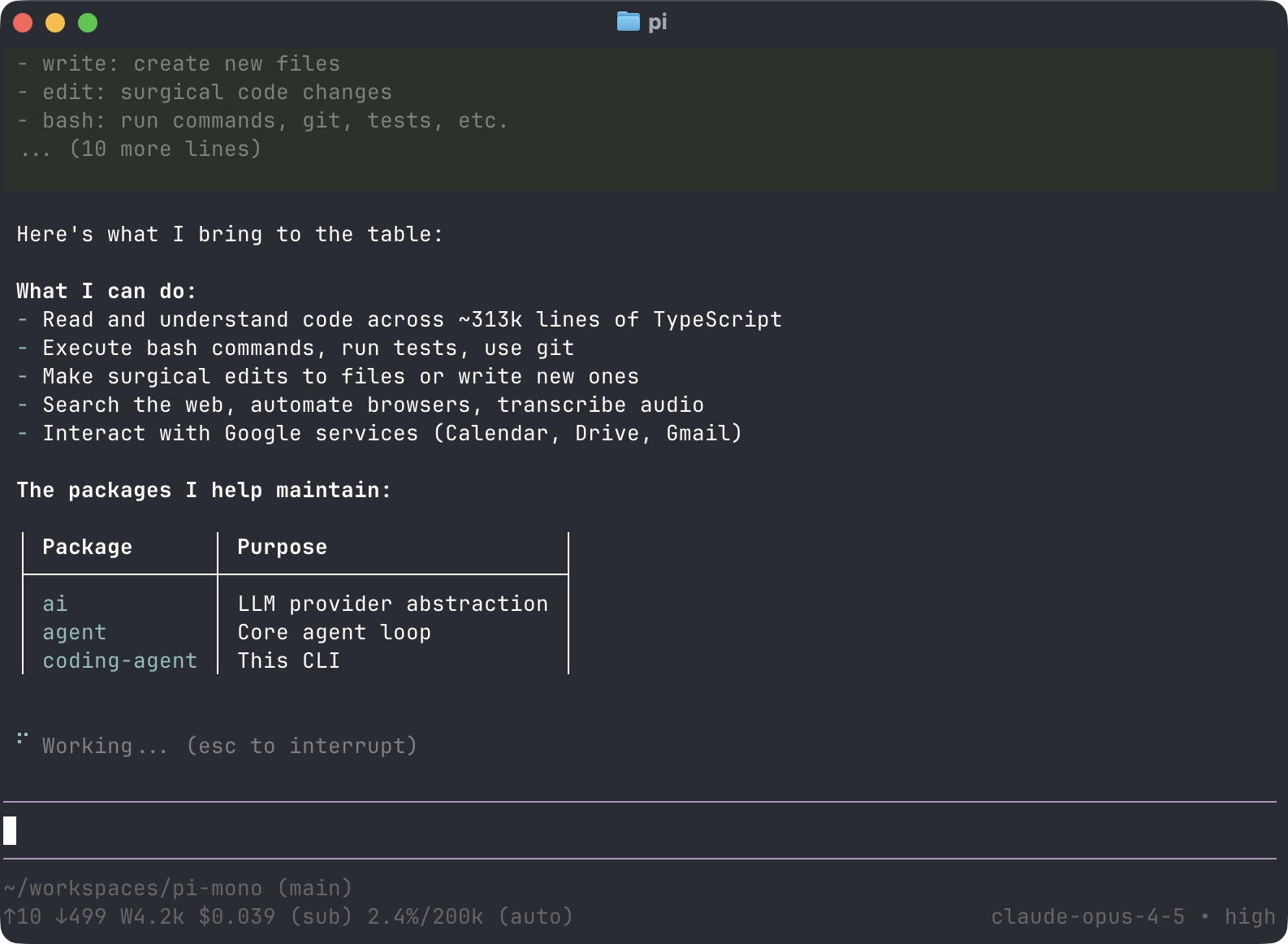
Pi is a minimal, terminal-based AI coding agent built to be endlessly customizable — you extend it with TypeScript modules, skills, prompt templates, and themes rather than accepting a sealed feature set. It supports 15+ model providers, tree-structured shareable sessions, and multiple integration modes (interactive TUI, print/JSON, RPC, and SDK).
What it can do
Generate and edit code from natural language prompts in an interactive terminal session
Natural language coding instructions via TUI → Generated or modified source code
Extend the agent with custom TypeScript modules, skills, and packages
TypeScript extension modules and skill definitions → Customized agent behavior and new capabilities
Route requests across multiple AI model providers
Model provider selection/configuration (15+ providers) → AI-generated responses from the chosen provider
Create and manage tree-structured, shareable conversation sessions
Session interactions and branching commands → Shareable branched session history
Produce machine-readable output for scripting and automation
Prompts or commands via print/JSON mode → Plain text or structured JSON responses
Integrate the agent into other programs via SDK and RPC
Programmatic API/RPC calls → Agent responses embedded in external applications
Apply custom prompt templates and themes to the agent
Prompt template files and theme configurations → Customized prompts and terminal appearance
Why it made the leaderboard
If you're tired of opinionated coding-agent CLIs that lock you into their idea of sub-agents or plan mode, Pi lets you ask the agent to rewrite its own harness on the fly and hot-reload, plus it supports 15+ model providers and tree-structured shareable sessions. It's a good fit for developers who want to reshape their agent around their exact workflow rather than adapt to a fixed feature set.
Tags
Media
Comments (0)
No comments yet
Editorially curated, with community endorsements as a secondary signal. Corrections welcome.