NextStep-1 takes autoregressive image generation past vector quantization
- Source
- x.com
- Date

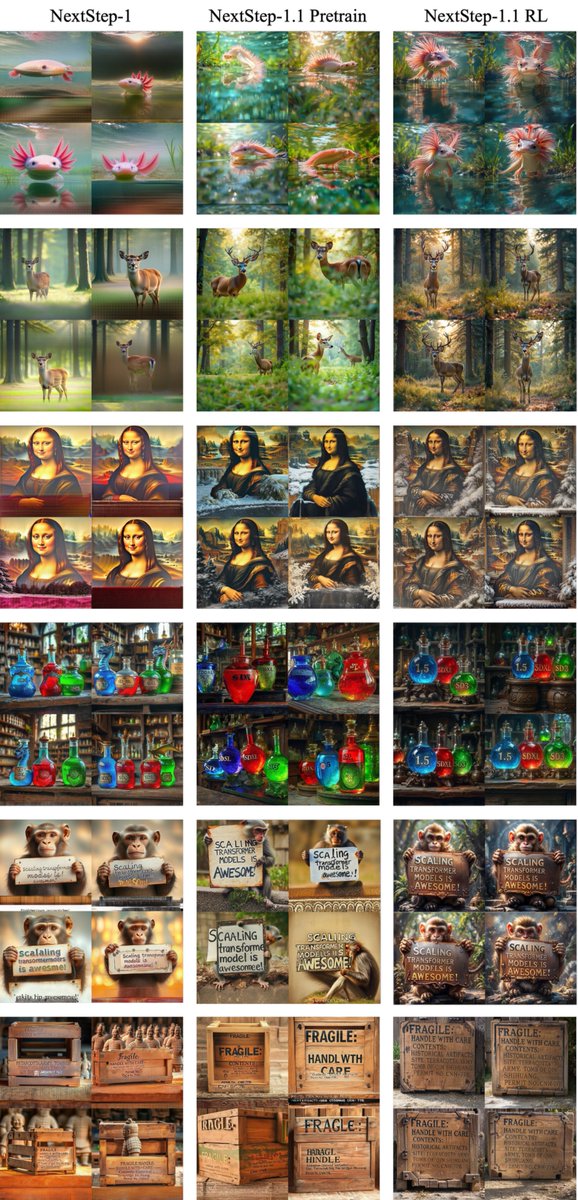
🎉 We are thrilled to announce NextStep-1 has been selected as an ICLR 2026 Oral (Acceptance Rate: 1.18%)! 🏆 We are redefining Autoregressive Image Generation by effectively moving beyond Vector Quantization. NextStep-1 pairs a causal transformer with a lightweight Flow Matching head to predict continuous tokens directly. It is the first continuous autoregressive model to achieve SOTA performance comparable to diffusion models like Flux and SD3.5. 🔥 Code and blog for Nextstep-1.1 are coming soon! We are committed to open research to accelerate the future of AR generation. Paper: https://t.co/CcEhZWIcSB GitHub: https://t.co/DSEWk0olDs HuggingFace: https://t.co/eRRk5GvNZN
Context
StepFun announced that NextStep-1, its autoregressive image-generation model, was accepted as an oral presentation at ICLR 2026, a slot with roughly a 1.18% acceptance rate. The paper describes a 14-billion-parameter causal paired with a lightweight 157-million-parameter flow-matching head that predicts continuous image directly, replacing vector , a step earlier autoregressive image models used to convert images into discrete tokens at some cost to fidelity.
StepFun reports this design reaches image quality on par with diffusion-based generators such as Flux and SD3.5, calling it the first continuous autoregressive model to do so. That comparison is StepFun's own reporting inside a paper that passed peer review for the oral slot, a stronger form of scrutiny than an unreviewed announcement, though it does not make the quality-parity claim independently reproduced outside the paper. Code, weights and the paper are public for outside verification.
- transformer — The neural network architecture behind modern AI models, built on attention — letting every word directly consider every other word in parallel.
- token — The chunk of text a model reads and writes in — roughly three-quarters of a word — and the unit AI usage is billed in.
- quantization — Shrinking a model by storing its numbers less precisely — like rounding — so it runs faster and fits on smaller hardware, at a small quality cost.
- benchmark — A standard public test set for comparing AI models — the shared scoreboards behind every "model X beats model Y" claim.
 postStepFun Open-Sources Step Code, a CLI Coding Agent Benchmarked on Terminal-Bench
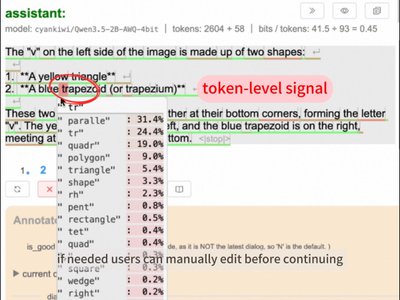 postStepFun Open-Sources onPanda, Its Internal LLM Annotation and Debug Tool
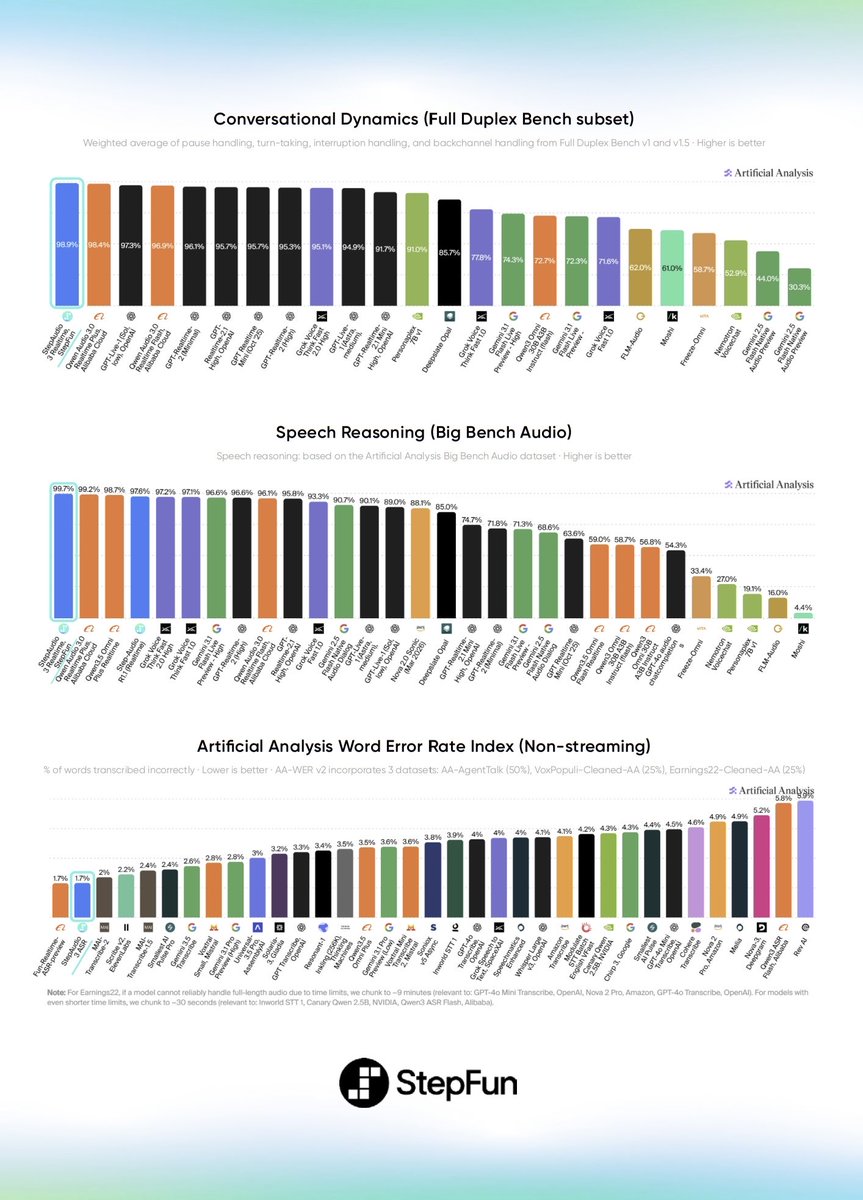 postStepFun debuts StepAudio 3 voice model family, tops real-time benchmarks
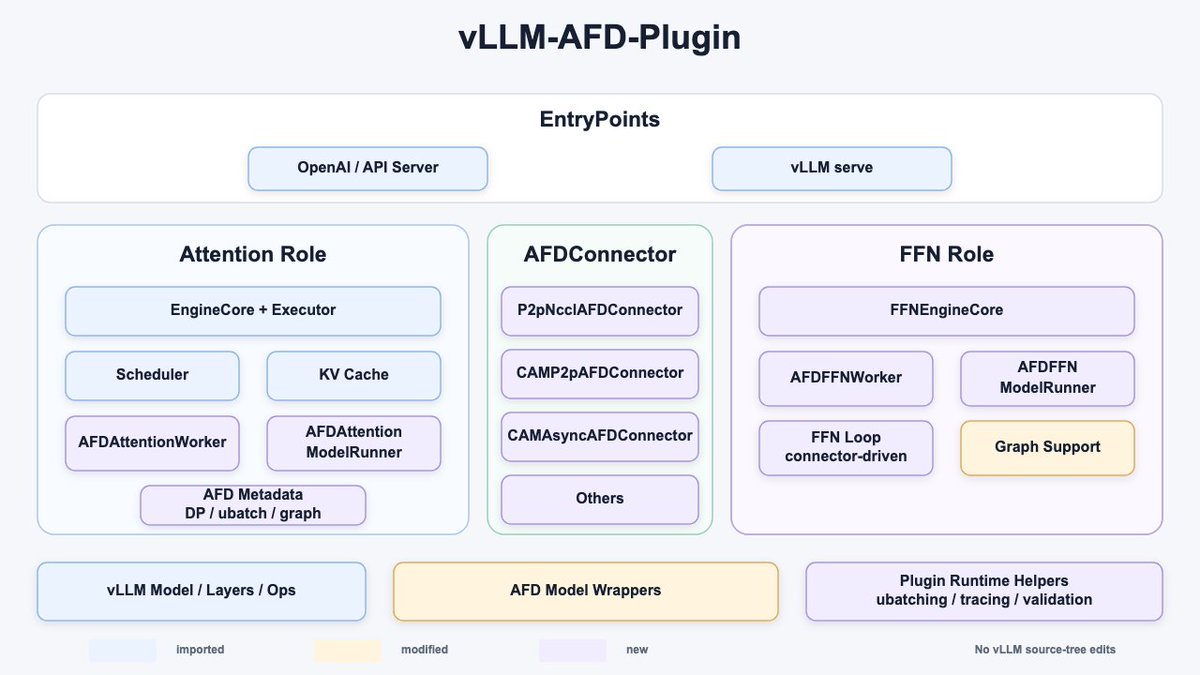 postvLLM gains an experimental Attention-FFN disaggregation plugin for MoE
Checking sign-in…
Loading comments…