Step 3.7 Flash: Apache 2.0 multimodal MoE tuned for agent efficiency
- Source
- x.com
- Date

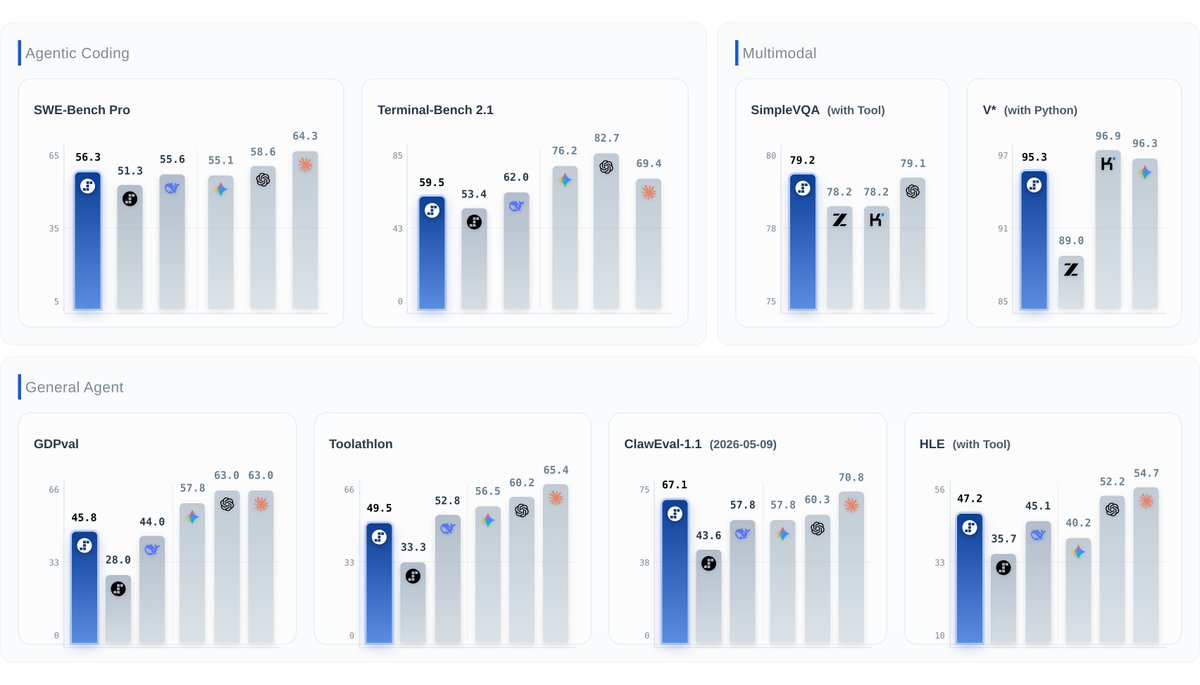
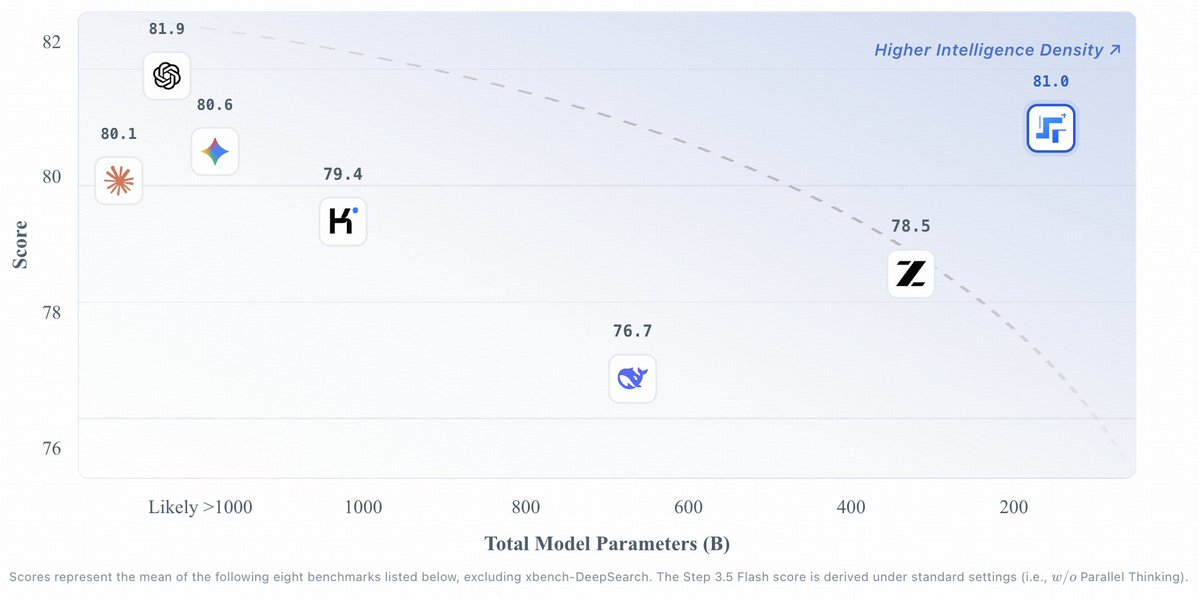
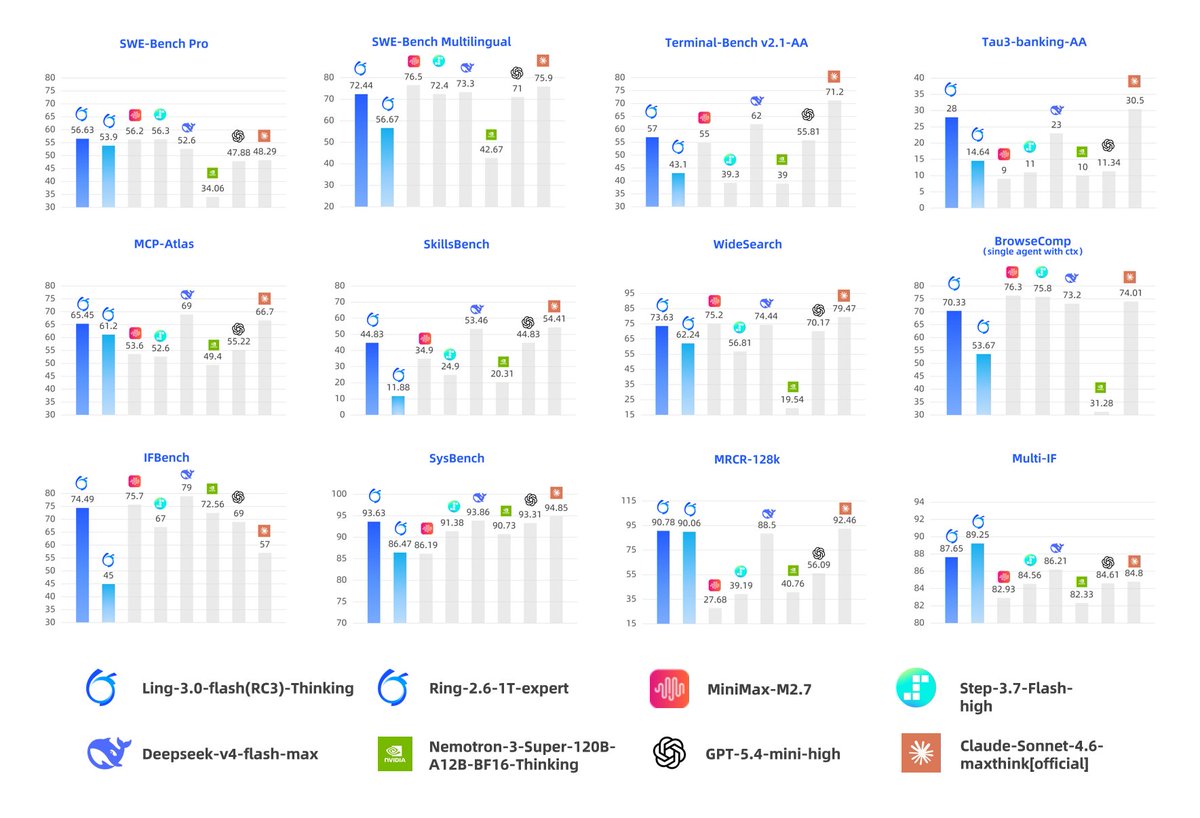
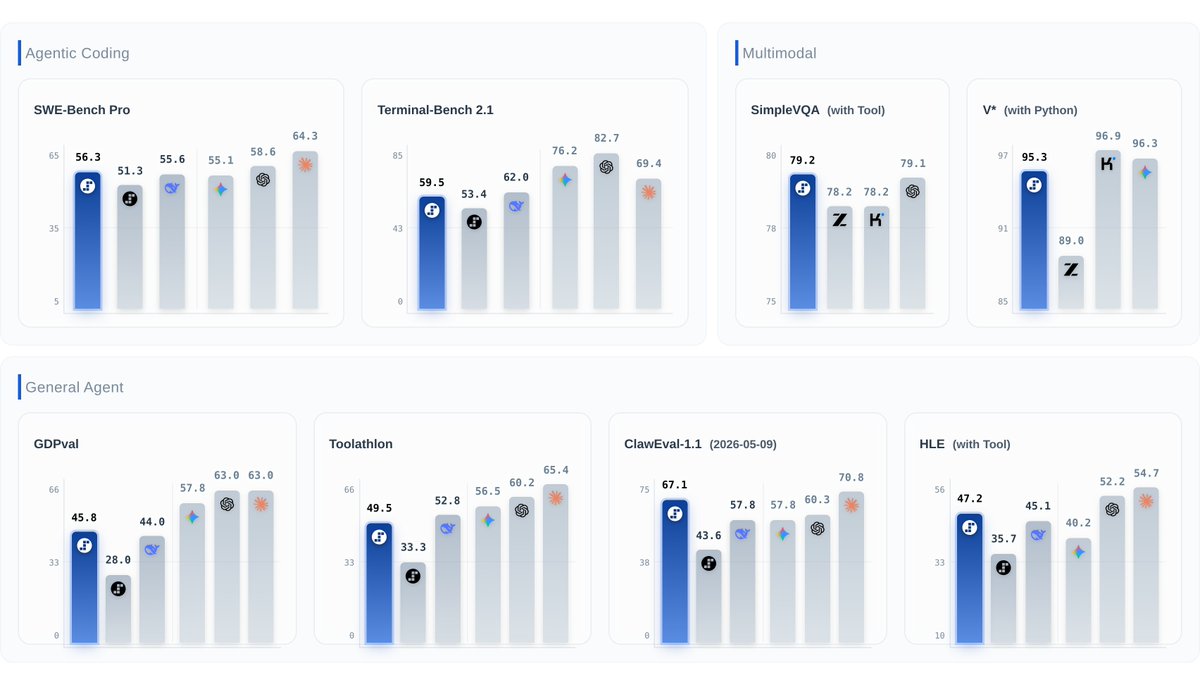
⚡️ Step 3.7 Flash is here: The new frontier is agent efficiency. #1 ClawEval-1.1 (67.1), #1 SimpleVQA Search (79.2), #2 SWE-PRO (56.3), 95.3 on V* Python. Open weights under Apache 2.0. Built for agentic, coding, search, and multimodal workflows — balancing speed, cost, and reliable execution. - 400 TPS. 198B sparse MoE, ~11B active. 256K context, 3 reasoning levels. - Understands UIs, charts, docs, images — then writes code or calls tools to act on what it sees. - Web + visual search reaches further: more sources, deeper follow-up. - Reliable tool use — less drift, fewer broken toolcalls. 98%+ on τ²-bench across all difficulty levels. - Works with Claude Code, KiloCode, Hermes Agent, OpenClaw, and protocols like MCP. - Runs locally on Mac Studio M4 Max, DGX Spark, AMD AI Max+ 395. GitHub: https://t.co/kqlZkVIRHv HuggingFace: https://t.co/qqceCrgPiw GGUF: https://t.co/rR6XrnymWG ModelScope: https://t.co/wney6Tzvqy API: https://t.co/RvHWzRG7Fu Blog:
Context
Per StepFun's launch post, Step 3.7 Flash is a 198-billion-parameter sparse model that activates roughly 11 billion parameters per token, with a 256K-token , three selectable reasoning levels, and under the Apache 2.0 license. In a sparse mixture-of-experts model, each token is routed through only a small subset of specialized sub-networks, called experts, instead of running the model's entire parameter set on every input, letting it behave like a much larger model while computing through a fraction of its total parameters per step.
StepFun reports the model ranking first on two benchmarks it names, ClawEval-1.1 at 67.1 and SimpleVQA Search at 79.2, second on SWE-PRO at 56.3, and 95.3 on a Python-focused test it calls V* Python, alongside throughput of 400 tokens per second and tool-call reliability above 98 percent on tau-squared-bench across all difficulty levels. These are the company's own self-reported figures at launch, not independently reproduced here. StepFun also says the model works with existing agent tools including Claude Code, Kilo Code and the Model Context Protocol, and can run locally on hardware like a Mac Studio M4 Max or Nvidia DGX Spark.
- mixture-of-experts — A model built from many specialist sub-networks where only a few activate per token, giving big-model capability at small-model running cost.
- context window — The maximum amount of text a model can consider at once — its working memory for the current conversation or task.
- open weights — A model whose trained parameters are published for anyone to download and run — unlike API-only models you can access but never possess.
- tool use — A model's ability to call external functions — run code, search the web, edit files — instead of only generating text.
 postStepFun Open-Sources Step Code, a CLI Coding Agent Benchmarked on Terminal-Bench
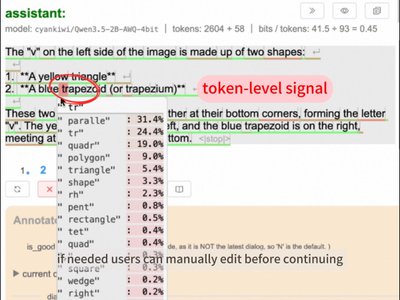 postStepFun Open-Sources onPanda, Its Internal LLM Annotation and Debug Tool
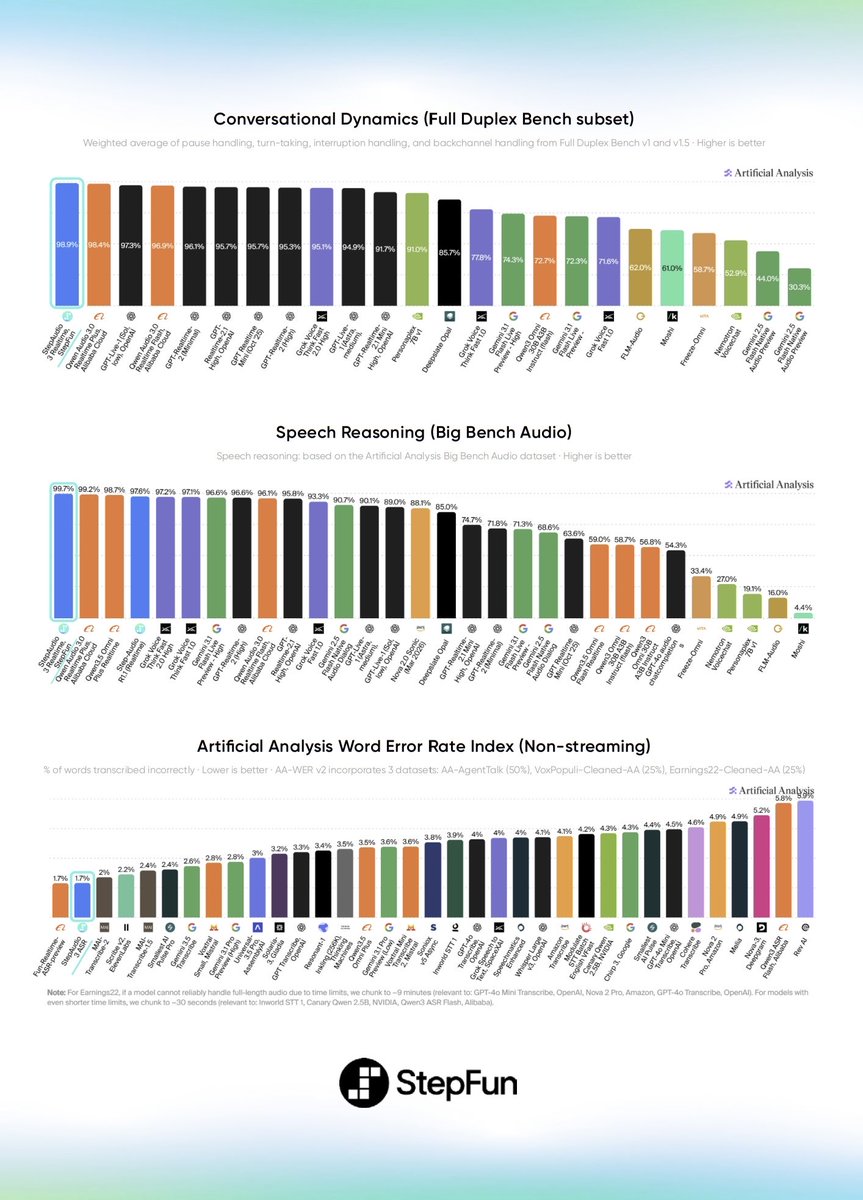 postStepFun debuts StepAudio 3 voice model family, tops real-time benchmarks
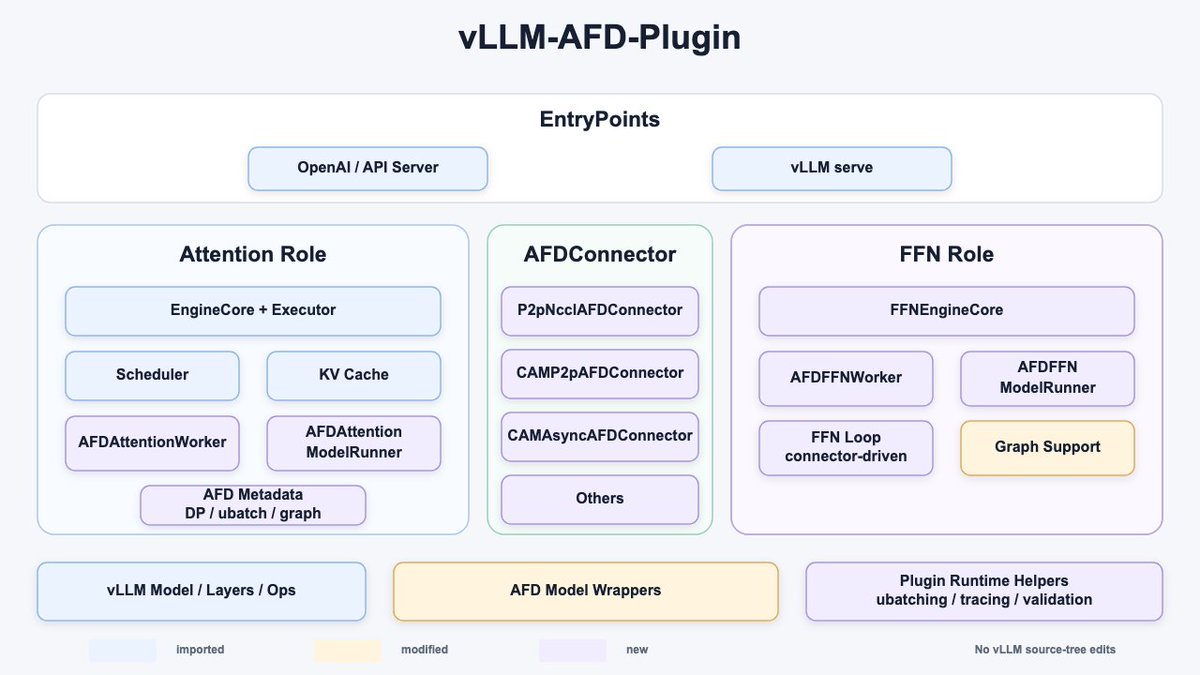 postvLLM gains an experimental Attention-FFN disaggregation plugin for MoE
Checking sign-in…
Loading comments…