The Pulse: tech companies move to open AI models
- Source
- newsletter.pragmaticengineer.com
- Author
- Gergely Orosz
- Date
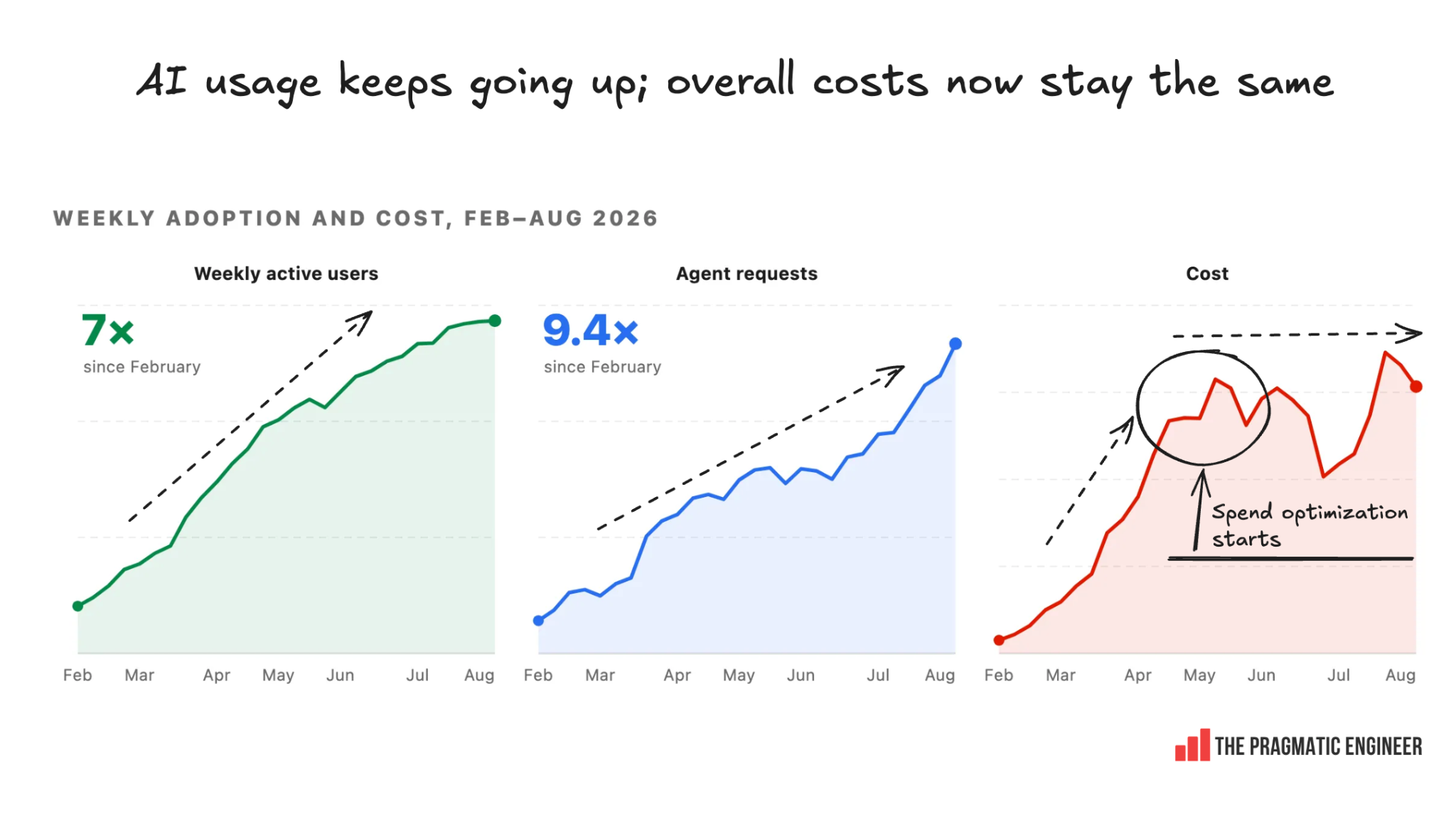
Gergely Orosz's newsletter details a cost-cutting pattern spreading across major engineering organizations: shifting simpler AI workloads from proprietary frontier models to open-weight models paired with smart routing logic. Companies named in the reporting, including Uber, Pinterest, Stripe, Coinbase, Ramp, and AT&T, are reportedly cutting their AI infrastructure bills by roughly half using this approach, reserving frontier models only for tasks that genuinely need that level of capability. The pattern is the same one showing up in GitHub's HydraFusion preview and Spotify's tiered sub-agent setup: send easy work to a cheap model, escalate to an expensive one only when needed. What is notable here is the scale, this is not a single company's optimization story but a repeatable practice now showing up across a wide range of unrelated engineering orgs, suggesting model-cost routing is becoming a standard line item in production AI architecture rather than a one-off hack.
Context
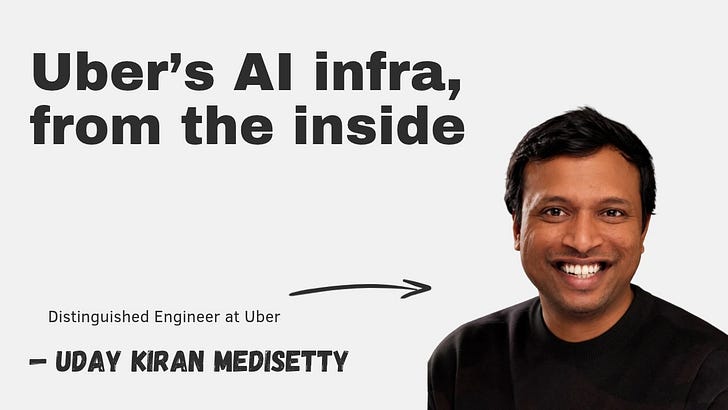
Moving work to cheaper AI models requires knowing which tasks they can handle. The newsletter's public preview names Uber among companies cutting AI costs through , and Uber Engineering's earlier account shows one way to decide: it evaluates models on real pull requests with known bugs, measuring detection quality alongside cost, latency and unwanted comments.
Uber's primary report says switching models improved its review-quality measure (F1) while dramatically reducing cost per review, though the text gives no figures. Its serves frontier and models behind one interface. This makes model selection a workload-specific measurement problem, rather than an assumption that every task needs the most expensive model.
- model routing — Sending each request to a model chosen by the difficulty of the task, rather than using one model for everything.
- agent harness — The scaffolding around a model that turns it into a working agent — the loop, the tools it can call, and the rules for when to stop.
- open weights — A model whose trained parameters are published for anyone to download and run — unlike API-only models you can access but never possess.

Checking sign-in…
Loading comments…