The Revenge of the Data Scientist
- Source
- hamel.dev
- Author
- Hamel Husain
- Date
Context
An can appear accurate because its instructions were repeatedly adjusted to the same examples. Hamel Husain's data-science argument applies a familiar safeguard: separate the examples used inside the prompt, the development cases used to improve it and an untouched test set used to assess the result.
Human labels provide the comparison standard. When failures are uncommon, the assessment should also distinguish catching actual failures from incorrectly flagging acceptable work. Husain's point is that adopting a model API leaves these experimental-design problems intact; validating an evaluator remains a classification problem.
- Accuracy hides the failures you care about. If a failure mode shows up 5% of the time, a judge that never catches it still scores 95%. Report precision and recall instead.
- Criteria drift: people cannot say what "good" means until they see outputs, and grading outputs is how they discover the criteria. Labeling is not QA busywork — it is how you learn what you want.
- Likert 1-5 ratings postpone the hard call. Scope each metric to one criterion and make it binary pass/fail, so a bad score points at something you can actually go fix.
- Asking an for 50 test queries gets you generic ones. Start from real production traces, decide which dimensions actually vary, then generate synthetic cases along those dimensions and inject edge cases.
- The metrics that move an app are never ROUGE or "helpfulness." They look like "calendar scheduling failure" or "failure to escalate to a human" — names that come out of reading your own traces.
- LLM-as-judge — Using one model to score another's output against a rubric, so quality can be measured at a scale human grading cannot reach.
- LLM — A large language model — the neural network behind tools like Claude and ChatGPT, trained on huge amounts of text to predict what comes next.
“Data Scientist (n.): Person who is better at statistics than any software engineer and better at software engineering than any statistician.”
Josh Wills
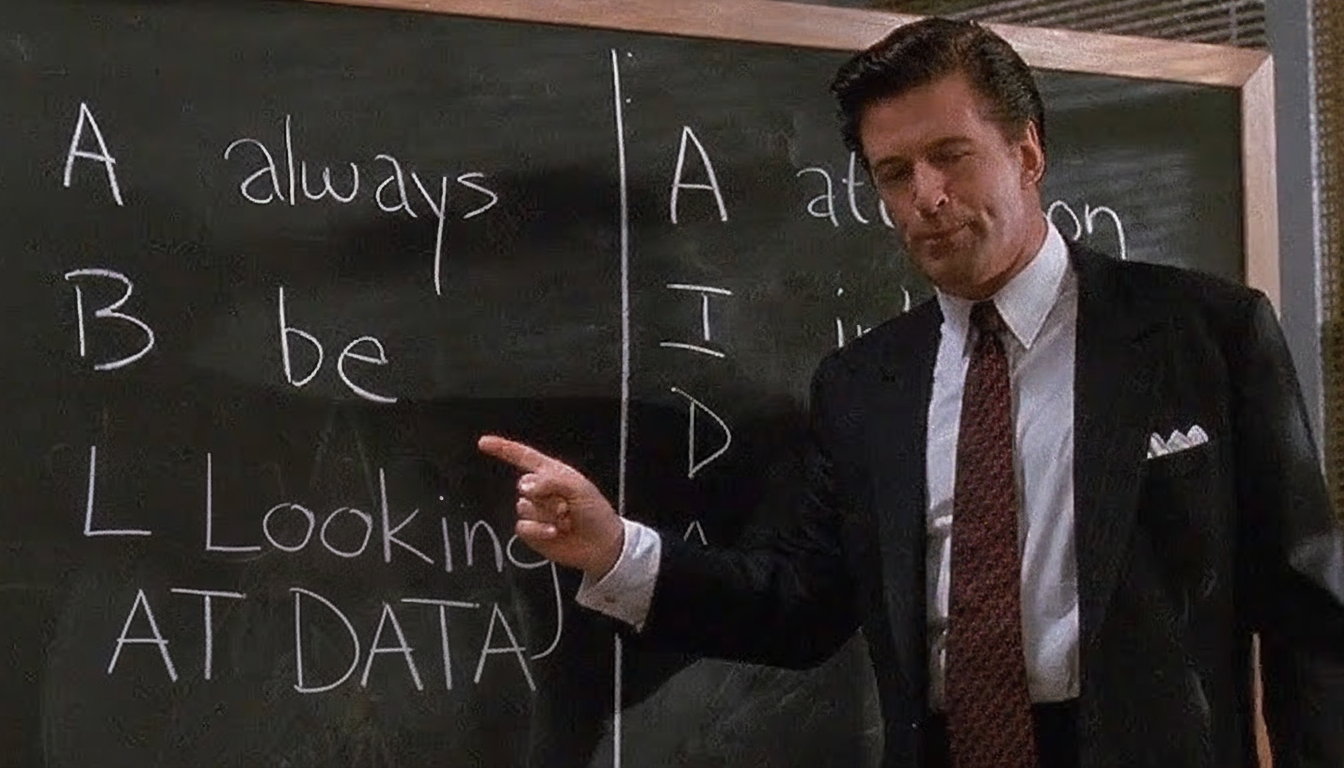
“If there is one thing to take away from this post: look at the data.”
“Data scientists don’t trust the data. They don’t trust the labels. They don’t trust anything.”
“People don’t know what they want until they see the LLM’s outputs.”
“None of this is new. The names changed, the work did not.”


Checking sign-in…
Loading comments…