The AI application skill stack: grounding, agents, evals, production
- Source
- x.com
- Publisher
- Andrew Ng
- Date

The most important skills in Building and Deploying AI Applications. https://t.co/IyWIKLIzeM
Context
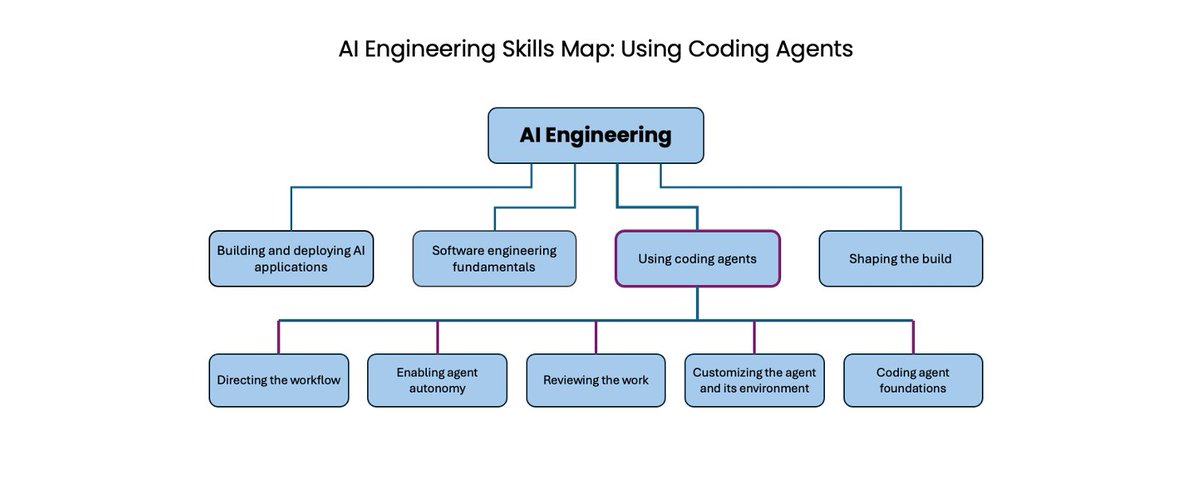
In Andrew Ng’s account, what sets AI applications apart from ordinary software is that their output is less predictable, which makes building them more iterative and harder to plan in advance. This August 2026 article fleshes out the first of four top-level skills in the AI Engineering Skills Map he wrote about earlier: building and deploying AI applications. He says the map was formed by analyzing a large number of job postings, structured expert interviews and survey responses.
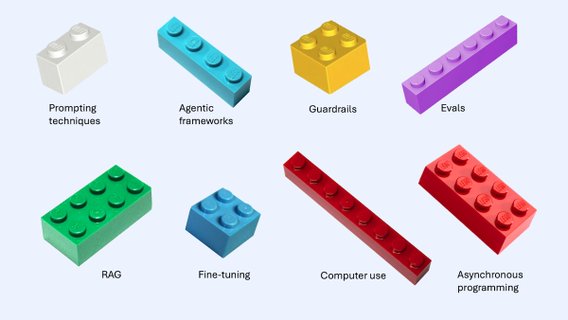
He breaks this skill into six parts: foundations, models with data, building agentic systems, evaluation-driven development, operating in production, and machine learning foundations. What ties them together is deciding what to try next. Skilled AI engineers, he writes, build a piece of software, examine it, and choose the next step based on intermediate results, and doing that well is how reliable systems get built from unreliable AI components.
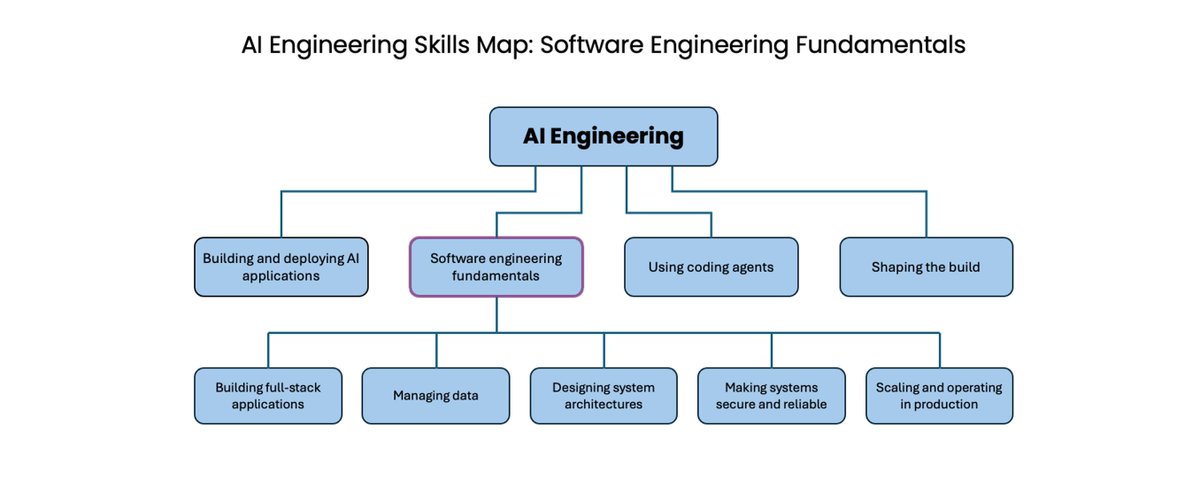
Ng singles out evaluation-driven development as, in his experience, the most important trait of people who are great at building AI systems: running a disciplined loop of evals and error analysis to decide where effort is likely to pay off. That means deciding what to measure from traces, outputs, data analysis and product and business insight; knowing when to use code-based checks, an LLM as a judge, or a ; and evaluating the evals themselves. His earlier letter on starting evals small describes one way to do that last part, checking whether an eval ranks two versions of a system the way a skilled human judge would. The article closes by naming software engineering as a strong complement, the subject of his follow-up article.
- Large language model — A model trained on large amounts of data to process and generate language.
- grounding — Tying a model's answers to checkable sources — retrieved documents, live data, tool results — instead of letting it answer from memory alone.
- Human oversight — Defined points where a person approves, monitors, or retains a judgment.
- Context and context window — Context is the information available for a generation; the context window is the capacity available to hold it.