A Component-by-Component Walkthrough of How Transformer LLMs Work
- Source
- x.com
- Date

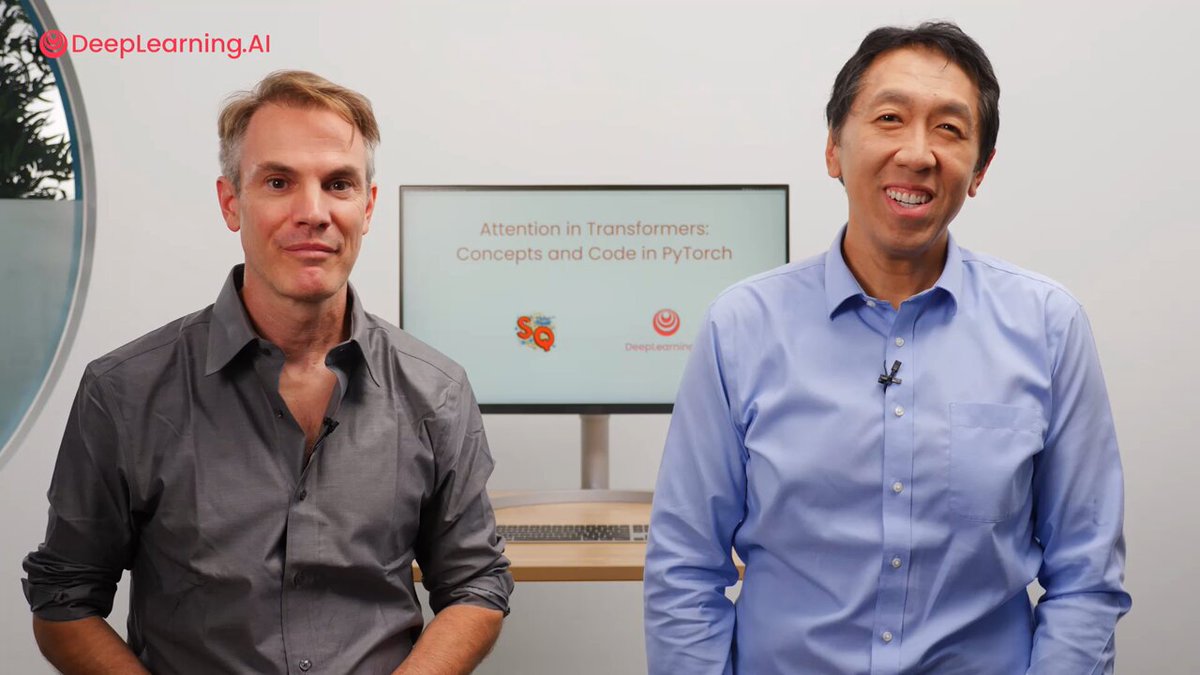
Announcing How Transformer LLMs Work, created with @JayAlammar and @MaartenGr, co-authors of the beautifully illustrated book, “Hands-On Large Language Models.” This course offers a deep dive into the inner workings of the transformer architecture that powers large language models (LLMs). The transformer architecture revolutionized generative AI; in fact, the "GPT" in ChatGPT stands for "Generative Pre-Trained Transformer." Originally introduced in the Google Brain team's groundbreaking 2017 paper "Attention Is All You Need," by Vaswani and others, transformers were a highly scalable model for machine translation tasks. Variants of this architecture now power today’s LLMs such as those from OpenAI, Google, Meta, Cohere, Anthropic and DeepSeek. In this course, you’ll learn in detail how LLMs process text. You'll also work through code examples that illustrate that transformer's individual components. In details, you’ll learn: - How the representation of language has evolved, from Bag-of-Words to Word2Vec embeddings to the transformer architecture that captures a word's meanings taking into account the context of other words in the input. - How inputs are broken down into…

Context
How LLMs Work organizes a around the path text takes through it. The course description starts with tokenization, which divides text into units such as words or word pieces, and , which represent those units numerically.
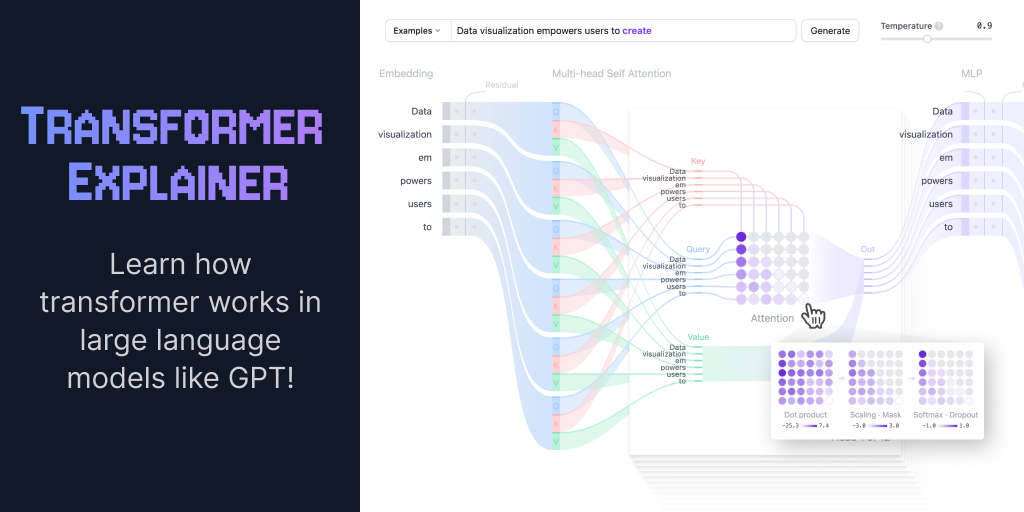
It then examines transformer blocks, including calculations that score relevance within the input, before reaching the model's output component. Code examples connect those concepts to implementations, and the curriculum also covers reusing cached calculations to speed processing. The course's intended value is to make architecture descriptions in model papers understandable by explaining how the components fit together.
- transformer — The neural network architecture behind modern AI models, built on attention — letting every word directly consider every other word in parallel.
- LLM — A large language model — the neural network behind tools like Claude and ChatGPT, trained on huge amounts of text to predict what comes next.
- embedding — A list of numbers representing a piece of text's meaning, so that similar meanings end up numerically close and can be searched.
- attention — The mechanism that lets a model weigh which earlier words matter for the word it's currently processing — the core operation of a transformer.

Checking sign-in…
Loading comments…