MiMo-V2.5 and V2.5-Pro go open weights under MIT with day-zero SGLang and vLLM
- Source
- x.com
- Date

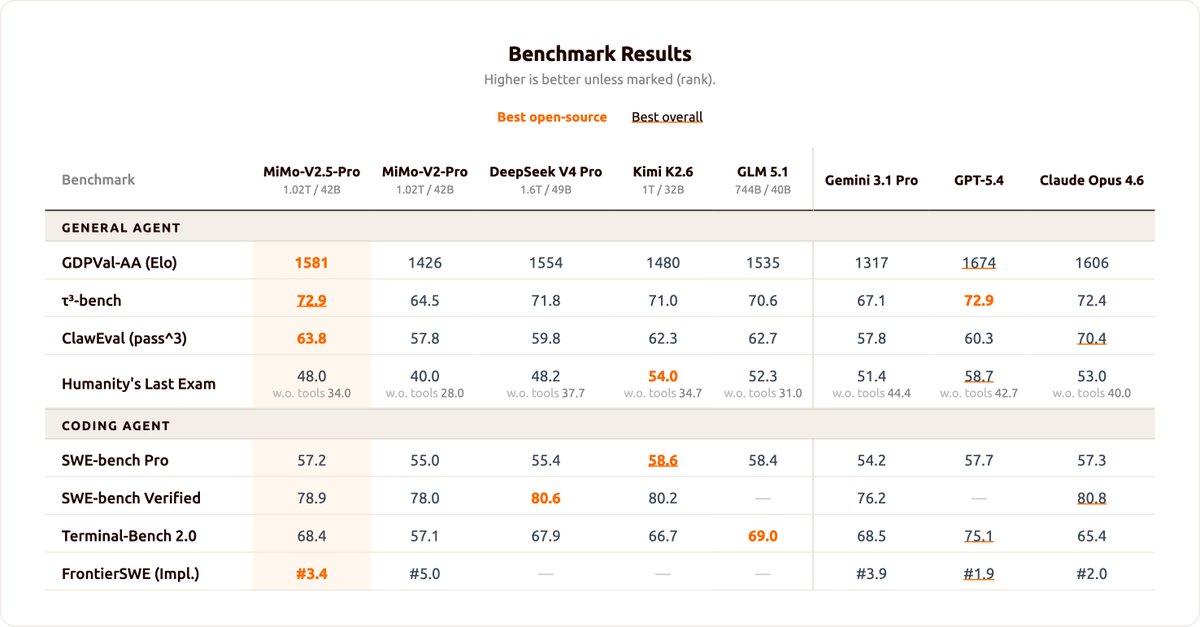
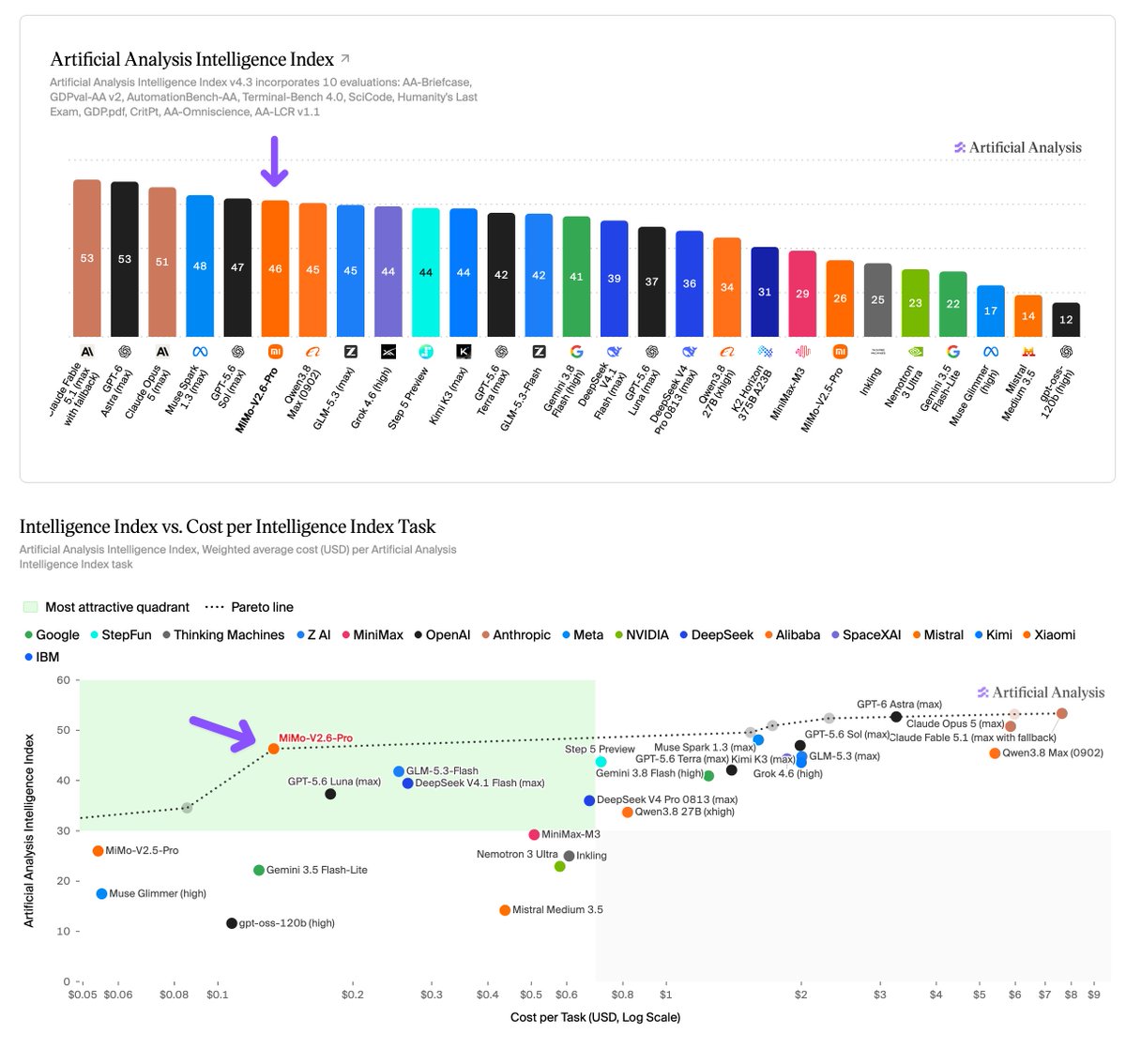
Xiaomi MiMo-V2.5 is now officially open-sourced! MIT License, supporting commercial deployment, continued training, and fine-tuning - no additional authorization required. Two models, both supporting a 1M-token context window : • MiMo-V2.5-Pro: built for complex agent and coding tasks, ranking No.1 among open-source models on GDPVal-AA and ClawEval • MiMo-V2.5: a native omni-modal model with strong agent capabilities A model's value isn't measured by rankings alone — it's measured by the problems it solves. Let's build with MiMo now! 🤗 Weights: https://t.co/w7wNtXj9Rm 📄 Blog:

SGLang and vLLM support for the MiMo-V2.5 series is here. 🙌 Huge thanks to SGLang project from @lmsysorg and @vllm_project for moving fast and helping developers get started with MiMo-V2.5 on day zero.

MiMo-V2.5 achieved Day-0 adaptation across multiple chip platforms on the first day of open source release. Huge thanks to our hardware ecosystem partners for helping make MiMo-V2.5 easier to deploy and run efficiently across more environments: @awscloud、@AMD 、T-HEAD、KUNLUNXIN、Enflame、MetaX、Iluvatar CoreX From cloud AI chips to domestic accelerators, we’re working with the ecosystem to bring MiMo-V2.5 to more developers and enterprises on day zero.

Context
Xiaomi open-sourced both models in its MiMo-V2.5 series under the MIT license, which its announcement says permits commercial deployment, continued training and without further authorization. Both models support a 1-million-token : MiMo-V2.5-Pro targets complex and coding tasks, where Xiaomi says it ranks first among open-source models on the GDPVal-AA and ClawEval benchmarks, and MiMo-V2.5 is a general-purpose omnimodal model with agent capabilities. Those rankings are Xiaomi's own reported benchmark placements, not an outcome checked by an outside party.
The release included same-day support in the SGLang and vLLM -serving projects, and Xiaomi says the models reached working deployment on the first day across multiple hardware platforms, crediting partners including AWS, AMD, T-Head, Kunlunxin, Enflame, MetaX and Iluvatar CoreX, meaning the release was not limited to Nvidia-based serving from the outset.
- fine-tuning — Taking a trained model and training it a bit more on your own examples so it gets better at one specific job.
- context window — The maximum amount of text a model can consider at once — its working memory for the current conversation or task.
- AI agent — An AI system that doesn't just answer once but works toward a goal in a loop — taking actions, reading the results, and deciding what to do next.
- inference — Running a trained model to get answers — the phase where AI is actually used, as opposed to trained.
Checking sign-in…
Loading comments…