Image Generation MCP: Images, Video & Lip Sync with Fish Audio
- Source
- fish.audio
- Author
- Fish Audio editorial sitemap
- Date
Context
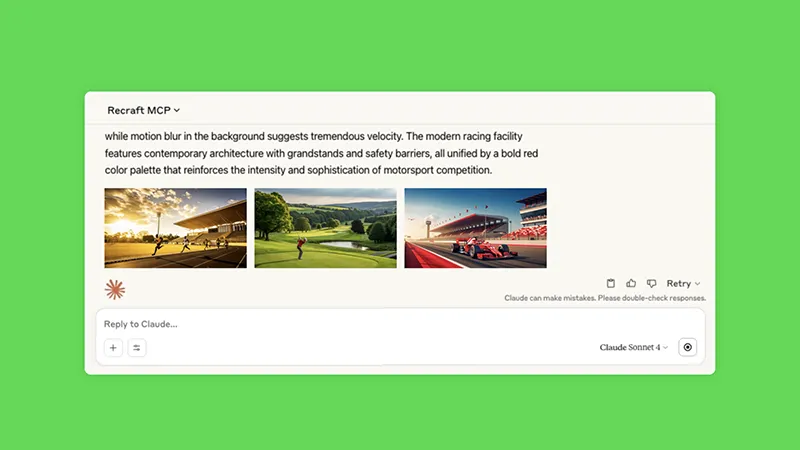
Fish Audio's update to its reads mostly as a guide, but it describes one design worth understanding. , the Model Context Protocol, is the standard way an AI agent such as Claude Code, Cursor or Codex gains outside tools: the agent connects to a and can then call the functions it offers. Fish Audio already ran such a server for its speech tools. According to its announcement, the same connection now also reaches dozens of third-party image, video, lip-sync and talking-avatar models, among them GPT Image 2, Seedance, Kling, Veo 3.1 and HeyGen Avatar 4. Access takes one browser sign-in rather than a separate API key per provider, and jobs draw on the credits of Fish Audio's web app, not its separate Developer API balance.
The design point is spending control when an agent can run paid models for you. For image, video, lip-sync and avatar jobs, the agent first requests a free price quote, shows it to you and waits, then submits the exact request. The server prices the job again at submission and rejects it if the price has changed, so the charge cannot exceed the quoted amount. Each paid request carries a unique key, so a retry after a timeout returns the original job instead of starting and charging for a new one, and failed jobs are refunded. Speech generation and transcription skip the quote and are charged as soon as they run. The post says this protection is built into the server rather than left to the agent's judgment, but what it describes the server checking is the price; waiting for your approval is a step the agent performs, and the post does not say how the server would know a person, rather than the agent, said yes.
The other thing a combined server allows is chaining. Speech the agent generates with Fish Audio's text-to-speech can go straight into an avatar or lip-sync job without being downloaded and uploaded again, and Fish Audio says it tested this with a six-second clip. Image generation, editing and upscaling are available on the free plan, while video, lip sync and avatars need the paid Plus plan or higher. The post lists no prices, telling users to ask the agent for quotes, and offers no comparison of the models' output, so it establishes what the server lets an agent do, not how well the underlying models perform.
- Fish Audio puts spend control in the server, not the agent: media jobs get a free quote, nothing is charged until the user approves, and the server re-prices at submission and rejects the job if the price changed.
- Each paid request carries a unique key, so an agent retrying after a timeout gets the original job back instead of a second charge; failed generations are refunded automatically.
- Text-to-speech and speech-to-text skip the quote step and are charged as soon as they run, so the approval safeguard covers image, video, lip sync and avatar jobs but not the voice tools.
- MCP media generation draws on Fish Audio web plan credits, not Developer API credits; image work is available on the Free plan, while video, lip sync and talking avatars need Plus or higher.
- One generate_video tool handles lip sync and avatars by inspecting inputs: a video plus audio is lip sync, a portrait plus audio is a talking avatar. Fish Audio says a six-second TTS clip passed straight in as avatar audio.
- MCP server — A program that provides tools, resources and prompt templates to an MCP client; it may run on the same machine as the application or remotely.
- Setup — The combination of a model, a harness, its connections and the path the task's data takes, considered together for a task.
- Model Context Protocol (MCP) — A published agreement for an AI application to discover what a separate program offers and ask it to run one of those offerings.
- Server — Software that receives requests, processes them and returns responses; the computer running it is its host.
Checking sign-in…
Loading comments…