Fully autonomous robots are much closer than you think – Sergey Levine
- Source
- dwarkesh.com
- Author
- Dwarkesh Patel
- Date
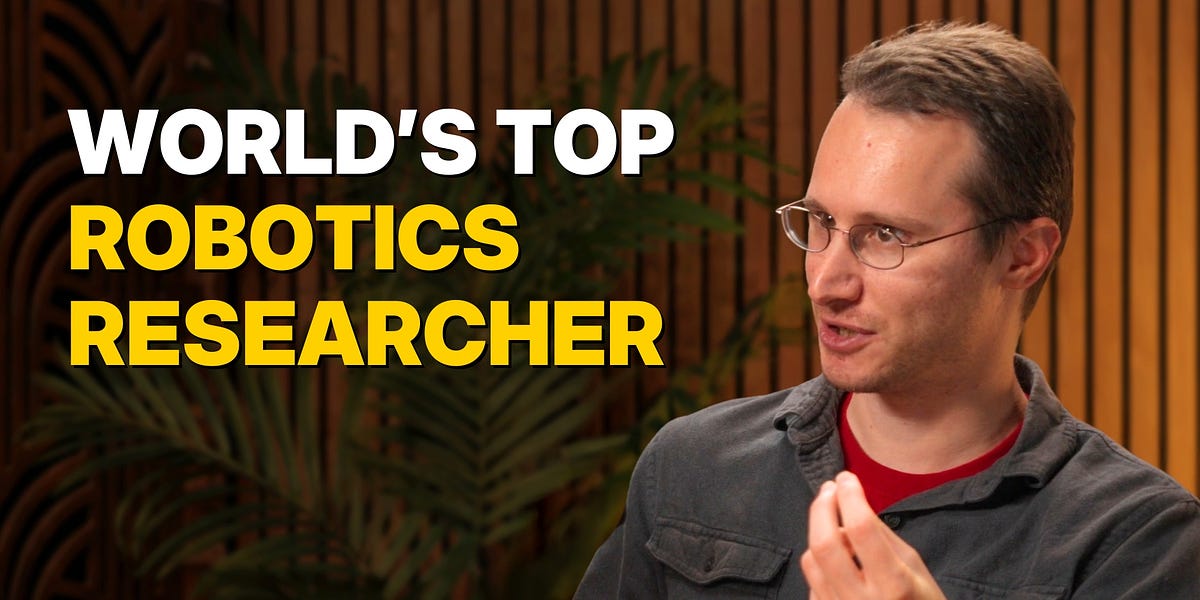
A deep dive with a top robotics researcher on how vision-language-action foundation models work and what it takes to scale robot data and hardware — useful for anyone tracking where agentic AI extends beyond text into the physical world.
“The robot is essentially encompassing all AI technology. If you can get a robot that's truly general, then you can do, hopefully, a large chunk of what people can do.”
Sergey Levine
“It also requires industrial scale building effort. It's more like the Apollo program than it is a science experiment.”
Sergey Levine
“Moravec's paradox says that in AI the easy things are hard and the hard things are easy.”
Sergey Levine
“when it's robot plus human now, there's a lot more potential for the robot to actually learn on the job, acquire new skills”
Sergey Levine
“Education is the best buffer somebody has against the negative effects of change. If there is one single lever that we can pull collectively as a society, it's more education.”
Sergey Levine
- 00:00:00Timeline to widely deployed autonomous robots
- 00:17:25Why robotics will scale faster than self-driving cars
- 00:27:28How vision-language-action models work
- 00:45:37Changes needed for brainlike efficiency in robots
- 00:57:59Learning from simulation
- 01:09:18How much will robots speed up AI buildouts?
- 01:18:01If hardware's the bottleneck, does China win by default?




Checking sign-in…
Loading comments…