Nemotron 3.5 Super VL plugs into Deep Agents with LangChain benchmarks
- Source
- docs.langchain.com
- Author
- LangChain
- Date
Context
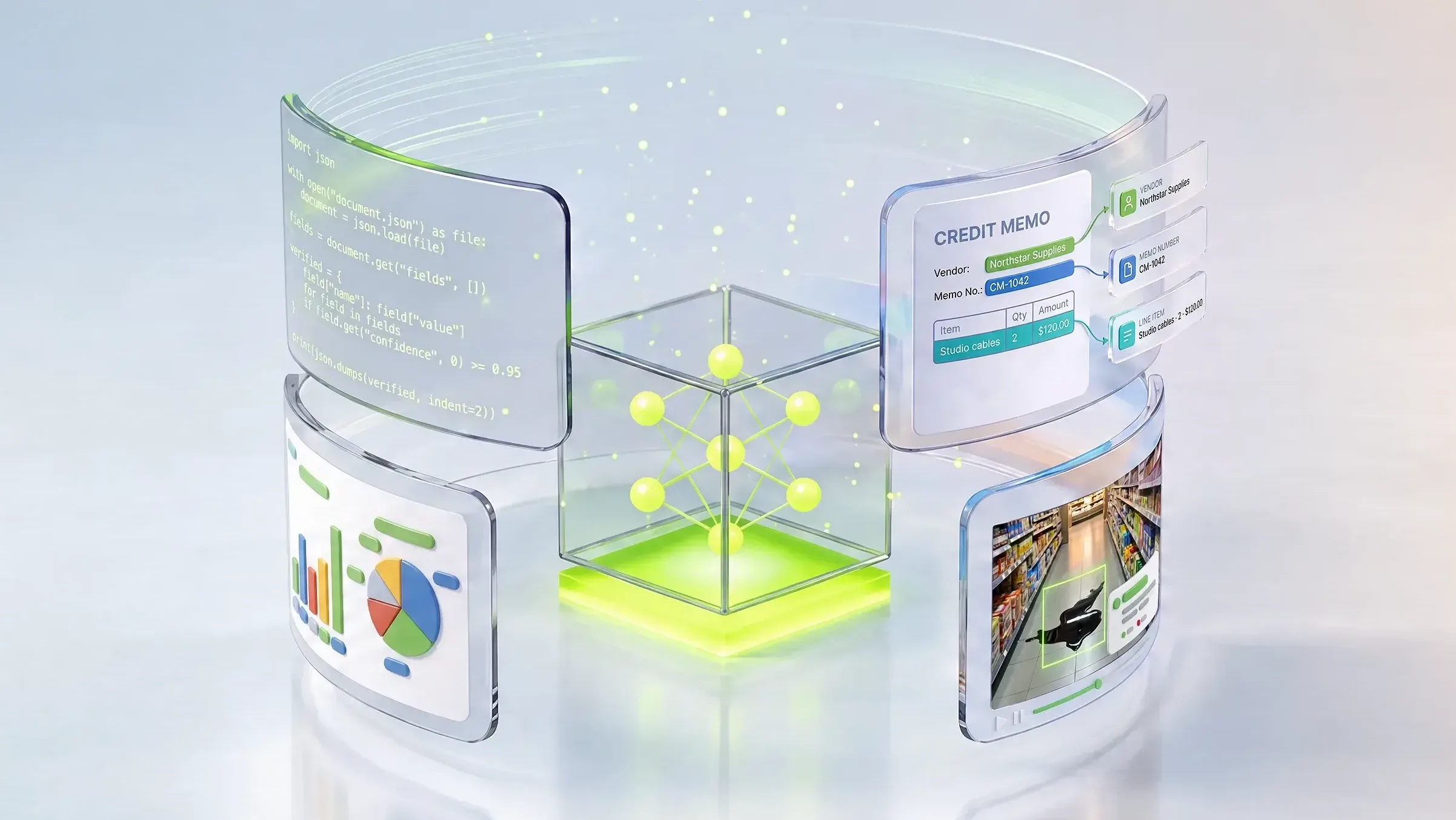
LangChain says NVIDIA's Nemotron 3.5 Super VL, an open-weights model with 120 billion parameters of which 12 billion are active per token, now works as the model inside Deep Agents, LangChain's ready-made with built-in tools (LangChain post). The connection runs through ChatNVIDIA, LangChain's wrapper for models served from NVIDIA's API catalog or self-hosted in NVIDIA's NIM containers. The integration docs show the whole path: create a ChatNVIDIA model with the ID nvidia/nemotron-3.5-super-vl-120b-a12b, an 8,192-token completion limit and thinking switched on, then pass it to create_deep_agent. Because the model accepts images as well as text, the same agent can be handed an image inside its message, which is where the vision in the announcement comes in.
The numbers in the post come from LangChain's own tests: an 87% average pass rate on its Deep Agents behavioral suite, and, on a benchmark it calls Harbor-lite, 55% less total task time than DeepSeek V4.1 Flash with what it describes as similar success. Neither the post nor the linked docs say what those suites contain, how many tasks were run or what the success rates were, so they describe speed and reliability inside LangChain's rather than a comparison a reader can reproduce. The docs also note that their example uses the default Deep Agents harness without a model-specific profile. A profile adjusts the harness for one model, for instance its prompts, tools or middleware; NVIDIA's earlier write-up of one for Nemotron 3 Ultra, covered separately, reported that it raised that model's evaluation score from 94 to 96 out of 127. The post does not say whether its own results used such a profile.
- LangChain's ChatNVIDIA docs show Nemotron 3.5 Super VL (nvidia/nemotron-3.5-super-vl-120b-a12b) taking text and image input for chat and , and serving as the model passed to create_deep_agent in Deep Agents.
- ChatNVIDIA translates thinking_mode=True into each model's own control, a request parameter or a system-prompt prefix. The docs warn against passing it to the constructor: unknown constructor arguments become raw model_kwargs and skip that translation.
- ChatNVIDIADynamo is a drop-in replacement that injects nvext.agent_hints (expected output length, inter-arrival time, latency sensitivity, priority and a prefix_id for affinity) so a Dynamo deployment can route interactive and background calls differently.
- agentic loop — The cycle an agent runs in: decide, call a tool, read the result, decide again — repeating until the goal is met or a stop condition fires.
- agent harness — The scaffolding around a model that turns it into a working agent — the loop, the tools it can call, and the rules for when to stop.
- structured output — Forcing a model's response to match a schema, so downstream code can parse it instead of guessing at prose.
- KV cache — The memory a model keeps about text it has already read, so generating each new token doesn't require reprocessing the whole conversation.
Checking sign-in…
Loading comments…