litellm v1.109.2
- Source
- github.com
- Author
- litellm-release[bot]
- Date
Context
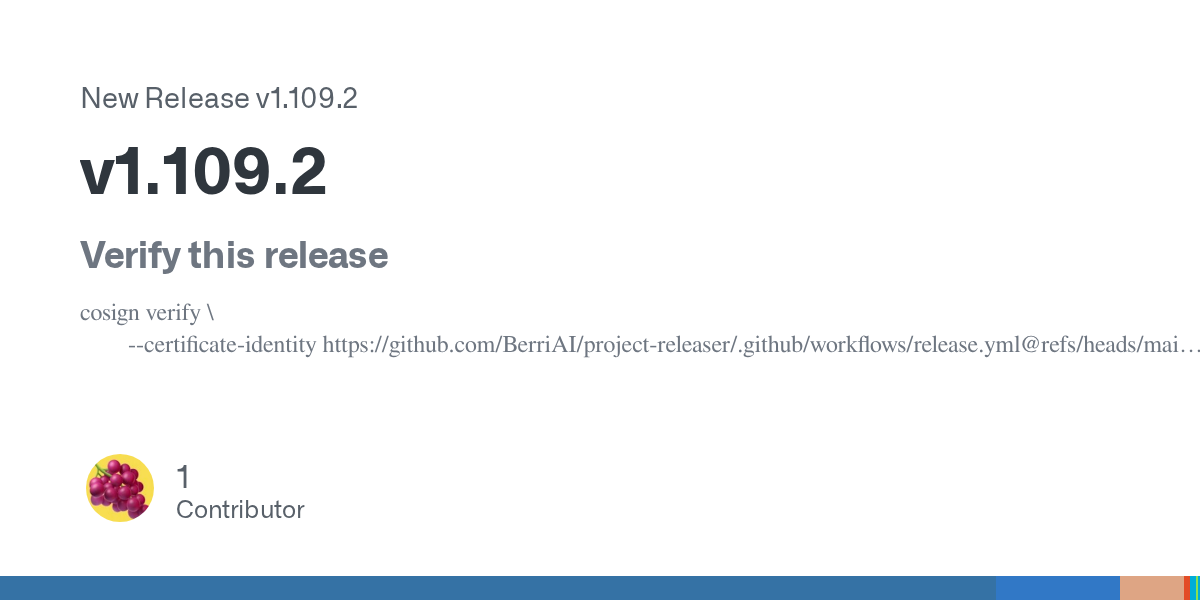
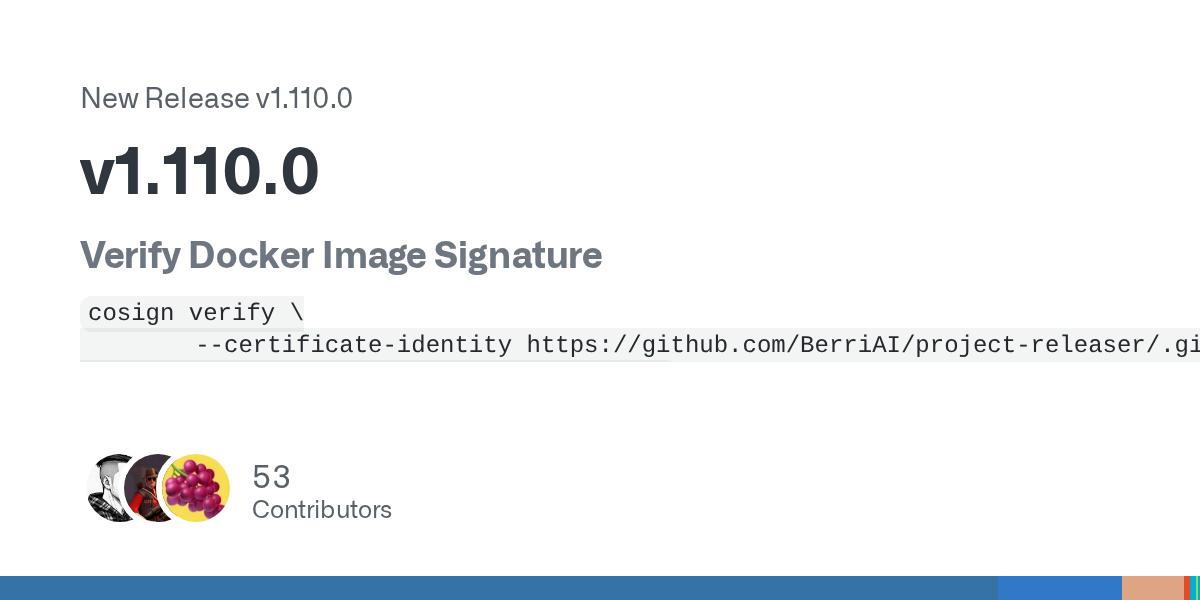
LiteLLM, an open-source library and proxy server that lets applications call many AI model providers through one interface, shipped v1.109.2 as a patch of 14 fixes, several of them to billing and spend tracking, such as budgets written as `1month` or `7days` resetting every midnight, and its notes say no action is needed to upgrade (release notes). The part that can still break an upgrade is the verification command at the top of those notes. LiteLLM signs its Docker images with cosign, a tool that lets anyone deploying an image confirm the project signed it before running it. In v1.108.2, and still in v1.109.1 on November 12, that command checked the signature against a public key file, `cosign.pub`, from commit `e82a3c6`. For v1.109.2 it checks an identity instead: the signing certificate must name the `release.yml` workflow in the `BerriAI/project-releaser` repository on its `main` branch, issued through GitHub Actions' service.
The release notes do not explain the switch, but LiteLLM's security incident post, in an update dated November 15, does. Starting with `v1.111.0-dev.3` that day, release images and the Helm chart are signed with keyless cosign, and the post says there is no stored signing key any more. Each release run instead gets a short-lived certificate from Sigstore, a public signing service, tied to the GitHub workflow doing the release. According to the post, `cosign verify --key` cannot be used with these releases. A verification script, CI check or cluster admission policy that pins the `e82a3c6` key therefore needs the identity-based command before it will accept v1.109.2. Releases published before `v1.111.0-dev.3` keep their key signatures and still verify with the key.
The same post covers why signing has been in flux. It concerns the compromised v1.107.0 release of October 21, and says the team believes the private half of the original cosign key, from commit `0112e53`, was exposed when the attacker exfiltrated tokens, which led to the key rotation explained in v1.106.3. With keyless signing there is no long-lived private key of that kind to steal, though the post does not give the team's reasons for choosing it.
- LiteLLM 1.109.2 now refuses requests from blocked or over-limit keys before reading the request body, fixing out-of-memory proxy restarts that happened when those keys retried large requests.
- Budgets written with long unit spellings such as `1month`, `7days` or `2weeks` had been resetting every midnight. This release fixes that, plus team member spend that never reset for users auto-joined to a default team, broken since v1.95.0.
- The release fixes GPT-6.2 for system prompts sent with `store: false` through `/v1/chat/completions` or `/v1/messages`.
- Login with SSO behind TLS termination had redirected to `http://` since v1.108.0 and is fixed here. The UI image also moved to slim nginx, which drops `curl` but keeps `wget` and `nc`.
- token — The chunk of text a model reads and writes in — roughly three-quarters of a word — and the unit AI usage is billed in.
- prompt caching — Reusing the model's processed form of a repeated prompt prefix so subsequent calls skip re-reading it, cutting cost and latency substantially.
Checking sign-in…
Loading comments…