Agents can now manage AI Gateway through Vercel MCP
- Source
- vercel.com
- Author
- Melkey Moksyakov
- Date
Context
Vercel's AI Gateway, a single that apps and coding agents use to reach models from many providers, can now be administered by an AI agent through Vercel , the that exposes Vercel's platform to agents over the Model Context Protocol, according to the Vercel changelog. The agent takes requests in plain language and can manage virtual models, view and change team-wide routing rules that redirect requests to another model or block them, and set spending budgets for the team, its projects and individual members, including defaults.
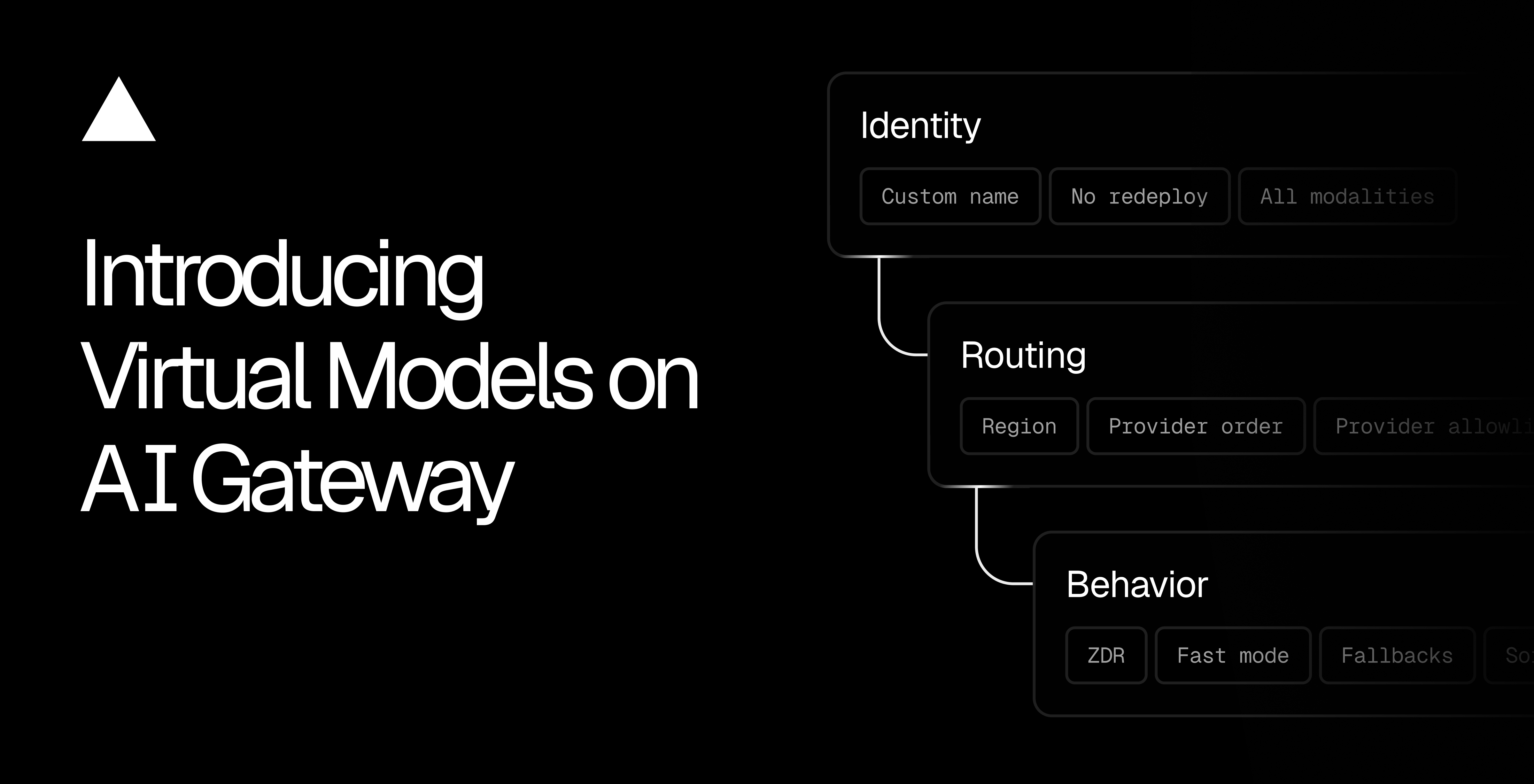
Virtual models are the part with the most reach. A virtual model, which Vercel introduced in October (earlier coverage), is a named, saved configuration that clients call in place of a real model ID. Vercel's example asks an agent to create one called coding-agent that uses anthropic/claude-opus-5.5 with Zero Data Retention enabled, a setting that routes requests only to providers that do not keep request data. Apps and coding agents then call vmc/coding-agent, and Vercel says the model or settings behind that ID can be changed later without updating those clients or redeploying the app. The agent can also list, inspect, update or restore existing virtual models.
That makes this more than a convenience. A single edit to a virtual model or a team-wide routing rule changes what every using it calls, so an agent with this access can switch the model a whole team's software uses or cap what it may spend. Vercel requires connecting the agent with team-level access and the required AI Gateway permissions, and says the team's existing Vercel permissions still apply, so the agent can do only what the connected account is already allowed to do. The changelog does not say whether changes made this way need confirmation or are recorded differently from changes made by a person.
- API — Application programming interface: the agreed set of operations, inputs and outputs through which one piece of software uses another.
- Model Context Protocol (MCP) — A published agreement for an AI application to discover what a separate program offers and ask it to run one of those offerings.
- Server — Software that receives requests, processes them and returns responses; the computer running it is its host.
- Client — The program that sends a request to a server and receives its response.
Checking sign-in…
Loading comments…