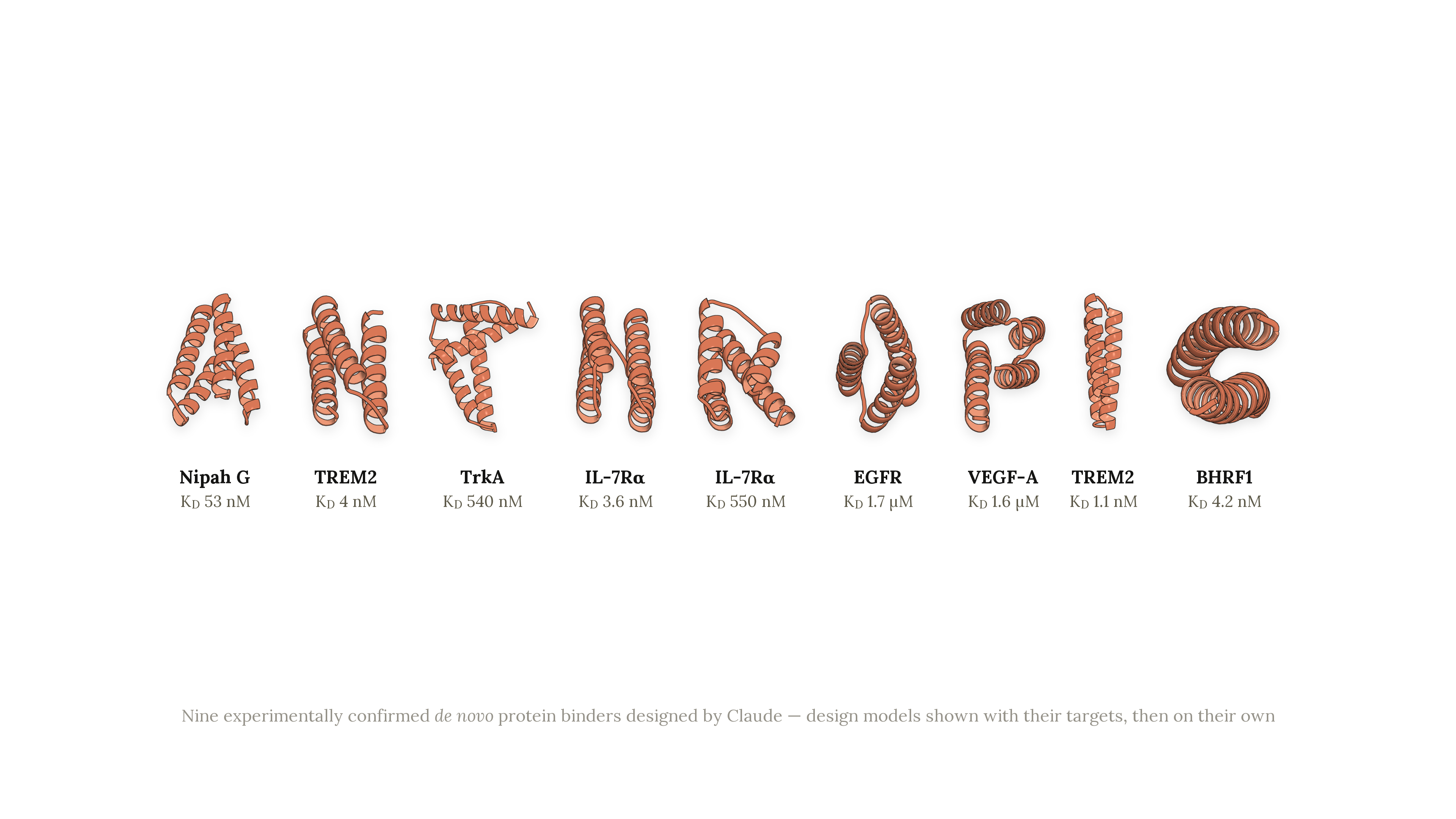
Claude designed working protein binders for 14 of 15 targets
- Source
- x.com
- Date

Many drugs work by binding to a specific target in the body and blocking or changing what it does. An important first step in the drug development process is designing a molecule that can bind tightly to its target. Traditionally, that's meant weeks or months of expert work per target, sifting through a large number of candidates to identify the few that work. We wanted to test if Claude could successfully design novel protein binders from scratch (also called de novo design). With a protein design prompt written by a human expert, Claude autonomously designed protein binders against 14 out of 15 targets. We then worked with Adaptyv Bio and Twist Bioscience, who independently built and tested the proteins Claude designed.

An autonomous design loop validated by outside labs is a concrete data point on where frontier models now sit on open-ended scientific work.

Checking sign-in…
Loading comments…