For more on how Claude ran this experiment and the full results, see our blog:
- Source
- anthropic.com
- Publisher
- Anthropic
- Author
- AnthropicAI
- Date
Context
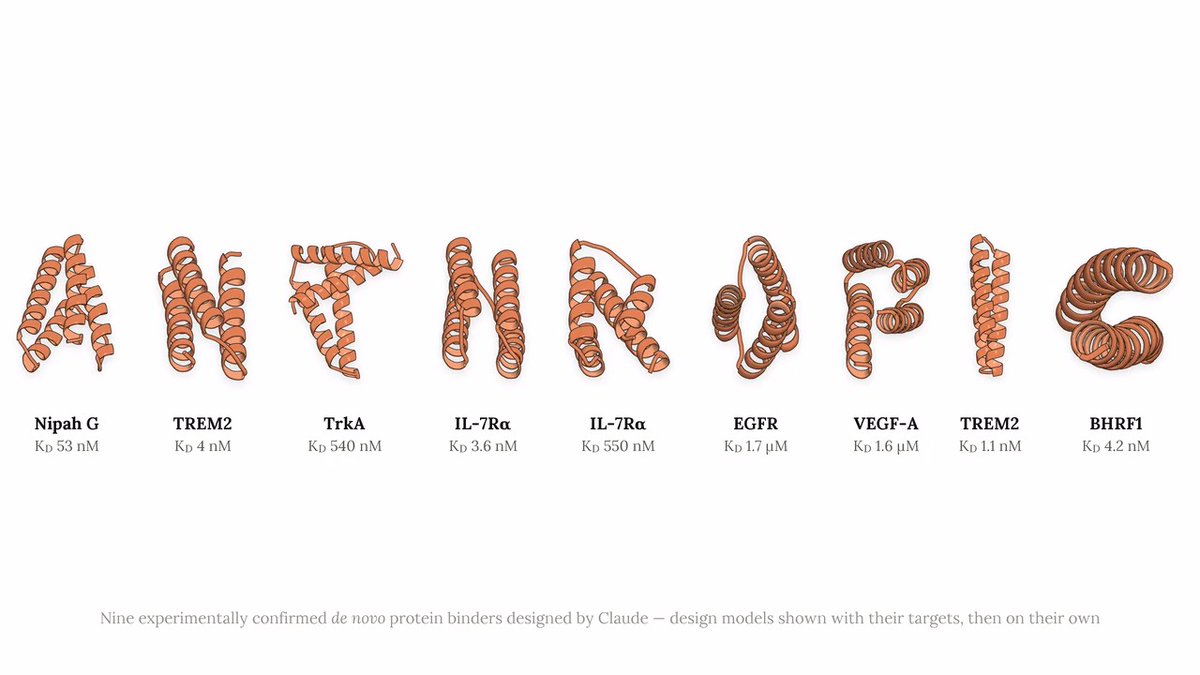
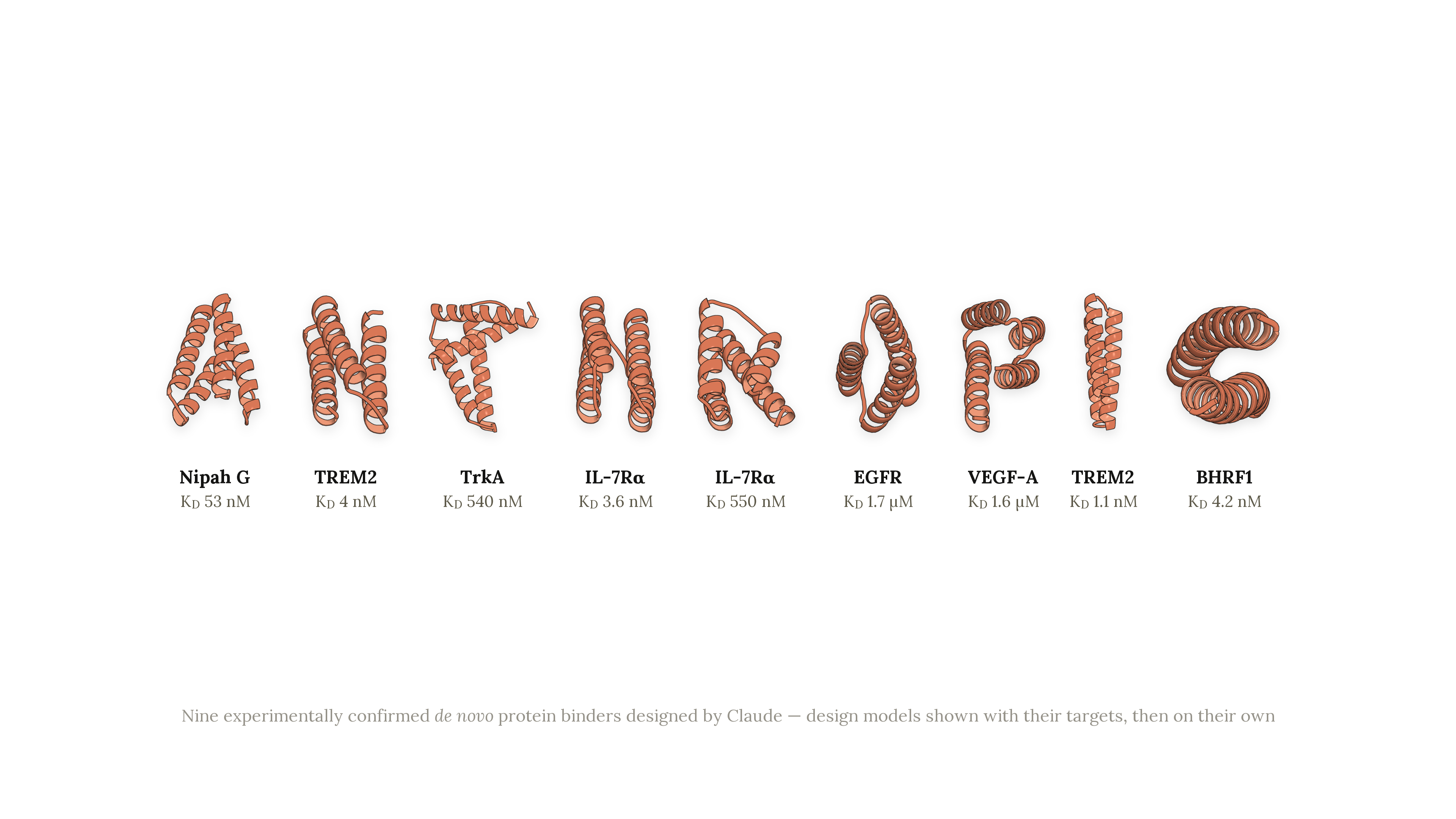
Anthropic reports that Claude, left largely to itself, designed new proteins that bound 14 of the 15 target proteins it was aimed at when outside labs built and tested them. The designs are minibinders: small proteins meant to latch tightly onto a target, which is how many medicines work. According to Anthropic's research post, designing such a binder from scratch has historically taken protein engineers months of computation, optimization and screening per target.
The experiment tested autonomy rather than collaboration with experts. Anthropic gave Claude a long design , web access, papers on protein design and GPU time to run the design and folding models the already uses, then gave no further scientific, technical or operational guidance. Its own role, it says, was approving access requests, keeping the infrastructure running and ordering the designs for testing. Two outside companies, Adaptyv Bio and Twist Bioscience, produced the proteins and tested whether they bound.
The main measure is the hit rate, the share of designs that actually bound. Designing against all targets in one 48-hour , the two Claude models tested, Mythos Preview and Opus 4.8, reached 26.7% and 22.6%. Mythos Preview reached 35.1% when each target got its own sessions. Anthropic compares these with the 10 to 15% it calls typical today, a figure it calculated from the public proteinbase.com collection. Across the whole campaign, 354 of 1,320 designs bound. On RBX1, a target from one of Adaptyv Bio's design competitions, Mythos Preview's hit rate was 40%, against 3.7% among the competition's entrants.
These are Anthropic's own reported results, and its protein design technical report could not be collected for this explanation, so the detailed methods were not checked here. Performance was uneven: none of 90 designs against maltose-binding protein was confirmed to bind, and only Opus 4.8, not Mythos Preview, succeeded against TNFα. Anthropic chose 16 targets, reports 15 because one gave inconclusive lab data, and says further characterization will follow to confirm the hit rates and binding strengths. A binder is only the first step toward a drug-like molecule, and Anthropic says protein design remains unavailable for general access while it works on trusted access programs.
- Prompt — Information or instructions supplied to a model; in a chat, the request you type is often called your prompt.
- Field — One named piece of a record, such as name or approved_on; a record is one entity's set of values, one per field.
- Session — One conversation or piece of work as a harness keeps it: a record of messages, tool calls and observations that can be saved and resumed.